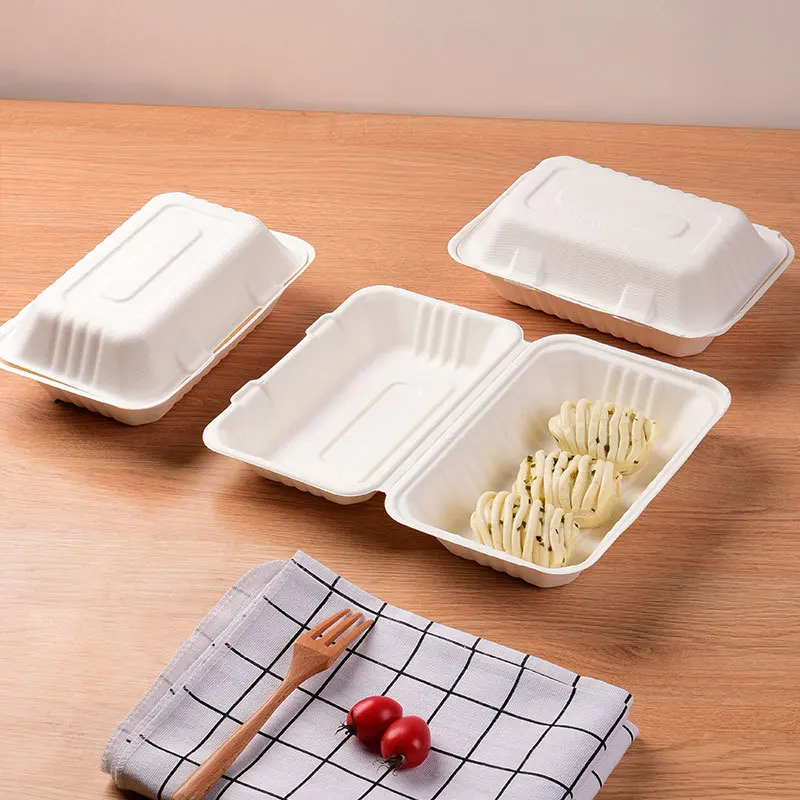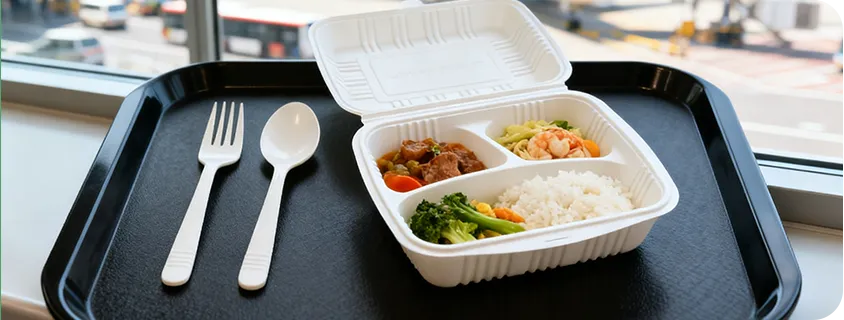
Substandard soup packaging leads to structural failure, thermal loss, and product leakage during transit. Biodegradable cornstarch soup bowls wholesale provide a structurally rigid, high-temperature stable, and fully compostable solution that ensures leak-proof delivery and strict compliance with global environmental regulations.
Evaluating packaging materials requires a rigorous analysis of material science and supply chain capabilities. For B2B procurement managers, transitioning from petroleum-based plastics to plant starch materials (PSM) addresses both operational durability and corporate ESG mandates. This guide examines the technical specifications and structural engineering behind commercial-grade cornstarch soup packaging.
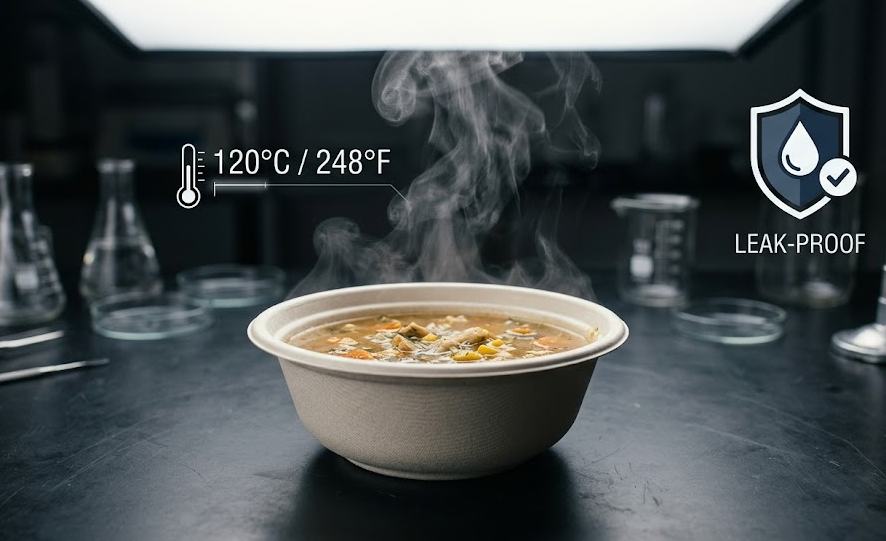
Table of Contents
- How Do Material Limitations Affect B2B Food Delivery?
- What Structural Engineering Secures the “Last Three Miles”?
- Which Technical Specifications Support Bulk Procurement?
- Cornstarch vs. Bagasse: Which Substrate Prevents Capillary Leaks?
- Case Study: Mitigating a 6% Leakage Rate in Cloud Kitchens
- How Does High-Purity Cornstarch Enhance ESG Compliance?
1. How Do Material Limitations Affect B2B Food Delivery?
Material limitations directly impact delivery logistics; traditional PP/PS plastics face global bans, while basic paper containers suffer from structural softening and leakage when exposed to high-temperature, high-lipid broths.
Balancing Compliance and Operational Costs
The catering supply chain is actively shifting due to restrictive legislation on single-use plastics. However, adopting unverified biodegradable materials introduces severe operational risks. Early-generation paper and cardboard containers fail under the stress of high-penetration liquids like hot broths and oil-heavy ramen, resulting in bottom degradation.
Multi-Angle Analysis:
- Theoretical Basis: Petroleum plastics offer absolute moisture barriers but zero biological degradation. Basic paper offers compostability but lacks necessary hydrophobic properties.
- Design Trade-offs: Plant starch materials bridge this gap. Upgrading to advanced eco-friendly restaurant packaging carries a marginal initial material cost increase compared to raw plastic.
- Practical Impacts: This cost is offset by market dynamics. Modern consumers typically accept a 10% to 15% premium for brands demonstrating a verified green commitment. Procurement teams utilizing compostable soup containers effectively bypass plastic taxation while increasing overall brand equity.
2. What Structural Engineering Secures the “Last Three Miles”?
Securing transit requires precision structural engineering, specifically utilizing the natural tensile strength of cornstarch to form a snap-tight seal and thickened walls that prevent spillage and retain optimal thermal dynamics.
Thermodynamics and Lid-to-Bowl Mechanics
The logistical phase from the kitchen to the end-user—often termed the “last three miles”—subjects packaging to kinetic shock and temperature fluctuations. Structural engineering is required to mitigate these variables.
Multi-Angle Analysis:
- Theoretical Basis: A snap-tight seal relies on extreme dimensional precision between the lid and the bowl rim. This mechanical interlock must withstand both internal steam expansion and external physical agitation.
- Design Trade-offs: Increasing the thickness of the bowl walls increases the overall unit weight, but it provides essential thermal insulation.
- Practical Impacts: Thickened cornstarch walls lock in the initial temperature of the soup. Furthermore, the structural rigidity allows delivery personnel to safely stack multiple heavy orders, preventing the bottom-tier collapse common with inferior containers.
3. Which Technical Specifications Support Bulk Procurement?
Bulk procurement requires verified manufacturing data, including a 350-ton monthly capacity, ISO9001 compliance, and strict dimensional tolerances to ensure automated packing lines operate without lid-matching errors.
Evaluating High-Volume Production Capabilities
Procurement decisions for bulk cornstarch bowls must be supported by laboratory testing and industrial output metrics. Hfenggreen provides objective parameters to validate supply chain stability.
Multi-Angle Analysis:
- Theoretical Basis: Consistent injection molding parameters prevent batch-to-batch variance in polymer density and dimensional shrinkage.
- Design Trade-offs: Operating at a 350-ton monthly capacity requires significant automated infrastructure, but it guarantees uninterrupted fulfillment for million-tier wholesale orders.
- Practical Impacts: Operating under an ISO9001 quality system ensures that lid-matching precision errors are controlled to near-microscopic margins, eliminating operational jams on automated restaurant packing lines.
| Technical Specification | Verified Performance Metric | Operational Output |
| Temperature Tolerance | -20°C to 120°C | Safe for freezing and microwave heating; zero BPA or toxic odor release. |
| Manufacturing Capacity | 350 Tons / Month | Ensures stable supply chain logistics for high-volume B2B buyers. |
| Composition | >70% Renewable Cornstarch | Prevents microplastic pollution; supports ESG environmental audits. |
| Capacity Matrix | 380ml (15g) to 800ml (26g) | Comprehensive sizing for diverse applications, from side dishes to main broths. |
Cost-Benefit Analysis of Switching to Cornstarch Soup Containers
While performance metrics such as thermal stability and leak resistance are critical, procurement decisions ultimately depend on total cost of ownership (TCO). Transitioning to cornstarch soup containers typically involves a moderate unit price increase compared to conventional plastics. However, this upfront cost is systematically offset by reductions in plastic taxation, lower product loss due to leakage, and improved operational efficiency in high-volume delivery environments.
From a financial perspective, the shift also enhances brand positioning, enabling food service operators to capture eco-conscious consumers willing to pay a premium. For a detailed breakdown of unit economics, lifecycle cost comparisons, and ROI modeling, refer to our in-depth analysis on the cost-benefit structure of cornstarch soup containers.
4. Cornstarch vs. Bagasse: Which Substrate Prevents Capillary Leaks?
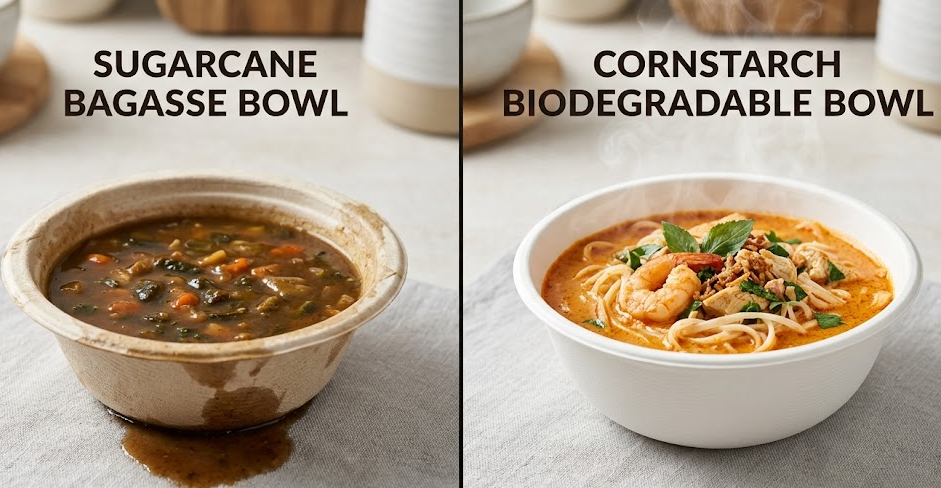
Cornstarch prevents capillary leaks by forming a dense, non-porous thermoplastic barrier, whereas bagasse contains natural fibers that absorb moisture and soften when exposed to high-temperature broths over extended periods.
Material Barrier Properties in Liquid Applications
Selecting the correct substrate requires matching the material’s chemical properties to the menu’s physical demands. Sugarcane bagasse is highly effective for dry or semi-moist foods due to its breathability. However, its fibrous structure acts as a capillary network. When exposed to boiling, oil-rich liquids, fluid migrates into the container walls, leading to structural softening and potential flavor contamination.
Multi-Angle Analysis:
- Theoretical Basis: Cornstarch (PSM) is processed into a dense thermoplastic polymer, completely eliminating fiber porosity.
- Design Trade-offs: While bagasse provides superior breathability for fried foods, cornstarch sacrifices breathability to achieve absolute liquid retention.
- Practical Impacts: For liquid-heavy menus, the moisture barrier is non-negotiable. For a detailed comparative analysis of thermal thresholds and structural limits under high heat, reviewing the engineering data in our cornstarch vs bagasse soup bowls guide is essential to making an accurate procurement decision.
5. Case Study: Mitigating a 6% Leakage Rate in Cloud Kitchens
Replacing generic containers with precision-molded 800ml cornstarch soup bowls eliminated a 6% leakage rate in a regional Cloud Kitchen, increasing packing efficiency by 12% and restoring platform ratings.
Correcting Packaging Failures in High-Volume Environments
Background: A regional Cloud Kitchen operating multiple hot-food delivery brands utilized unverified, early-generation compostable containers. Due to poor lid dimensional tolerance, the facility experienced a 6% “spill and damage” complaint rate during peak delivery hours, resulting in severe financial loss and degraded platform algorithm rankings.
Solution: The operator initiated a complete packaging overhaul, integrating Hfenggreen’s 800ml large-capacity cornstarch soup bowls (HF-W07) with high-sealing lids featuring a custom embossed logo.
Execution Results:
- Operational Efficiency: The high structural rigidity and stackability of the new bowls allowed kitchen staff to pack orders faster without fear of deformation, increasing throughput speed by approximately 12%.
- Satisfaction Metrics: Within three months, refund requests related to packaging failures dropped to zero. Consequently, the aggregate store rating increased by an average of 0.8 points.
- Brand Value: The custom embossing provided a premium aesthetic without utilizing toxic printing inks, elevating the end-user experience.
6. How Does High-Purity Cornstarch Enhance ESG Compliance?
High-purity packaging containing over 70% renewable cornstarch degrades within 180 days in industrial compost, providing verifiable carbon footprint reduction data essential for corporate ESG audits and regulatory compliance.
Biodegradability and Corporate Sustainability Reporting
For corporate entities, strict ESG (Environmental, Social, and Governance) compliance is a prerequisite for securing public investments and government contracts.
Multi-Angle Analysis:
- Theoretical Basis: High-starch polymers undergo enzymatic hydrolysis via microbial action, breaking down entirely into carbon dioxide and water.
- Design Trade-offs: Maintaining over 70% cornstarch ensures maximum biodegradability but requires precise blending technologies to retain the mechanical strength typical of synthetic plastics.
- Practical Impacts: The Cloud Kitchen from the previous case study utilized this exact material transition in their annual reporting. By replacing millions of highly polluting plastic bowls, they demonstrated a quantifiable reduction in their carbon footprint, earning a commendation from the local Environmental Protection Agency (EPA) and attracting new institutional investment.
Conclusion
Procuring biodegradable cornstarch soup bowls wholesale is an engineering and operational upgrade. By utilizing high-purity cornstarch materials, food service operators eliminate the leakage risks associated with paper and bagasse, maintain thermal dynamics from -20°C to 120°C, and ensure high-speed packing efficiency via precision snap-tight seals. Most importantly, this transition provides the verifiable environmental data required to pass modern ESG audits and capture consumer brand premiums.
Frequently Asked Questions (FAQs)
1. What is the actual starch content in these bowls?
The formulation utilizes a high-density Plant Starch Material (PSM) containing over 70% renewable cornstarch, significantly reducing reliance on petroleum.
2. What is the maximum temperature tolerance of the cornstarch material?
The material is structurally stable up to 120°C (248°F), allowing it to handle boiling oils and acidic broths without leaching BPA or toxic chemicals.
3. Are these bowls suitable for commercial freezing?
Yes. The material maintains flexibility and structural integrity down to -20°C (-4°F), preventing brittleness and shattering in cold storage.
4. How long does the biodegradation process take?
Under standard industrial composting conditions, the material converts entirely into carbon dioxide and water within 180 days.
5. How does the lid mechanism prevent leaks during transit?
The bowls and lids are manufactured using ISO9001-certified injection molding, resulting in micro-tolerances. This creates a mechanical snap-tight seal that resists internal steam expansion and external kinetic shock.
6. Will the cornstarch composite alter the flavor of the broth?
No. The manufacturing process yields a completely odorless, non-toxic thermoplastic matrix that will not impart fibrous or chemical tastes to the food.
7. Can we apply branding to the packaging without using toxic inks?
Yes. We recommend custom embossing on the lids. This process presses the logo directly into the material, ensuring a premium brand presence while maintaining 100% compostability.
8. What are the available capacity sizes and weights?
The capacity matrix ranges from 380ml (weighing 15g) for side dishes, up to 800ml (weighing 26g) for large main-course liquid servings.