Delivering boiling hot broth in substandard packaging leads to structural failure, severe leaks, and ruined brand reputation. When sourcing eco-friendly soup packaging for hot broth, B2B buyers must recognize a critical operational reality: while bagasse is excellent for dry foods, cornstarch composites offer superior moisture barriers and structural rigidity, preventing the leaks and collapsing associated with high-temperature liquid delivery.
In the B2B catering and food delivery sector, material selection directly determines structural stability during transit. Let’s analyze the exact performance differences between these two bio-materials, backed by hardcore manufacturing data, to help you eliminate hidden procurement traps and upgrade your takeaway operations.
1. The Hidden Traps of Bagasse for Liquid Delivery
Many procurement managers mistakenly assume that all plant-based fibers perform equally. However, matching the specific bio-material to the menu item is critical.
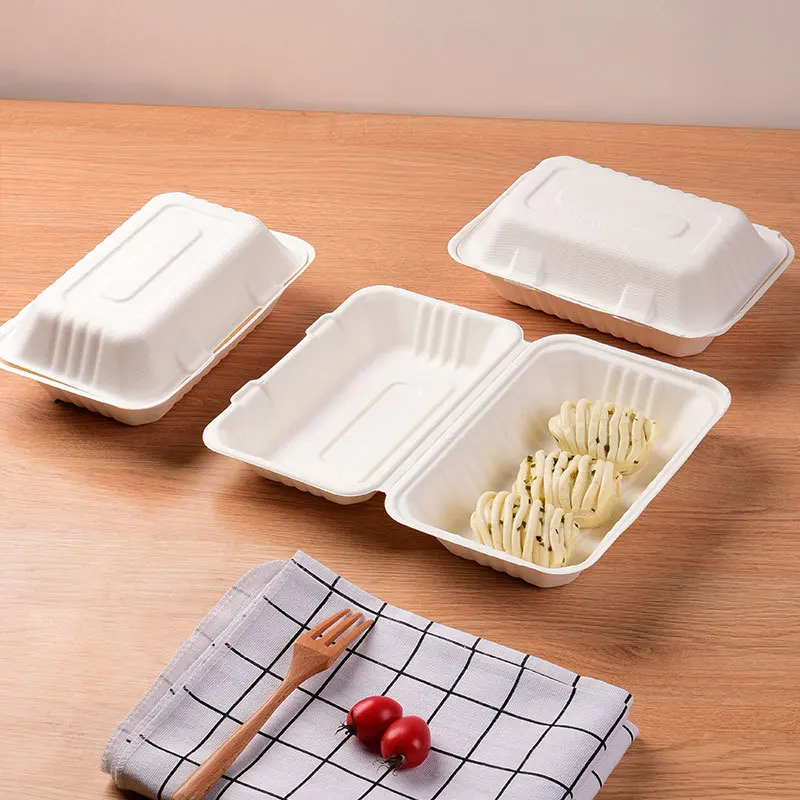
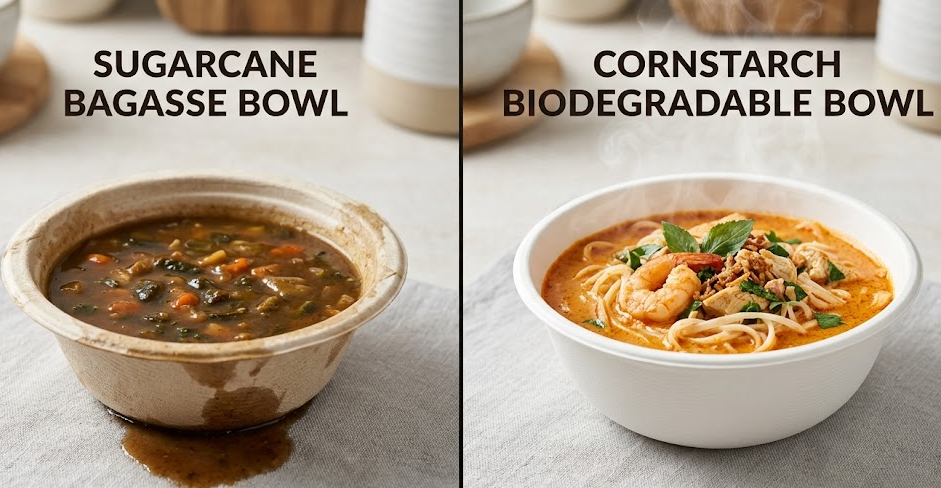
Bagasse (sugarcane fiber) excels in packaging dry or semi-dry items like burgers and partitioned meals because of its breathability. However, its natural fibrous structure becomes a liability when exposed to boiling liquids. Bagasse possesses microscopic capillary pores. When subjected to prolonged contact with boiling broth, these pores trigger a “capillary effect,” drawing liquid into the container walls.
If handled improperly, the base of a bagasse bowl will soften significantly within 15 minutes. Worse, the hot liquid can extract a subtle paper-fiber taste, actively degrading the flavor profile of premium soups.
2. Why Cornstarch Excels in High-Temperature Applications
To combat the capillary effect of natural fibers, engineers utilize Plant Starch Material (PSM). Cornstarch packaging provides a much stronger moisture barrier, effectively bridging the gap between natural biodegradability and commercial plastic performance.
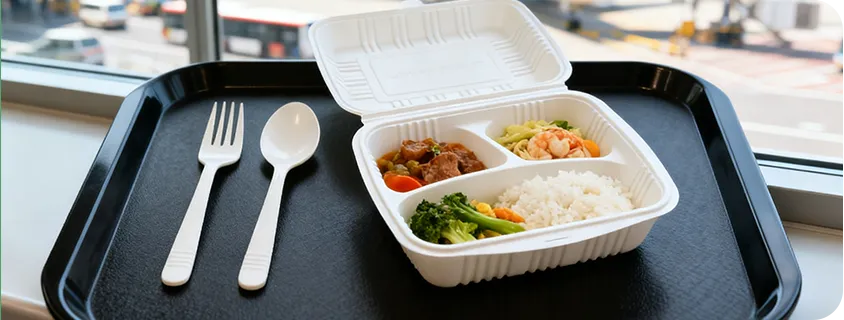
Physically, cornstarch composites behave similarly to traditional petroleum plastics but carry a 100% biodegradable genetic makeup. When a cornstarch bowl is filled with 100°C soup and sealed in a delivery bag for a bumpy 30-minute ride, the bowl maintains exceptional rigidity. There is no structural “collapse,” and the dense material ensures the lid will not automatically pop off due to steam expansion or rim warping.
Selecting the right container requires a comprehensive understanding of material science, especially when dealing with complex, high-temperature menus. Procurement teams often need a detailed breakdown of specifications, lid-matching mechanics, and thermal thresholds to make truly informed purchasing decisions.
To facilitate this process, we have compiled an extensive technical resource that details everything from production methodologies to specific sizing applications. We highly recommend reviewing our Complete Guide to Biodegradable Cornstarch Soup Bowls to learn how these specific containers can be optimized for your exact operational and menu needs.
3. Hardcore Performance Data: Cornstarch vs. Bagasse
Making an informed decision requires looking past eco-marketing and focusing on hard performance metrics. When comparing Cornstarch vs Bagasse soup bowls, the data clearly dictates which material is suited for heavy liquid transport.
Based on Hfenggreen’s production line testing and industry standards, cornstarch bowls demonstrate superior commercial adaptability for hot liquids in the following dimensions:
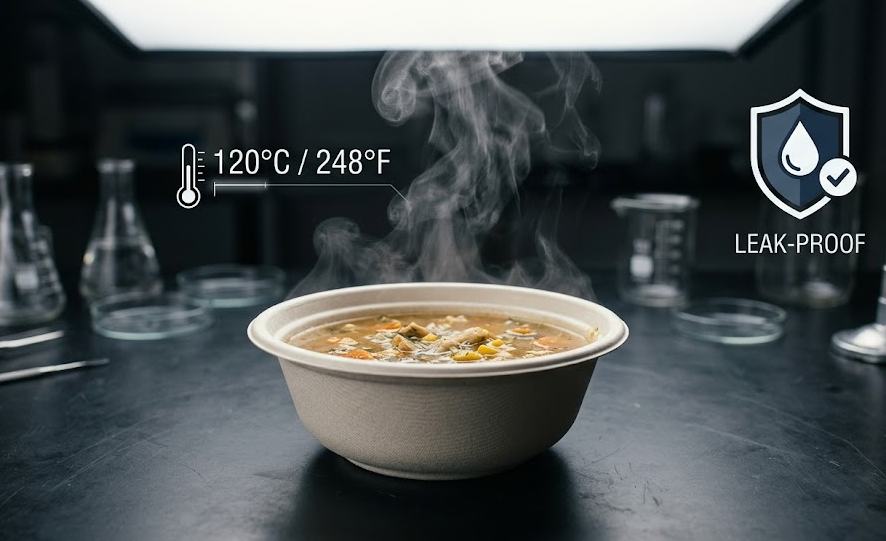
- Extreme Temperature Tolerance: Cornstarch bowls safely withstand temperature swings from -20°C to 120°C (248°F). They fully support microwave reheating without releasing harmful toxins like BPA, outperforming standard uncoated fiber materials.
- Degradation Timelines: Under industrial composting conditions, the material converts entirely into organic matter within 180 days, strictly complying with rigorous global ESG environmental audit standards.
| Performance Metric | Uncoated Bagasse (Sugarcane) | Hfenggreen Cornstarch (PSM) |
| Moisture Barrier | Low (Susceptible to capillary seepage) | High (Waterproof & Oil-proof) |
| Max Temperature | ~90°C (Softens quickly) | 120°C (248°F) |
| Rigidity at 100°C | Low (Prone to collapsing) | High (Maintains shape for 30+ mins) |
| Flavor Neutrality | Moderate (Can impart paper taste) | Excellent (100% Odorless) |
| Lid Seal Integrity | Moderate (Rim can warp under steam) | High (Precision snap-fit) |
4. Case Study: Eliminating Leaks in Southeast Asian Cuisine Delivery
Understanding material science in theory is one thing; seeing it perform in a high-stress commercial kitchen is another.
Client Background: A multinational fast-food chain specializing in Southeast Asian cuisine, specifically high-temperature, oil-heavy dishes like Laksa and Tom Yum soup.
The Problem: The client originally used uncoated bagasse bowls for delivery. Due to the high oil content and extreme heat of the soup, delivery times exceeding 20 minutes caused uneven heating and micro-cracks at the bottom of the bowls. Soup leakage resulted in a platform complaint rate that peaked at a devastating 8%.
The Solution: The client audited their packaging and switched to Hfenggreen’s 800ml thickened cornstarch soup bowl (Model: HF-W07), paired with our precision-engineered snap lids.
Execution Results:
- Drastic Loss Reduction: Customer complaints regarding leaks and spills dropped by 92% in the first month of implementation.
- Operational Efficiency: Because the cornstarch bowls are highly rigid, kitchen staff could confidently stack and pack orders faster during peak hours, increasing packing speed by 15% without fearing bottom deformation.
- Brand Premium: The client utilized our Custom Embossed Logo feature on the lids to highlight their eco-friendly stance. This premium presentation attracted environmentally conscious corporate catering clients, driving their average single-order value up by 20%.
5. Supply Chain Stability for Wholesale Buyers
Identifying the right material is only half the battle; securing a manufacturer capable of delivering it consistently is the other. When purchasing biodegradable soup bowls wholesale, batch-to-batch consistency is vital for operational efficiency.
Hfenggreen operates a robust manufacturing facility with a production capacity of 350 tons per month. This scale allows us to comfortably support large bulk wholesale orders (starting at an MOQ of 100 cartons). More importantly, this highly automated capacity ensures strict quality control: the thickness and lid-sealing precision error between batches is strictly controlled to within 0.05mm. For restaurants utilizing automated packaging or lidding lines, this tight tolerance guarantees jam-free, seamless operations.
6. How to Upgrade Your Soup Packaging Strategy
If your restaurant or catering business struggles with leaking hot foods, transitioning away from uncoated fiber to cornstarch composites is the most effective engineering solution. Cornstarch provides the leak-proof performance of plastic while fulfilling your brand’s sustainability commitments.
Stop letting substandard packaging dictate your customer reviews and bottom line. Reach out to the engineering and sales team at Hfenggreen today to request structural samples of our 800ml cornstarch bowls and test their high-temperature performance in your own kitchen.
Frequently Asked Questions (FAQs)
1. Why do bagasse bowls sometimes leak with hot soup?
Bagasse is a natural fiber with microscopic pores. When exposed to boiling water or hot oil for extended periods, these pores draw the liquid into the container walls (the capillary effect), causing it to soften and eventually seep.
2. Is cornstarch packaging safe for microwave use?
Yes. High-quality cornstarch bowls can withstand temperatures from -20°C up to 120°C (248°F), making them entirely safe for microwave reheating and freezer storage without releasing BPA or other toxins.
3. Does cornstarch alter the taste of the broth?
No. Unlike some paper or uncoated fiber products that can impart a papery taste into hot liquids, cornstarch material is 100% odorless and flavor-neutral, preserving the exact taste of your premium soups.
4. How long does it take for cornstarch bowls to biodegrade?
Under proper industrial composting conditions, cornstarch composite packaging will completely break down into organic matter within 180 days.
5. What is the minimum order quantity (MOQ) for wholesale purchasing?
At Hfenggreen, our bulk wholesale minimum order quantity starts at 100 cartons, designed to support both growing restaurant chains and established distribution networks.
6. Can I get my restaurant’s logo on the cornstarch lids?
Yes. We offer custom embossed logos directly on the lids. This not only enhances your brand presentation but does so without using potentially harmful printing inks.