
Inconsistent manufacturing processes lead to weak containers, causing leaks, compromised food safety, and severe brand damage. The disposable lunch box production process relies on advanced extrusion and injection molding to transform renewable cornstarch powder into durable, non-toxic, and temperature-resistant eco-friendly food containers.
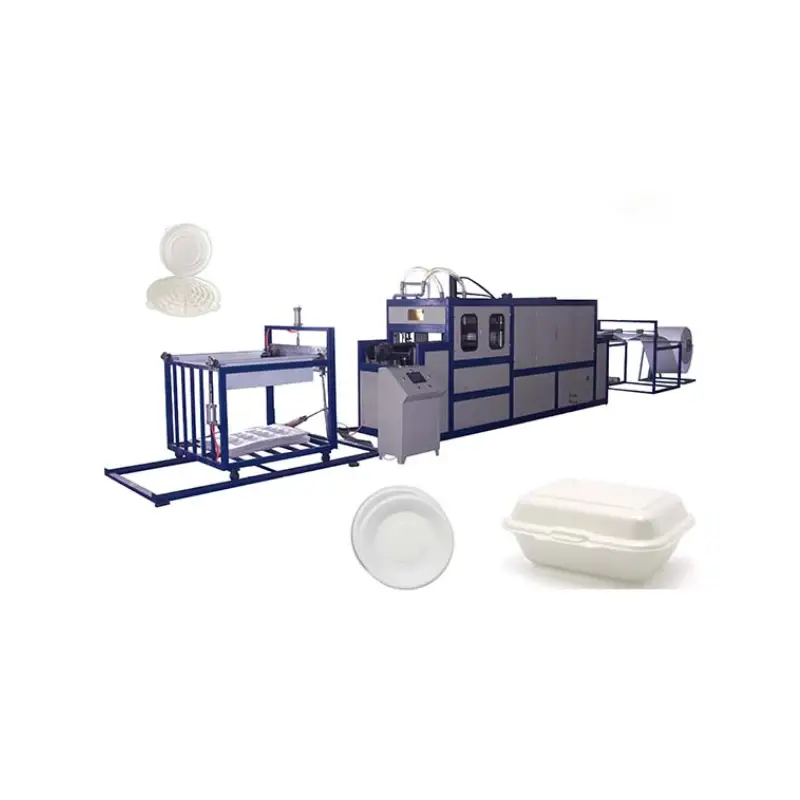
Understanding how raw starch becomes a robust takeout container helps procurement managers identify reliable suppliers and avoid costly packaging failures. By examining each manufacturing phase—from raw material blending to final quality inspection—buyers can ensure their supply chain meets strict environmental and structural standards.
- How Does Raw Material Preparation Impact Quality?
- What Is the Role of Mixing and Extrusion?
- How Do Molding and Forming Shape the Final Product?
- Why Are Cooling, Trimming, and Inspection Critical?
- How Does Facility Scale Ensure Stable Production Capacity?
1. How Does Raw Material Preparation Impact Quality?
The foundation of any robust eco-friendly container lies in its base materials. If the initial starch composition is flawed, the final product will inevitably suffer from poor heat resistance and structural weakness.
The disposable lunch box production process begins by converting raw corn into fine cornstarch powder. Manufacturers blend this renewable powder, which typically constitutes 60% of the composition, with PPT plastics to ensure the base material achieves both biodegradability and necessary structural durability.
Engineering the Cornstarch Base
Preparing the cornstarch base requires precise moisture control and particle sizing. If the cornstarch powder is too coarse, the final container will exhibit surface roughness and structural weak points. Conversely, overly fine powder can agglomerate during mixing.
For heavy-duty restaurant takeaway boxes, a precise 60% corn starch to 40% PPT plastic ratio provides the required rigidity. For lighter supermarket deli trays, minor adjustments ensure optimal clarity and flexibility without compromising the core biodegradable nature.
Multi-Angle Analysis:
- Theoretical Basis: Starch is a hydrophilic polymer. Converting it into a water-resistant food container requires disrupting its granular structure before blending it with thermoplastic binders.
- Design Trade-offs: Utilizing a pure 100% starch base results in a product that dissolves upon contact with hot liquids. Maintaining a starch content above 40% (specifically 60%) strikes the perfect balance between achieving an approximately 180-day degradation cycle and practical commercial utility.
- Practical Impacts: This careful preparation ensures the final tableware is non-toxic, odorless, and safe for direct food contact.
| Raw Material Component | Function in Production | Target Property |
| Cornstarch Powder | Base renewable polymer | Biodegradability (~180 days) |
| PPT Plastic Composite | Structural binder | Waterproof & oil-proof |
| Natural Additives | Processing aids | Thermal stability (-5℃ to 125℃) |
Practical Advice: Ask your supplier for the material specification sheet to verify the exact starch percentage; a stable composition should strictly hover around 60% to guarantee microwave safety.
2. What Is the Role of Mixing and Extrusion?
Once the raw materials are prepped, they must be seamlessly integrated. Inadequate mixing leads to material inconsistencies, causing weak spots that rupture when the container holds hot or heavy food.
During the disposable lunch box production process, starch is combined with other natural ingredients and processed through advanced extrusion equipment. This high-temperature mixing creates uniform base sheets or pellets, establishing the necessary waterproof and oil-proof properties required for food-grade safety.
High-Temperature Blending Dynamics
The extrusion phase is where the mechanical properties of the lunch box are locked in. The mixture of cornstarch and PPT composites is fed into high-temperature mixers. The heat and shear forces melt the plastics and plasticize the starch, creating a homogenous melt.
Facilities utilize imported American high-temperature mixers to ensure the 60% cornstarch formulation blends flawlessly with the plastic composites. This is critical for producing multi-compartment lunch boxes where material flow must reach intricate mold corners without premature cooling.
Multi-Angle Analysis:
- Theoretical Basis: Extrusion relies on precise thermal profiling. If the temperature is too low, the PPT plastic will not fully encapsulate the starch particles, leading to poor moisture resistance. If too high, the starch degrades and darkens.
- Design Trade-offs: High-shear extrusion consumes significant energy and requires expensive machinery, but it is the only way to guarantee the material will not deform or release harmful substances at high temperatures.
- Practical Impacts: Buyers receive a product that easily transitions from a -5℃ freezer to a 125℃ microwave without structural failure.
| Extrusion Parameter | Low Control Consequence | High-Tech Facility Standard |
| Temperature Profile | Starch burns or plastic fails to melt | Imported high-temp mixers |
| Mixing Shear | Clumping, weak spots in final box | Uniform composite distribution |
| Moisture Venting | Bubbles and blistering in sheets | Smooth, non-porous base sheets |
Practical Advice: Conduct a boiling water test on a sample container. If the material was poorly extruded, the surface will quickly become sticky or start to delaminate.
3. How Do Molding and Forming Shape the Final Product?
Transforming raw sheets or pellets into functional tableware requires massive pressure and precision engineering. Substandard molding results in warped lids, improper seals, and subsequent food leakage during delivery.
The core of the disposable lunch box production process involves specialized molds shaping the heated material. Utilizing 250-ton injection molding machines ensures the composite is forced into custom molds under extreme pressure, forming structurally consistent, durable, and precisely dimensioned food containers.
Precision Injection and Custom Tooling
Molding is the phase that defines the end-user’s experience. High-tonnage injection machines press the plasticized cornstarch mixture into custom molds.
For a standard single-compartment lunch box, rapid injection ensures uniform wall thickness. For custom orders requiring sophisticated embossing or relief craftsmanship, the 250-ton pressure forces the material into the finest mold details, producing sharp, clear brand logos.
Multi-Angle Analysis:
- Theoretical Basis: Injection molding relies on the relationship between pressure, volume, and temperature (PVT). Maintaining stable holding pressure ensures the material does not shrink unevenly as it cools, maintaining tight lid-to-base tolerances.
- Design Trade-offs: Custom mold forming requires upfront tooling costs and lead times, but it allows for highly specialized designs like leak-proof hinged-lid boxes tailored to specific restaurant menus.
- Practical Impacts: Automated production lines utilizing these heavy-duty machines ensure high efficiency and superior product quality, minimizing unit-to-unit variance.
| Molding Metric | Impact on Product | Factory Capability |
| Machine Tonnage | Determines material density | 250-ton injection machines |
| Mold Precision | Seal integrity and stacking | Custom mold forming support |
| Automation Level | Consistency across batches | Fully automated production lines |
Practical Advice: Evaluate the snap-fit closure of a sample container. A well-molded lunch box should produce an audible “click” and resist popping open when gently squeezed.
4. Why Are Cooling, Trimming, and Inspection Critical?
Production does not end when the container leaves the mold. Bypassing rigorous post-processing and inspection allows defective, unsafe, or sharp-edged products to slip into the food supply chain.
In the final stages of the disposable lunch box production process, the formed containers are rapidly cooled, trimmed of excess material, and rigorously inspected. This sterile, pollution-free process guarantees every container is microwave-safe, non-toxic, and meets stringent international food safety standards.
Quality Assurance in a Sterile Environment
Cooling dictates the final crystalline structure of the polymer matrix, preventing post-mold warpage. Trimming removes flash (excess material at the mold seams), ensuring safety and aesthetics. Inspection is the final gatekeeper.
Every biodegradable soup bowl or tray must pass through visual and mechanical checks. If a batch shows signs of incomplete mold filling, it is rejected. Furthermore, all production from raw materials to final packaging occurs in a sterile, pollution-free environment.
Multi-Angle Analysis:
- Theoretical Basis: Controlled cooling prevents internal stresses that could cause the lunch box to warp later when a consumer adds boiling hot food.
- Design Trade-offs: Implementing stringent ISO9001 and U.S. quality standard certification checks slows down the theoretical maximum output but virtually eliminates customer returns and health liabilities.
- Practical Impacts: Products passing these checks are guaranteed to be non-toxic, harmless, and free of any peculiar smells, safeguarding the end consumer.
| Post-Processing Step | Purpose | Quality Standard Ensured |
| Controlled Cooling | Prevents warpage and shrinkage | Dimensional stability |
| Edge Trimming | Removes sharp plastic flash | Consumer safety and aesthetics |
| Visual/Mechanical QA | Detects defects and pinholes | U.S. quality standards |
Practical Advice: Check the edges of your sample containers. Rough or sharp edges indicate poor trimming and a lack of detailed quality control in the factory.
5. How Does Facility Scale Ensure Stable Production Capacity?
A perfect manufacturing process means nothing if the factory cannot scale to meet demand. B2B buyers require suppliers who can handle massive wholesale orders without compromising on delivery timelines or quality.
To support global wholesale supply, the disposable lunch box production process relies on massive facility scale. Operating a 10,000-square-meter independent factory with advanced equipment, manufacturers can reach a monthly production capacity of 350 tons of biodegradable tableware to meet international demands.
Scaling for Global Food Packaging Demands
Large-scale food delivery services and restaurant chains consume millions of containers monthly. Supporting this requires a vast industrial footprint and an extensive machinery fleet.
Modern facilities operate over 30 sets of advanced equipment within a 10,000-square-meter footprint. This allows manufacturers to dedicate specific production lines to high-demand items like rectangular corn starch boxes, while keeping other lines open for custom specialized orders.
Multi-Angle Analysis:
- Theoretical Basis: Economies of scale dictate that larger, continuously running automated facilities achieve lower per-unit costs and higher batch-to-batch consistency compared to smaller, intermittent operations.
- Design Trade-offs: Maintaining a mature management system and a 350-ton monthly capacity requires heavy overhead. However, this ensures a stable supply chain and a predictable 25-day mass production lead time for clients.
- Practical Impacts: Buyers can confidently schedule their procurement and logistics, knowing that large wholesale orders will be fulfilled on time, supporting their domestic and international market expansions.
| Facility Metric | Factory Capacity | Benefit to Wholesale Buyers |
| Factory Size | 10,000 square meters | Space for extensive automated lines |
| Monthly Output | 350 tons | Reliable fulfillment of massive orders |
| Lead Time | 25 days (mass production) | Predictable supply chain scheduling |
Practical Advice: Request a facility capability report from your supplier. A monthly output exceeding 300 tons is typically necessary to comfortably support international wholesale accounts without delays.
Conclusion
The disposable lunch box production process is a highly engineered sequence that transforms renewable cornstarch into high-performance food packaging. By understanding the intricacies of raw material preparation, high-temperature extrusion, precision molding, and sterile quality inspection, procurement managers can confidently select manufacturers capable of delivering safe, durable, and eco-friendly products at scale.
Frequently Asked Questions (FAQs)
1. What are the raw materials used in your disposable lunch boxes? Our products are made from a carefully engineered blend of corn starch and plastic, with renewable corn starch accounting for 60% of the composition.
2. How long does the production and delivery process take? For mass production orders, the lead time is within 25 days after receiving the deposit. If you require custom samples first, they are typically delivered in 7-10 days.
3. What is the degradation timeline for these lunch boxes? When disposed of in appropriate conditions, our cornstarch-based materials take approximately 180 days to fully degrade.
4. Can these lunch boxes withstand extreme temperatures during use? Yes. The operating temperature range for our containers is from -5℃ to 125℃, making them completely safe for both freezer storage and microwave heating.
5. Are your production facilities certified for international markets? Absolutely. We hold multiple certifications, including the ISO9001 International Quality Management System, U.S. quality standard certification, and Guangdong Provincial Health Supervision Institute approval.