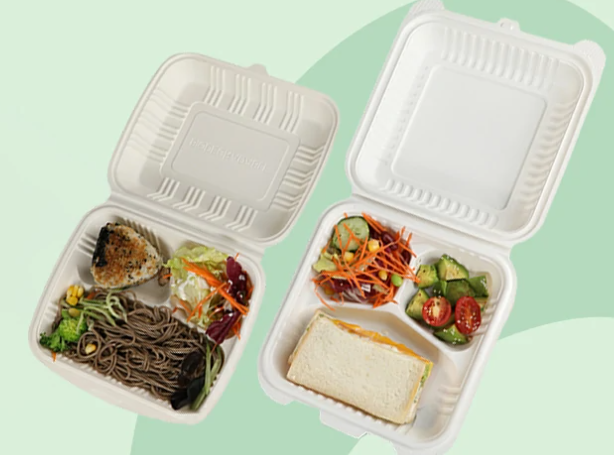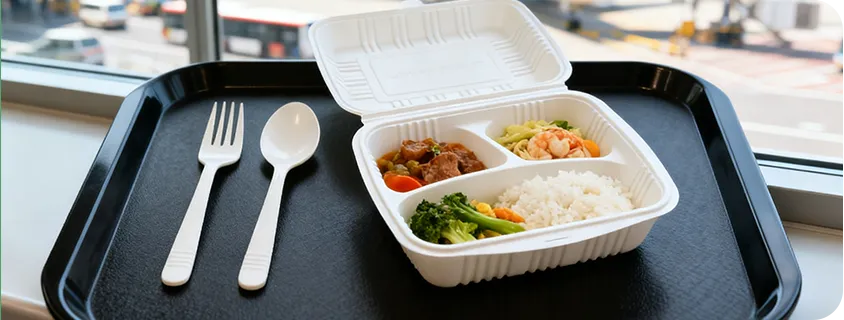
To prevent chemical leaching into hot food, the healthiest disposable lunch box materials are plant-based biodegradable composites, specifically high-starch cornstarch blends. These materials are non-toxic, renewable, odorless, and engineered to be completely safe for direct food contact across extreme temperature ranges.
From a manufacturing engineering perspective, formulating alternatives to traditional petroleum plastics requires balancing environmental sustainability with the rigorous thermal and structural demands of the catering industry. The ongoing shift toward plant-based polymers provides a scientifically backed method to package food safely, eliminating the chemical migration risks associated with synthetic packaging without sacrificing commercial performance.
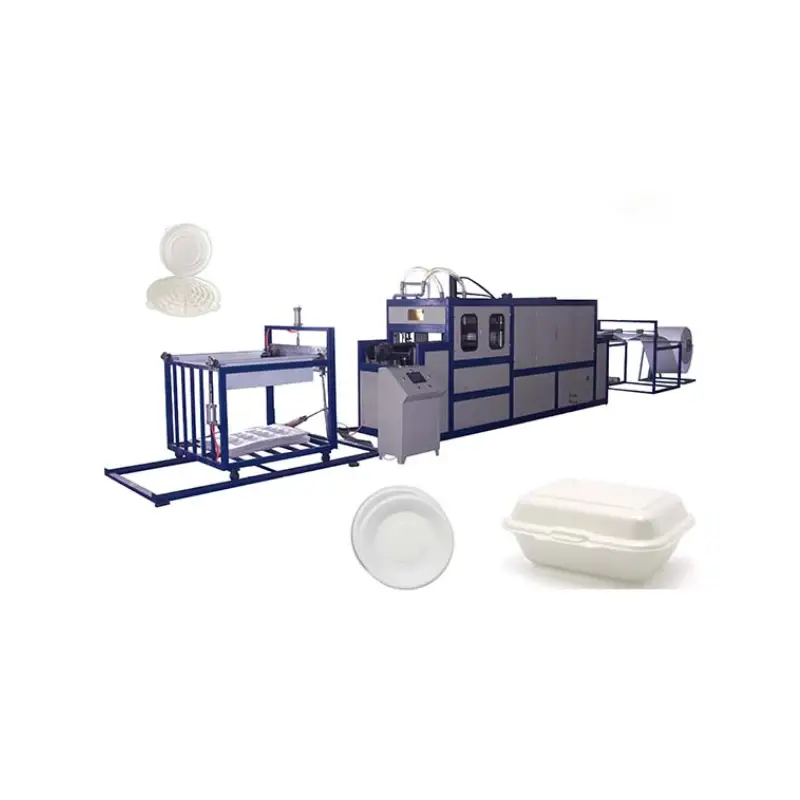
Table of Contents
- Why Are Plant-Based Materials Considered the Healthiest Options?
- How Do Cornstarch Composites Compare to Petroleum Plastics?
- What Data Proves the Safety and Sustainability of Cornstarch Containers?
- How Do Manufacturing Processes Ensure Food Contact Safety?
- What Should Procurement Managers Check Before Sourcing Healthy Containers?
1. Why Are Plant-Based Materials Considered the Healthiest Options?
Selecting the appropriate base material prevents chemical contamination. The global catering industry is actively shifting towards natural, renewable resources to guarantee absolute consumer safety and meet increasingly stringent modern environmental regulatory standards.
Plant-based biodegradable materials, such as cornstarch and natural fibers, are considered the healthiest disposable lunch box materials because they completely eliminate toxic chemical leaching. They offer a non-toxic, odorless, and highly renewable alternative to traditional petroleum-based plastics for consistently safe food packaging applications.
Evaluating Natural Fibers and Starch Polymers
Manufacturers specializing in eco-friendly disposable food packaging increasingly use plant-based biodegradable materials to ensure food safety and environmental sustainability. Two prominent examples include corn-starch-based lunch boxes used for hot, oily takeout meals, and pressed sugarcane pulp containers utilized for cold salads. Both alternatives successfully avoid the integration of harmful industrial plasticizers.
Multi-Angle Analysis:
- Theoretical Basis: Plant-based polymers rely on natural molecular chains rather than synthetic chemicals (like BPA or phthalates), which are documented endocrine disruptors that activate under heat.
- Design Trade-offs: Pure natural fibers often lack structural integrity and moisture resistance. They require expert compounding and advanced R&D to achieve plastic-like durability without compromising the material’s inherent safety.
- Practical Impacts: Procurement managers can assure their end-consumers of zero toxic residue transfer. These materials are non-toxic, odorless, and suitable for direct food packaging, making them widely used by restaurants, takeaway businesses, and catering companies. Furthermore, eco-friendly tableware manufacturers have accumulated significant R&D experience in developing biodegradable plant-based materials such as cornstarch and other natural fibers as highly effective alternatives to petroleum-based plastics.
| Material Type | Toxicity Risk | Odor Level | Base Resource | Ideal Application |
| Traditional Plastic | High (Chemical Leaching) | Chemical/Plastic | Petroleum (Finite) | Non-food industrial items |
| Sugarcane Pulp | Zero | None | Bagasse (Renewable) | Cold, dry foods |
| Cornstarch Composite | Zero | None | Corn Starch (Renewable) | Hot, oily, or wet foods |
Practical Advice: Always request a Material Safety Data Sheet (MSDS) from your supplier to confirm the absolute absence of heavy metals and toxic plasticizers in the packaging matrix.
2. How Do Cornstarch Composites Compare to Petroleum Plastics?
Decades of reliance on petroleum plastics created significant health concerns regarding chemical migration. Engineering a viable replacement requires matching physical packaging performance without introducing the associated hazardous chemical profile into food.
Unlike petroleum plastics that can release harmful substances under high temperatures, healthy disposable lunch box materials made from advanced cornstarch composites are designed to withstand thermal stress safely. They provide identical commercial durability while remaining completely non-toxic, structurally stable, and environmentally sustainable.
The Engineering Behind Starch-Based Alternatives
In material science, replacing a highly versatile material like polypropylene (PP) requires sophisticated formulation. Engineers have focused on utilizing corn starch due to its abundance and polymer-like behaviors when processed correctly. Consider heavy-duty microwaveable meal prep containers versus standard EPS foam clam-shells; the performance gap has been closed entirely by advanced bio-engineering.
Multi-Angle Analysis:
- Theoretical Basis: By blending organic starch with biodegradable polymers, engineers create a dense matrix that repels water and oil. This effectively mimics the favorable barrier properties of standard plastics without retaining the toxic elements.
- Design Trade-offs: While petroleum plastics might initially carry a marginally lower production cost, they carry severe long-term environmental and health liabilities. Starch composites require precise mixing technology but deliver unparalleled food safety.
- Practical Impacts: Transitioning to starch composites protects food integrity during transit and reheating. For instance, advanced formulations utilize a blend of corn starch and plastic, with corn starch accounting for 60% of the composition. This precise ratio strikes the optimal balance between manufacturing cost, structural strength, and consumer health.
| Performance Metric | Petroleum Plastic (PP/PS) | Cornstarch Composite (60% Starch) |
| Chemical Leaching at 100℃ | High Risk | Zero Risk |
| Structural Rigidity | High | High |
| Food Contact Safety | Questionable / Context-dependent | 100% Safe & Certified |
| Environmental Impact | Severe Long-term Pollution | Biodegradable within months |
3. What Data Proves the Safety and Sustainability of Cornstarch Containers?
Claims of health and sustainability must always be backed by objective material science data. Quantifiable metrics allow procurement teams to make informed, risk-free packaging decisions for their large-scale food services.
Data shows that corn-starch disposable tableware typically contains a high starch content around 40–80%, enabling rapid natural biodegradation. Furthermore, these materials safely withstand extreme high and low temperatures, ensuring secure use in microwaves and refrigerators without compromising fundamental food safety standards.
Quantifying Biodegradability and Thermal Resistance
The laboratory numbers behind bio-plastics definitively validate their safety for human use. Corn-starch disposable tableware typically contains a high starch content (often around or above 40–80%), which is the primary catalyst enabling the product to biodegrade under natural conditions and dramatically reduce environmental pollution.
Multi-Angle Analysis:
- Theoretical Basis: The high volume of starch breaks down rapidly via microbial action. These materials can decompose naturally in soil within about 90 days under suitable conditions, turning into harmless substances such as carbon dioxide and water. For thicker, more durable commercial formulations, it takes approximately 180 days.
- Design Trade-offs: A higher starch percentage accelerates degradation but requires incredibly precise injection molding parameters to prevent the container from becoming brittle during consumer use.
- Practical Impacts: Biodegradable containers made from renewable materials like cornstarch or plant fibers are engineered to withstand both high and low temperatures. The official operating temperature range is from -5℃ to 125℃, making them exceptionally safe for direct use in microwaves and freezers while maintaining strict food safety standards.
| Data Point | Standard Value | Practical Meaning |
| Starch Content | 40% – 80% | Ensures biodegradability and reduces plastic volume. |
| Degradation Time | 90 to 180 Days | Rapidly returns to nature as CO2 and water. |
| Cold Resistance | -5℃ | Safe for commercial and residential freezers. |
| Heat Resistance | 125℃ | Safe for boiling soups and microwave reheating. |
4. How Do Manufacturing Processes Ensure Food Contact Safety?
Raw material purity is only part of the safety equation; the manufacturing environment dictates the final product’s integrity. Sterile, highly controlled production lines are mandatory for producing health-compliant commercial tableware.
Healthy disposable lunch box materials require precise, high-tech molding processes operated within completely sterile environments. Advanced automated manufacturing ensures that renewable corn-starch raw materials are formed without any external contamination, producing durable, non-toxic containers highly suitable for rigorous food service and takeout applications.
Advanced Molding and Quality Control
A typical example of healthy disposable lunch box materials is corn-starch biodegradable lunch boxes widely used in takeout packaging. These containers are made from renewable corn-starch raw materials and manufactured through high-tech molding processes to produce durable, microwave-safe food containers.
Multi-Angle Analysis:
- Theoretical Basis: Automated processes with closed-loop material handling systems prevent cross-contamination from external airborne pollutants and limit human contact during the forming stage.
- Design Trade-offs: Maintaining sterile, high-tech facilities (such as a 10,000-square-meter independent factory ) requires significant capital investment compared to standard open-air factories, but it entirely eliminates the risk of bacterial and particulate contamination.
- Practical Impacts: Such lunch boxes are non-toxic and biodegradable, making them inherently suitable for restaurants, supermarkets, and food delivery services seeking environmentally friendly packaging alternatives without compromising on hygiene or structural safety.
| Manufacturing Aspect | Standard Factory Environment | High-Tech Sterile Facility |
| Environment | Open air, prone to dust | Sterile, pollution-free |
| Equipment Type | Manual/Semi-automated | Automated, imported machinery |
| Contamination Risk | Moderate to High | Near Zero |
| Final Product | Inconsistent quality | Uniformly safe, durable, odor-free |
Practical Advice: When vetting a supplier, strictly require proof of ISO9001 certification and regional health supervision approvals to verify their manufacturing environment is truly sanitary.
5. What Should Procurement Managers Check Before Sourcing Healthy Containers?
Sourcing reliable packaging requires looking far beyond standard marketing labels. Buyers must carefully verify technical specifications and manufacturer credentials to guarantee they are receiving genuinely healthy, eco-friendly food container products.
Before sourcing healthy disposable lunch box materials, procurement managers must rigorously verify the exact starch content, request third-party food safety certifications, validate microwave temperature tolerances, and ensure the manufacturer possesses proven, long-term R&D experience in developing sustainable plant-based composite materials.
Strategic Sourcing and Verification Steps
Both large global manufacturers and smaller specialized factories offer “green” products, but the actual health implications and material stability vary wildly. Procurement teams must conduct strict technical audits before onboarding a new supplier.
Multi-Angle Analysis:
- Theoretical Basis: Documented laboratory validation of material composition ensures regulatory compliance and protects end-users from hidden synthetic fillers that could leach toxins under heat.
- Design Trade-offs: Rigorous supplier vetting extends the initial procurement timeline, but acts as a critical safeguard against catastrophic product recalls, customer health issues, and long-term brand damage.
- Practical Impacts: Partnering with transparent, experienced manufacturers ensures a stable supply of safe containers. Delivery schedules are also a factor; a reliable, high-capacity supplier can typically fulfill mass production orders within 25 days after receiving the deposit.
5 Key Checks for Procurement Managers:
- Material Composition: Is the specific starch content clearly defined (e.g., 60% cornstarch )?
- Thermal Limits: Do they provide certified lab data proving safety from -5℃ to 125℃?
- Facility Certifications: Are the products manufactured in a verified sterile, pollution-free environment?
- Biodegradability Proof: Can the manufacturer provide data on actual degradation timelines (e.g., 90 to 180 days )?
- Manufacturer R&D: Does the factory have a proven, multi-year track record in engineering plant-based polymers?
Conclusion
When analyzing what materials are the healthiest disposable lunch boxes made of, objective engineering data clearly points to plant-based biodegradable composites. By utilizing renewable resources like cornstarch, the food service industry can completely eliminate toxic chemical leaching, achieve impressive thermal stability capable of withstanding -5℃ to 125℃, and ensure full environmental biodegradability. B2B procurement managers must prioritize these healthy disposable lunch box materials to protect consumer health, maintain brand integrity, and meet global sustainability demands.
Frequently Asked Questions (FAQs)
1. What are the raw materials of your healthy disposable lunch boxes? Our product is made from a precisely engineered blend of corn starch and plastic, with corn starch accounting for 60% of the composition to ensure both biodegradability and structural integrity.
2. Are corn-starch lunch boxes safe to put in the microwave or freezer? Of course, no problem. Its operating temperature range is from -5℃ to 125℃, making it entirely safe for extreme temperature changes without chemical leaching.
3. How long does it take for these biodegradable materials to decompose? Under appropriate natural conditions, it takes approximately 180 days for the commercial-grade materials to break down without leaving toxic residue.
4. Are these materials safe and odorless for direct food contact? Yes, they are non-toxic, odorless, and safe for direct use , as they are manufactured in a sterile, pollution-free environment.
5. What are the precautions to take when storing these plant-based containers? To preserve the integrity of the biodegradable material before use, you must store in a cool and dry environment.
6. How long will it take to deliver a bulk order of these containers? For mass production wholesale orders, delivery is typically within 25 days after receiving the deposit.
7. How do your cornstarch containers compare to sugarcane pulp? Unlike sugarcane pulp, our cornstarch material is not prone to absorbing moisture, which can negatively impact food taste and container rigidity.