Blindly adopting “green” packaging without understanding disposal infrastructure leads to regulatory fines and severe greenwashing backlash. Yes, cornstarch trays are significantly more environmentally friendly than plastic trays because they dramatically lower carbon footprints during production and eliminate microplastic pollution, provided they enter proper industrial composting facilities.
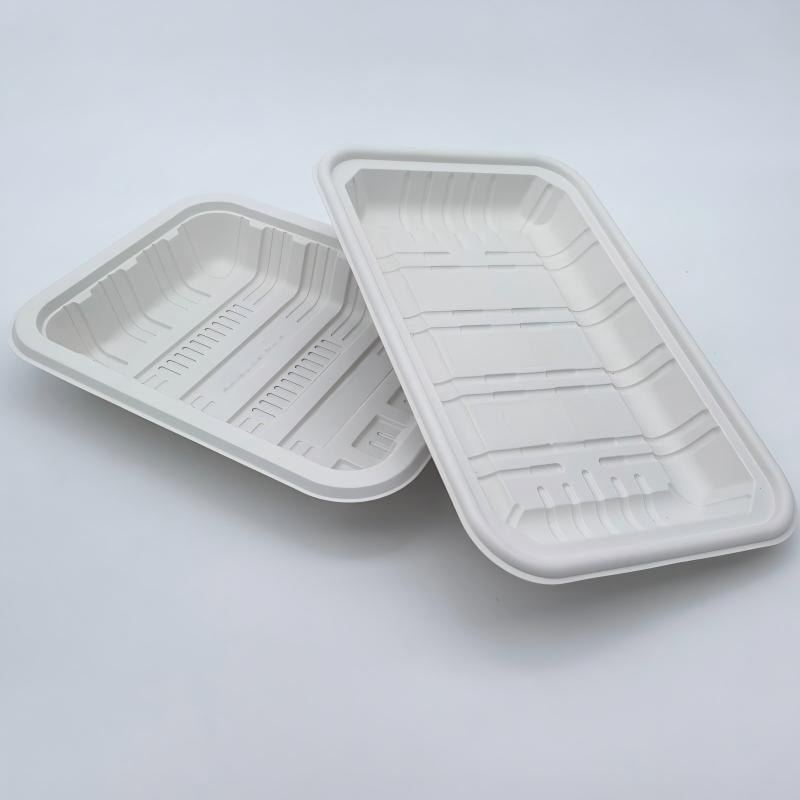
As a Chief Manufacturing Engineer at Dongguan Hengfeng High-Tech Development Co., Ltd., I frequently see procurement managers struggle to navigate tightening single-use plastic bans in the US and Europe. The shift away from petroleum is necessary, but replacing traditional PP or PET trays with biodegradable alternatives requires more than just reading a label. It demands a rigorous understanding of polymer science, thermal limits, and actual end-of-life disposal systems to ensure your operational transition is genuinely sustainable and commercially viable.
Table of Contents
- What Is the True Environmental Impact of Cornstarch Packaging?
- How Do Cornstarch Trays Compare to Traditional Plastic Trays?
- Do Cornstarch Trays Require Special Composting Facilities?
- Which Material Performs Better Under Extreme Food Temperatures?
- How Does Material Selection Affect Brand ESG Compliance?
- What Are the Real-World Applications for Eco-Friendly Disposable Trays?
1. What Is the True Environmental Impact of Cornstarch Packaging?
Understanding the fundamental composition of plant-based materials is critical for assessing their ecological footprint. Let us dissect what exactly makes cornstarch formulations a viable alternative to fossil-fuel derivatives in commercial packaging.
The cornstarch packaging environmental impact is notably lower than petroleum plastics because it utilizes renewable agriculture, drastically reducing reliance on fossil fuels. While it lowers carbon emissions during manufacturing, its true ecological benefit is realized only when processed through industrial composting facilities.
Dissecting Bioplastics and Carbon Footprints
In the disposable food tray industry, “eco-friendly” must be evaluated through a complete lifecycle analysis, not just the source material. Cornstarch trays are fundamentally bioplastics. They typically rely on Polylactic Acid (PLA) or Thermoplastic Starch (TPS) matrices. The theoretical basis of these materials is that they polymerize organic starch derived from renewable crops like corn or cassava, entirely bypassing the crude oil cracking process.
For instance, standard PLA trays are utilized in supermarket cold-chain displays for their high transparency, while modified cornstarch composites (containing 60% cornstarch blended with functional polymers) are heavily used for demanding restaurant takeout. The primary design trade-off here is the end-of-life scenario. While the manufacturing phase significantly reduces greenhouse gas emissions compared to traditional plastic synthesis, these plant-based materials are not “freely biodegradable.” They will not simply dissolve if tossed into a backyard garden or a marine environment.
| Environmental Metric | Traditional Plastic (PET/PP) | Cornstarch Bioplastics (PLA/TPS) |
| Raw Material Source | Finite crude oil / Natural gas | Renewable agriculture (Corn/Cassava) |
| Manufacturing Carbon Output | High | Moderately Low |
| End-of-Life Pollution | Severe (Microplastics) | Zero (If composted properly) |
| Degradation Environment | Centuries in any environment | Requires specific industrial compost conditions |
2. How Do Cornstarch Trays Compare to Traditional Plastic Trays?
Procurement teams must evaluate both mechanical performance and environmental liabilities when transitioning materials. Comparing cornstarch trays vs plastic trays reveals distinct operational differences that directly influence high-volume supply chain decisions.
When analyzing compostable trays vs plastic trays, cornstarch variants offer comparable structural rigidity but eliminate century-long landfill persistence and microplastic shedding. However, traditional plastics like Polypropylene (PP) maintain a broader unchecked temperature tolerance, whereas standard cornstarch requires advanced engineering for heat resistance.
Performance Metrics and Waste Realities
Traditional plastics such as Polypropylene (PP) and Polyethylene Terephthalate (PET) have dominated the packaging industry for decades due to their incredibly low production costs and predictable structural integrity. A standard PP tray easily holds boiling liquids exceeding 100°C without the slightest deformation, while a PET tray provides absolute oxygen barriers for fresh meat packaging.
The theoretical advantage of petroleum plastics is their chemically inert nature. Ironically, this is also their most severe environmental flaw: they take hundreds of years to break down, eventually fragmenting into hazardous microplastics that contaminate global food chains. In contrast, a biodegradable food trays comparison shows that high-quality cornstarch composites break down safely into water, carbon dioxide, and organic biomass. The practical impact for B2B buyers is balancing the initial unit cost of bioplastics against the escalating taxes, regulatory bans, and disposal fees associated with non-recyclable, food-contaminated petroleum plastics.
- Mechanical Strength: Modified cornstarch rivals PP in rigidity, preventing crush damage during delivery.
- Recycling Viability: Food-contaminated plastic is rarely recycled; compostable cornstarch turns food waste and packaging into a single compostable stream.
- Cost Vector: Cornstarch carries a slight premium upfront but lowers long-term compliance costs in regulated markets.
3. Do Cornstarch Trays Require Special Composting Facilities?
A widespread industry misconception is that bio-based packaging will effortlessly disappear if thrown into a natural environment. Clarifying the actual degradation mechanics is vital for accurate environmental marketing and compliance.
Yes, most eco friendly disposable trays for food require industrial composting facilities to degrade efficiently. These environments provide the sustained high temperatures and specific humidity levels necessary to break down the bioplastic molecular structure into organic matter, typically within 90 to 180 days.
Understanding Industrial Degradation Pathways
The label “eco-friendly” does not equate to “litter-friendly.” The complex polymer chains found in PLA and dense cornstarch composites require active microbial environments operating at elevated temperatures (typically above 58°C) to initiate rapid hydrolysis. If a consumer throws a cornstarch tray into a standard plastic recycling bin, it acts as a contaminant to the PET recycling stream. If it ends up in a standard landfill lacking oxygen and microbial activity, it can persist for years, much like traditional plastic.
To fully grasp how these materials break down and the specific operational requirements for large-scale catering, I highly recommend reviewing our [Complete Guide to Biodegradable Cornstarch Soup Bowls]. This resource details the precise moisture and temperature thresholds required for optimal structural performance and subsequent organic breakdown.
Procurement managers must audit their target market’s municipal waste infrastructure. Supplying certified compostable packaging designed for regulated markets is highly effective, but brands must also take responsibility for educating consumers on proper disposal methods to truly close the sustainability loop.
4. Which Material Performs Better Under Extreme Food Temperatures?
Food service packaging must survive aggressive thermal shocks, from freezing storage to microwave reheating. Evaluating material behavior under extreme heat prevents catastrophic structural failures during the crucial delivery phase.
While traditional PP plastic handles heat effortlessly, standard PLA cornstarch trays deform at 60°C. However, advanced modified cornstarch composites are engineered to withstand temperatures from -5℃ to 125℃, offering superior heat-resistant biodegradable food trays perfectly suited for microwave heating and frozen storage.
Thermal Engineering for Food Delivery
Selecting the right eco-friendly material dictates the safety of your food delivery. Unmodified PLA is excellent for cold-chain applications but constitutes a severe risk for hot foods. Fast-food chains attempting to use standard PLA for hot meals routinely face immediate container warping, resulting in leaks and burns.
For example, a supermarket using transparent PLA trays for cold salads benefits from high visual clarity and a premium feel. However, a restaurant serving hot curries or boiling soups must utilize heavily modified cornstarch composites. At Hengfeng, our formulation utilizes a precise blend of 60% cornstarch and 40% functional plastic composites. This specific ratio creates a highly durable matrix that prevents structural melting and oil weeping.
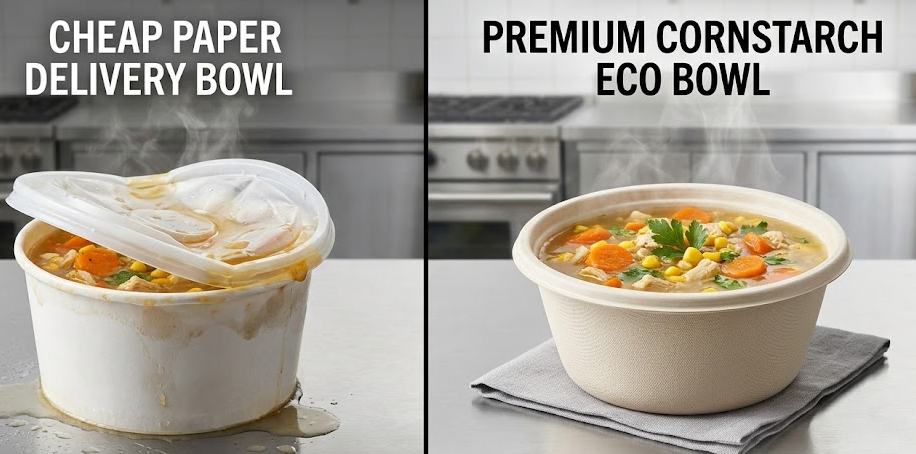
Maintaining a rigid structure under high heat is essential for preventing steam-induced seal failures. You can explore exactly [How Cornstarch Bowls Solve the “Soggy Lid” Problem in Long-Distance Delivery] by utilizing these advanced, thermally stable composite matrices that resist warping even when holding boiling liquids. Buyers should always perform a 120°C oil immersion test on sample trays to verify thermal stability before executing wholesale agreements.
5. How Does Material Selection Affect Brand ESG Compliance?
Modern B2B procurement extends beyond mere functional packaging; it directly influences corporate sustainability reporting. Aligning your material strategy with international environmental legislation is critical for maintaining market access and brand equity.
Transitioning to cornstarch trays significantly bolsters a brand’s ESG compliance by providing quantifiable reductions in plastic usage and carbon emissions. Utilizing certified compostable packaging satisfies stringent US and EU single-use plastic bans, mitigating long-term regulatory risks while elevating sustainable market positioning.
Future-Proofing Through Sustainable Packaging
Environmental, Social, and Governance (ESG) criteria are now paramount for global restaurant chains, distributors, and retailers. Relying on traditional PP or PS packaging exposes brands to increasing plastic taxes and sudden restrictive single-use bans. Sourcing eco-friendly disposable trays for food is a strategic maneuver to future-proof your packaging supply chain.
Consider a European catering firm that replaces traditional plastic with our modified cornstarch trays. Not only do they avoid immediate regulatory fines, but they also utilize the quantifiable reduction in plastic tonnage in their annual sustainability reports to attract eco-conscious investors. Similarly, a US-based takeout franchise adopting certified compostable trays gains a distinct marketing edge, validating their environmental commitment to an increasingly discerning consumer base.
| ESG Compliance Factor | Traditional Plastics | Cornstarch Composites |
| Regulatory Ban Risk | Extremely High | Zero (Fully Compliant) |
| Carbon Reporting Value | Negative impact | Positive reduction metrics |
| Brand Premium Potential | Low (Viewed as cheap) | High (Viewed as responsible) |
6. What Are the Real-World Applications for Eco-Friendly Disposable Trays?
Theoretical environmental benefits must seamlessly translate into functional commercial utility. Examining specific deployment scenarios helps product designers match the correct biodegradable substrate with the distinct demands of varying food service environments.
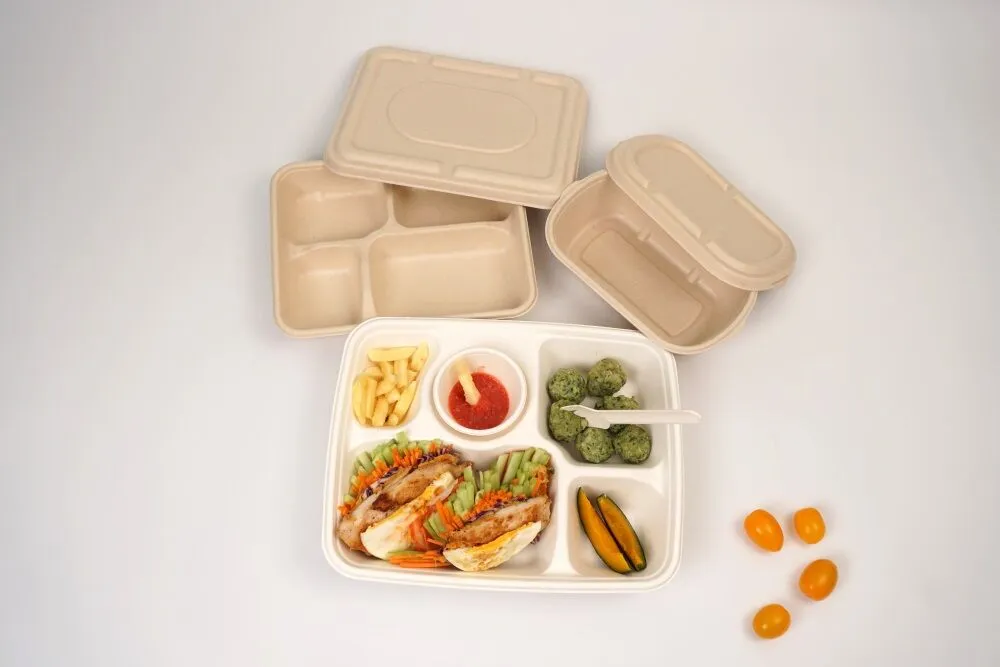
Real-world applications for eco friendly disposable trays for food span across diverse sectors. Standard PLA trays dominate chilled supermarket displays for high visual appeal, while highly rigid, modified cornstarch composites secure hot fast-food delivery, effectively eliminating structural failures and reducing takeaway complaints.
Scenario-Based Sourcing Strategies
Material selection must always be based on real food service conditions. Operating a modern 10,000-square-meter facility with over 30 sets of advanced injection molding machines, our monthly output of 350 tons allows us to engineer specific tray profiles for distinct commercial applications.
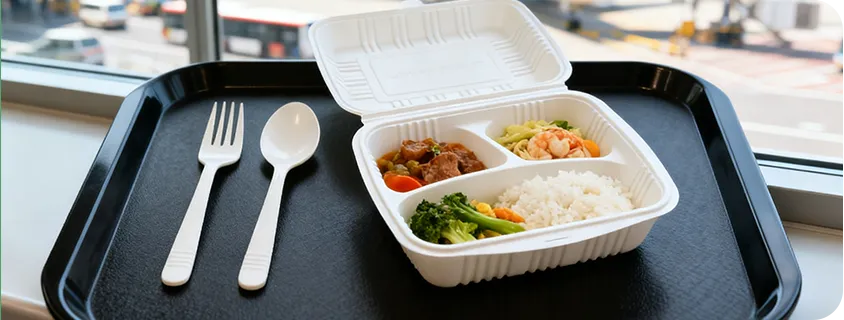
- Fast Food & Hot Takeaway: Replacing traditional PP with modified cornstarch composites ensures stability up to 125℃. This solves the deformation problem associated with early bioplastics, dramatically reducing oil leak complaints during transit.
- Supermarket Fresh Produce: Utilizing transparent PLA trays enhances the aesthetic presentation of fruits and salads, driving visual consumer purchases while maintaining cold-storage integrity without fogging.
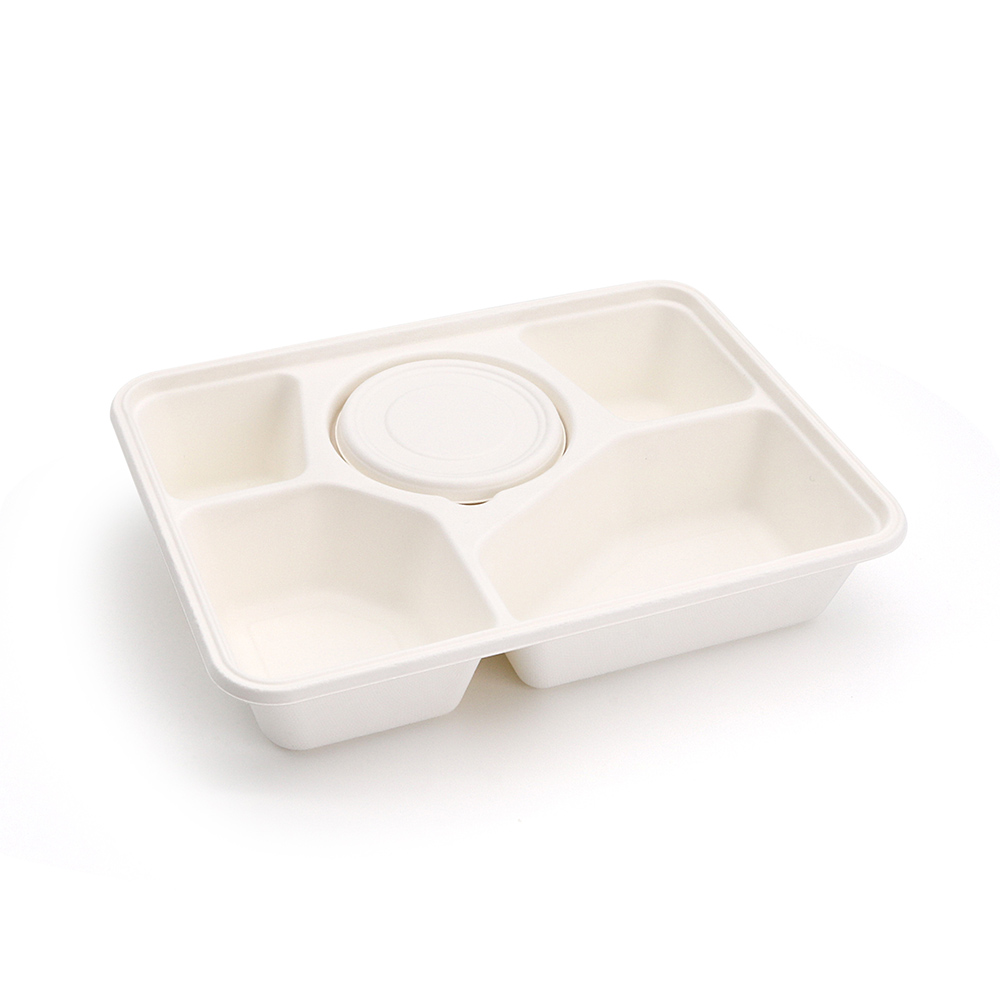
For B2B buyers, partnering with a factory that provides comprehensive OEM/ODM disposable tray solutions is vital. Support for custom mold forming guarantees that compartment sizes, draft angles, and lid sealing tolerances meet your specific operational automation requirements.
Conclusion
The debate between cornstarch trays vs plastic trays is no longer just about the environment; it is about securing operational longevity. While traditional plastics offer cheap convenience, their devastating ecological impact and increasing regulatory restrictions render them obsolete for forward-thinking brands. Cornstarch packaging—when properly engineered for thermal resistance and disposed of in commercial composting facilities—provides an uncompromising, leak-proof solution. By upgrading your packaging strategy with certified, high-performance biodegradable materials, you eliminate microplastic pollution, streamline your ESG reporting, and deliver a premium, sustainable experience to your global customer base.
If you are looking for a reliable supplier of eco-friendly cornstarch trays or need customized packaging solutions for your market, please contact us for technical consultation and product samples. Our engineering team can assist with material selection, structural design, and compliance requirements based on your application scenario.
Frequently Asked Questions (FAQs)
1. What are the raw materials used in your cornstarch trays?
Our high-performance trays are manufactured from a unique formulation that blends renewable corn starch with PPT plastic composites, with the organic corn starch accounting for 60% of the total composition to ensure biodegradability.
2. Are cornstarch trays safe for microwave and freezer use?
Absolutely. Our modified cornstarch materials feature an exceptional operating temperature range from -5℃ to 125℃, making them entirely safe for direct microwave heating and deep freezer storage without deforming.
3. How long does it take for these trays to degrade?
Under appropriate industrial composting conditions (proper heat, moisture, and microbial activity), our cornstarch tableware takes approximately 180 days to fully break down into organic matter.
4. Can cornstarch trays hold hot, oily foods without leaking?
Yes. Unlike simple untreated paper or pulp, our advanced composite formulation is engineered to be completely waterproof and oil-proof, preventing any leaks or softening when exposed to hot, heavy greases.
5. What is the typical lead time for a mass wholesale order?
With our large-scale automated facility reaching a capacity of 350 tons per month, mass production lead times are highly efficient, typically shipping within 25 days after receiving the initial deposit.