Selecting improper disposable food trays materials can lead to regulatory non-compliance fines, structural packaging failures, and food safety breaches. To avoid these operational liabilities, procurement managers must shift toward certified biodegradable food tray materials, such as sugarcane bagasse and modified cornstarch composites, which provide robust thermal performance and full environmental degradation.
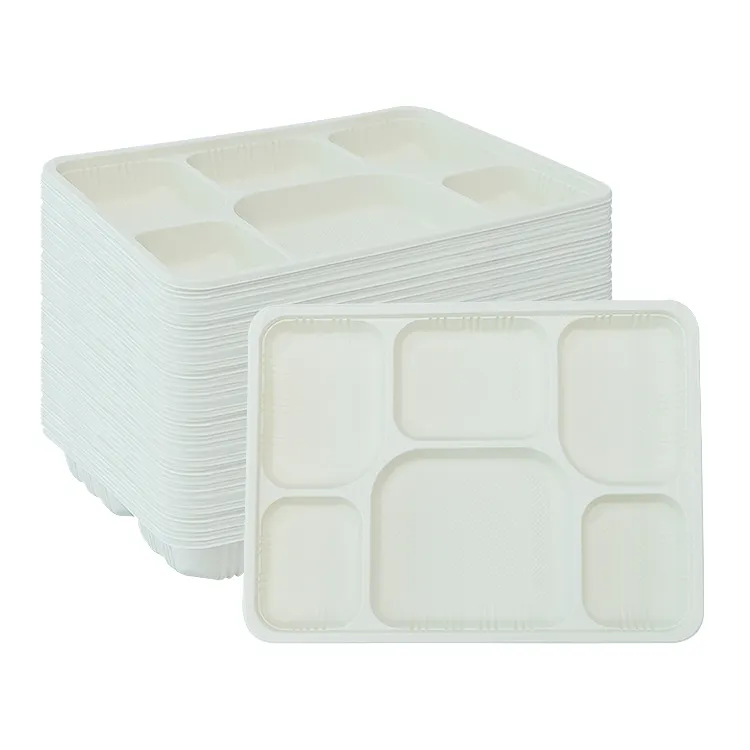
In manufacturing engineering, the selection of raw materials directly governs structural deflection under load and automated lid-fit tolerances. As European and US markets tighten single-use plastic restrictions, transitioning to sustainable packaging solutions requires a deep understanding of material behavior under variable thermal and mechanical stresses.
- What Are the Primary Plant-Based Fibers Used for Food Trays?
- How Do Biodegradable Bioplastics Fit Modern Packaging Needs?
- What Are the Key Performance Differences Between Disposable Tray Materials?
- Which Materials Are Best Suited for Specific Commercial Applications?
- How Can Buyers Verify Compliance and Material Performance Before Ordering?
- What Customization Options Are Available for Eco-Friendly Trays?
1. What Are the Primary Plant-Based Fibers Used for Food Trays?
Plant-based fibers dominate the current shift toward sustainable packaging solutions. Understanding the structural properties of these agricultural byproducts allows buyers to make informed decisions regarding raw material resilience and food contact safety.
The primary plant-based fibers used for food trays include sugarcane bagasse, bamboo pulp, and recycled wood fiber. These eco friendly food trays materials are highly renewable and break down naturally under composting conditions, offering excellent grease resistance and structural stability for short-term food service packaging.
Sugarcane Bagasse Properties
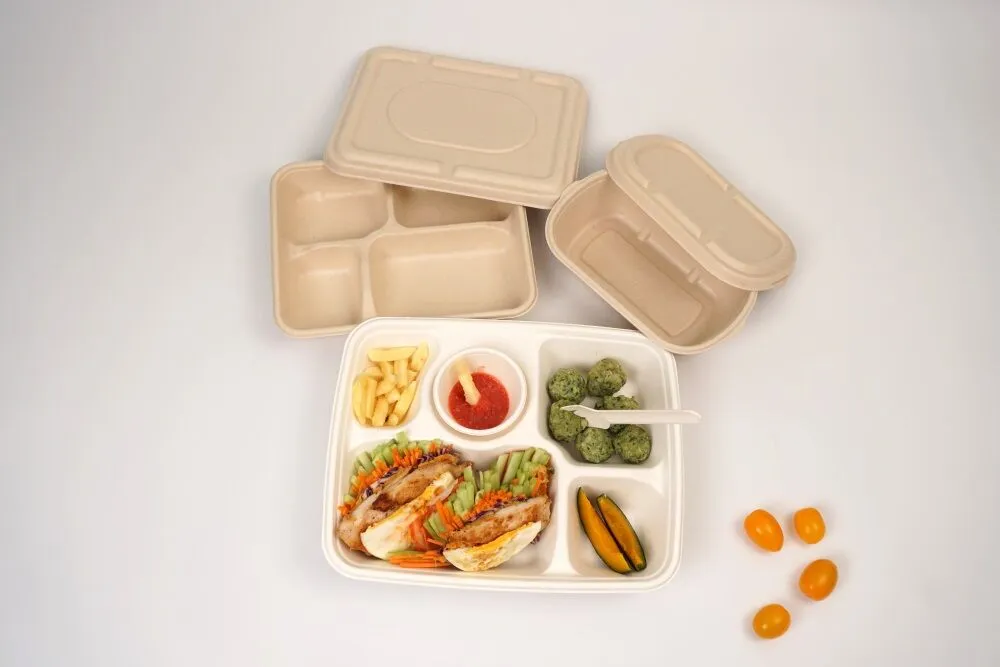
Bagasse is the fibrous residue remaining after sugarcane stalks are crushed for juice extraction. From a theoretical basis, bagasse consists of long-chain cellulose fibers that naturally interlock during the wet-molding extrusion process. This structural cross-linking yields high rigidity and native hydrophobic properties. For example, bagasse is widely manufactured into multi-compartment lunch trays and quick-service burger boxes.
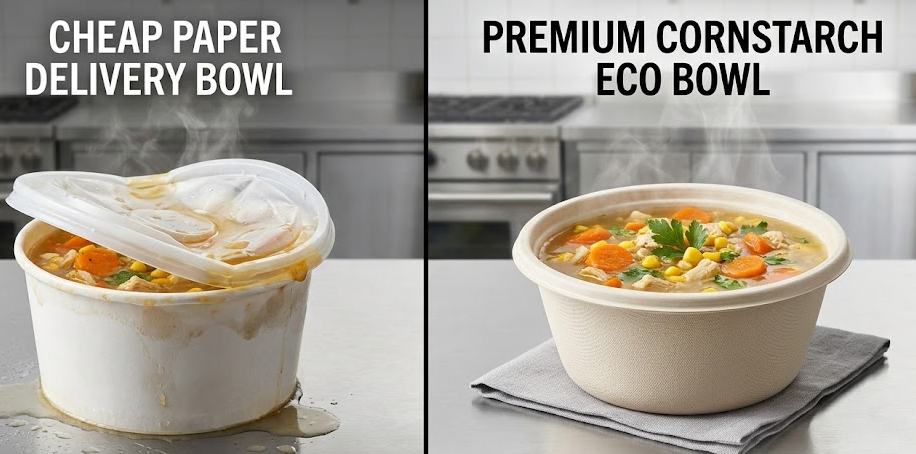
However, design trade-offs exist: untreated bagasse fibers contain micro-pores that can allow high-temperature oils to seep through over extended durations, a phenomenon known as the capillary effect. Practically, this means raw bagasse trays are ideal for immediate consumption items like fried foods or dry baked goods, but require specialized formulation or secondary lamination when used for hot, liquid-heavy dishes.
Bamboo Pulp and Wood Fiber Mechanics
Bamboo pulp represents a rapidly renewable alternative due to the rapid growth cycle of the bamboo plant. Structurally, bamboo fibers possess a higher tensile strength-to-weight ratio than standard hardwood pulp, making bamboo-based trays exceptionally resistant to tearing and bending. For instance, high-end catering companies often select unbleached bamboo trays for corporate banquets to present a premium, natural aesthetic.
Wood fiber and molded paper pulp, derived from recycled cardboard or virgin timber, provide an alternative primarily for dry food partition trays in institutional catering. The main trade-off for pure wood pulp is moisture absorption; without polymer reinforcement, ambient humidity causes structural deflection, which can cause lid-matching automation to fail on high-speed filling lines.
2. How Do Biodegradable Bioplastics Fit Modern Packaging Needs?
Bioplastics provide a bridge between the clean aesthetic of traditional synthetic polymers and the ecological necessity of degradation. These materials are essential for high-barrier and clear packaging formats in retail environments.
Biodegradable bioplastics such as Polylactic Acid (PLA), PBAT, and modified cornstarch composites fit modern packaging needs by providing smooth, liquid-impermeable surfaces. These compostable food tray materials deliver robust moisture barriers and clear optical transparency while completely eliminating petroleum dependency and microplastic pollution.
Polylactic Acid (PLA) Applications
Polylactic Acid (PLA) is synthesized through the fermentation of plant starches, typically derived from corn or sugarcane, into lactic acid, followed by ring-opening polymerization. PLA mirrors the optical clarity and tensile strength of conventional Polyethylene Terephthalate (PET). For example, it is widely utilized for supermarket fresh meat trays and transparent fruit clamshells.
The primary design trade-off for raw PLA is its low thermal stability, as it begins to deform at temperatures exceeding 45°C (113°F). Consequently, its practical impact is limited strictly to cold-chain storage or cold retail displays, where it prevents moisture loss and oxygen ingress without the structural failures seen when exposed to microwave radiation.
Modified Starch-Based Formulations (PSM)
To overcome the thermal limitations of PLA and the porosity of plant fibers, material engineers specialize in Plant Starch Materials (PSM), specifically cornstarch-based composites. By compounding renewable cornstarch powder with biodegradable polyester binders or minimal amounts of food-grade polypropylene (PP), factories produce a material with high thermal resistance and excellent injection-molding performance.
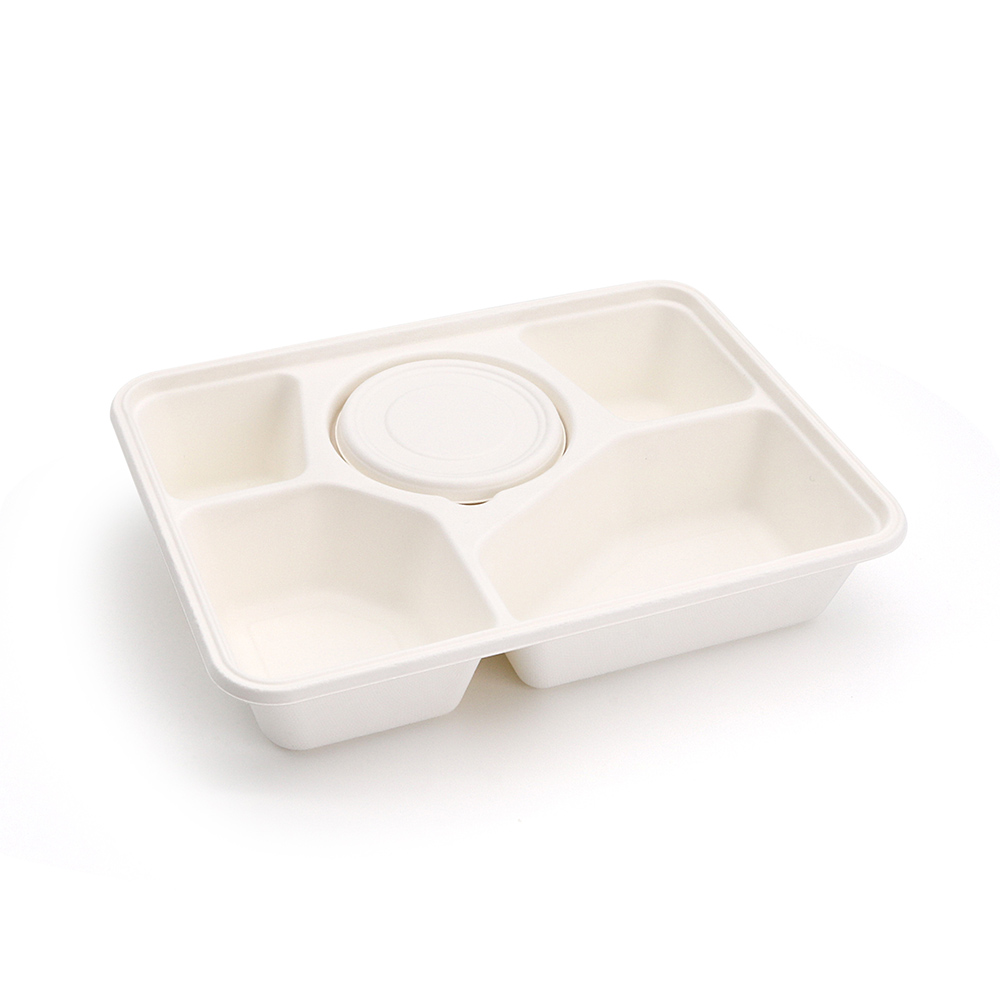
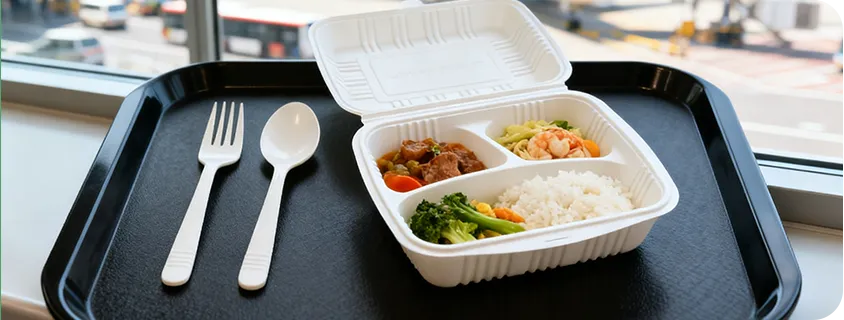
For instance, these starch-based formulations are used to manufacture heavy-duty, multi-compartment takeaway trays and meal-prep containers. The theoretical benefit lies in the material’s ability to resist water and oil up to 120°C, meaning the tray can be safely heated in a microwave without melting, softening, or emitting synthetic chemical odors.
3. What Are the Key Performance Differences Between Disposable Tray Materials?
Selecting a tray material requires comparing physical thresholds and degradation timelines. Procurement managers must analyze how different substrates behave under extreme temperatures and varying storage conditions to avoid operational failure.
The key performance differences lie in thermal limits, moisture permeability, and composting requirements. While sugarcane bagasse handles high heat but risks moisture absorption, PLA provides excellent cold-chain clarity but deforms under heat, whereas modified cornstarch composites deliver balanced thermal resistance and rigidity.
Comprehensive Material Matrix
Let’s structure a comprehensive engineering table to compare these disposable tray material types. This enables data-driven sourcing rather than relying on generic product catalog descriptions.
| Material Type | Temperature Range | Microwave Safe? | Moisture/Oil Barrier | Composting / Degradation Timeline | Primary Raw Material |
| Sugarcane Bagasse | -15°C to 120°C | Yes | Medium (Prone to long-term oil weeping) | 90 – 180 Days (Industrial Compost) | Sugarcane agricultural residue |
| Pure PLA Bioplastic | 4°C to 45°C | No | High (Excellent for liquids) | 90 – 180 Days (Industrial Compost) | Fermented corn/sugarcane starch |
| Modified Cornstarch | -20°C to 120°C | Yes | High (Waterproof & oil-proof) | Approximately 180 Days (Biodegradable) | Renewable plant cornstarch powder |
| Molded Paper Pulp | -10°C to 100°C | Yes (Short duration) | Low (Requires lining for oily foods) | 60 – 90 Days (Home/Industrial Compost) | Recycled paper or virgin wood pulp |
| Traditional PP Plastic | -10°C to 120°C | Yes | High (Absolute barrier) | Non-Biodegradable (Centuries in landfill) | Petroleum derivatives (Crude oil) |
The data indicates that while traditional PP plastic provides an absolute barrier, its lack of environmental degradation creates severe corporate compliance risks and waste disposal liabilities under modern ESG frameworks. Modified cornstarch composites offer a functional equivalent that preserves high-power microwave capability while significantly reducing petroleum reliance.
4. Which Materials Are Best Suited for Specific Commercial Applications?
Commercial applications dictate specific mechanical and environmental demands. Sourcing the wrong tray material for a specific operational context leads to high food waste, customer complaints, and diminished brand equity.
The best material configurations pair sugarcane bagasse or molded pulp with quick-service hot foods, pure PLA with transparent supermarket cold-chain displays, and cornstarch composites with automated meal-prep operations requiring stable dimensions, high-temperature microwave heating, and rigid stacking strength.
Quick-Service Restaurants and Takeaway
In quick-service restaurant environments, the immediate priority is grease resistance, thermal retention, and rapid manual assembly. Trays must handle fried items, hot combos, or burger assemblies without bending or leaking. For example, unbleached sugarcane bagasse trays with embossed sections are highly popular for fast-food meal portioning.
The multi-angle analysis reveals that while bagasse may experience minor moisture weeping after 30 minutes of containing hot liquids, its high thermal insulation keeps fried foods crispy by letting excess steam escape naturally. This is a crucial design trade-off that favors bagasse over conventional, non-vented plastic trays which trap condensation and turn food soggy during transit.
Supermarket Cold Chain and Fresh Food Retail
Supermarket fresh food retail demands maximum visibility, tight anti-fog sealing, and prolonged preservation against oxygen and moisture transmission. Trays holding fresh cuts of meat, seafood, or delicate berries must maintain structure in high-humidity refrigeration units. For instance, clear PLA trays are the preferred choice for premium organic produce displays.
Theoretically, the material’s low gas permeability preserves food freshness and extends shelf-life. However, because it cannot be heated, retail operations must clearly label these packages to prevent consumers from microwaving them. To lower long-term compliance and disposal costs, fresh food chains are replacing PET trays with PLA to align with international sustainable packaging strategies.
5. How Can Buyers Verify Compliance and Material Performance Before Ordering?
Verifying material performance prior to bulk capital expenditure is essential to prevent supply chain disruptions. Procurement managers must establish rigorous quality verification steps rather than relying on supplier guarantees.
Buyers can verify performance by requesting third-party certifications including ASTM D6400 or EN 13432 for compostability, executing rigorous in-house heat resistance tests at 120°C, and checking factory compliance with ISO9001 and food-grade safety standards before executing wholesale agreements.
Certification Checkpoints (ASTM D6400 / EN 13432)
International trade requires documented validation of any environmental claims. When evaluating a biodegradable food container manufacturer, look for recognized international testing standards. The US standard ASTM D6400 and the European equivalent EN 13432 certify that the material will completely degrade within a set timeframe under industrial composting conditions without leaving toxic residues or microplastics behind. For example, a procurement manager sourcing trays for European supermarket distribution must ensure the packaging carries the OK Compost logo or a valid EN 13432 test report to clear customs and comply with strict extended producer responsibility (EPR) regulations.
In-House Testing Protocols for Thermal and Moisture Resistance
Beyond certifications, performing empirical testing on pre-shipment samples mitigates structural risks. An effective engineering testing method involves the Thermal Stress and Oil Permeation Protocol:
- Secure five random samples of the cornstarch or fiber trays.
- Fill each tray with 100°C commercial vegetable oil and close the matching lid.
- Place the loaded tray in a commercial microwave oven and heat at maximum power (typically 1000W) for exactly three minutes.
- Remove the tray and measure dimensional deflection along the rim using digital calipers. A variance exceeding 0.05mm indicates unstable formulation or poor cooling parameters during injection molding.
- Place the tray on a dry sheet of white paper for 30 minutes; inspect the paper for any signs of weeping or grease penetration. Passing this test ensures the container will perform flawlessly in commercial food delivery.
6. What Customization Options Are Available for Eco-Friendly Trays?
Customization drives brand differentiation and operational efficiency in high-volume food packaging. Choosing a manufacturer with advanced engineering capabilities allows brands to customize dimensions, structural partitions, and embossed branding.
Customization options for eco-friendly food trays include custom mold forming for variable compartment layouts, precise dimension adjustments for automated lidding machinery, and ink-free logo embossing, which upgrades packaging to sustainable standards without compromising the compostability of the substrate.
Dimensional Engineering and Compartment Design
Standard off-the-shelf tray configurations rarely satisfy the exact portioning and automated sealing requirements of national food brands or large meal-prep facilities. Advanced factories provide full OEM/ODM disposable tray solutions that begin with automated computer-aided design (CAD) modeling.
For instance, a cloud kitchen chain might require a three-compartment tray where the protein section requires precise thermal isolation from the cold vegetable section. Precision engineering allows the adjustment of wall thickness and ridge heights to prevent cross-contamination between compartments during delivery transit, ensuring a consistent consumer unboxing experience.
Branding and Supply Chain Scaling
Integrating corporate logos and ESG branding onto disposable packaging often relies on toxic, non-degradable inks that can compromise the material’s certified compostable status. To eliminate this risk, modern factories utilize sophisticated engraving techniques to apply embossed or debossed logos directly into the steel core of the injection molds. For example, a healthy food chain can feature its trademark directly on the lid or base of a cornstarch tray without using any ink.
To ensure these custom products are delivered on time, buyers should partner with manufacturers operating large-scale facilities—such as a 10,000-square-meter automated factory utilizing high-pressure mixers and 250-ton injection molding machines—capable of sustaining a monthly capacity of 350 tons to maintain stable, uninterrupted wholesale supply lines.
Conclusion
Procuring the correct eco friendly food trays materials is a data-driven process that balancing structural utility with environmental compliance. At Dongguan Hengfeng High-Tech Development Co., Ltd., we specialize in fabricating high-rigidity, microwave-safe cornstarch composites and plant-based fibers tailored to global regulatory frameworks. Whether your operations require precise multi-compartment lunch trays or high-barrier retail fresh food packaging, our automated facility ensures batch-to-batch precision within 0.05mm. Contact our engineering team today to request a comprehensive material consultation, order customized prototyping samples, or receive an immediate wholesale quote.
Frequently Asked Questions (FAQs)
- Which disposable tray material types can safely go into a microwave?
Modified cornstarch composites and sugarcane bagasse can safely undergo microwave heating up to 120°C. Pure PLA and traditional polystyrene (PS) cannot withstand microwave temperatures and will warp or melt. - How does the degradation time of sugarcane bagasse compare to cornstarch composites?
Sugarcane bagasse typically decomposes within 90 to 180 days under industrial composting conditions. Modified cornstarch composites engineered for high durability break down naturally within approximately 180 days. - Can PLA trays be used for hot soups or roasted meats?
No. Pure PLA possesses low thermal resistance and starts to deform at temperatures above 45°C (113°F). It is strictly recommended for cold-chain storage, fresh produce retail, and cold deli displays. - What is the standard minimum order quantity (MOQ) for custom-molded eco-friendly food trays?
For specialized custom mold forming and custom embossed logos, our manufacturing minimum order quantity typically starts at 100 boxes (with 500 units per box) to ensure production efficiency and competitive pricing. - Why do some biodegradable food trays develop micro-leaks or sweat during transit?
This occurs due to the capillary effect found in untreated natural fibers like raw paper or low-tier bagasse, where long-term contact with hot oils penetrates the fiber micro-pores. Upgrading to a dense cornstarch polymer composite eliminates this issue. - How should plant-based disposable trays be stored to prevent premature degradation?
To maintain the structural integrity and high-density molecular structure of plant starch and natural fibers before usage, products must be stored in a cool and dry environment away from direct moisture exposure.