Choosing the wrong takeaway packaging leads to catastrophic food leaks, increased customer complaints, and severe damage to your restaurant’s brand reputation. To choose the right biodegradable lunch boxes, restaurants must rigorously evaluate corn starch material performance, match volumetric capacities to specific menus, ensure leak-proof structural designs, and secure a reliable factory-direct wholesale supply.
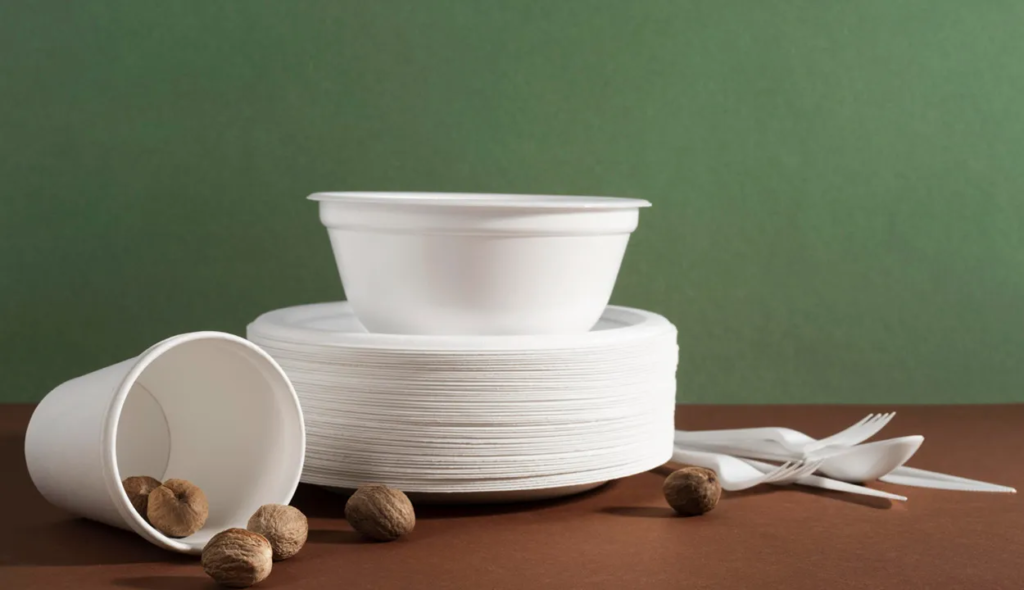
Table of Contents
- Evaluate Material Performance for Commercial Takeaway
- Select the Right Size Capacity for Different Restaurant Menus
- Determine the Optimal Container Design for Food Organization
- Assess Heat and Leak Resistance for Takeaway Reliability
- Leverage OEM Customization for Restaurant Chains
- Verify Reliable Bulk Supply for Uninterrupted Operations
- Why Restaurants Partner with Hfenggreen for Eco-Friendly Packaging
1. Evaluate Material Performance for Commercial Takeaway
When replacing traditional plastics, restaurants must ensure that eco-friendly alternatives can handle intense commercial foodservice demands without degrading. A high-performance biodegradable lunch box utilizes plant-based, food-contact safe materials like corn starch to deliver robust compostable packaging solutions specifically engineered for rigorous takeaway applications.
The Shift Beyond Traditional Plastics
Historically, the restaurant industry relied heavily on petroleum-based plastic containers solely due to their low cost and basic functional reliability. However, the landscape has fundamentally shifted. Restaurants are now facing immense environmental pressure from tightening regional packaging regulations and a consumer base that actively demands sustainable business practices. Relying on conventional plastics not only risks regulatory fines in many regions but also alienates eco-conscious consumers. Consequently, procurement teams are moving away from simply seeking the cheapest option, instead focusing on a holistic evaluation of performance, environmental compliance, and brand image upgrades.
Corn Starch-Based Bio-Composites
The optimal alternative to traditional plastic is advanced corn starch-based material. This plant-based material offers a highly durable, food-contact safe design that functions as a direct drop-in replacement for plastic. Because it is engineered as a compostable packaging solution, it allows food delivery services and fast-food brands to significantly reduce their dependence on non-renewable fossil fuels. Most importantly, commercial-grade corn starch packaging does not compromise on the structural rigidity required for restaurant operations; it maintains its form and strength even under heavy loads, ensuring food is protected from the kitchen to the customer’s door.
2. Select the Right Size Capacity for Different Restaurant Menus
Mismatched container capacities ruin food presentation, cause ingredients to shift violently during transit, and unnecessarily inflate operational packaging costs. To optimize takeaway services, restaurants must select small sizes for snacks, medium capacities (700-1000ml) for standard meals, and large capacities (1000ml+) for family portions and catering.
Mapping Volumetric Capacity to Food Types
Selecting the precise container volume is critical for maintaining portion control and ensuring an attractive unboxing experience. If a container is too large, the food appears sparse, diminishing the perceived value of the meal. If it is too small, kitchen staff struggle to close the lid, leading to crushed food and high leakage risks. A professional packaging supplier provides a spectrum of sizes, allowing a restaurant to standardize its packaging line across an entire diverse menu without needing to source from multiple vendors.
Capacity Application Matrix
| Lunch Box Capacity | Volumetric Range | Suitable Restaurant Applications | Ideal Food Types |
| Small Size | Under 700ml | Light meals, side-order packaging, cafes. | Snacks, desserts, side dishes, small salads. |
| Medium Size | 700ml – 1000ml | Standard takeaway meals, fast food combos. | Rice bowls, pasta, fried chicken, standard mains. |
| Large Size | 1000ml and Above | Heavy meals, group dining, event catering. | Family meals, catering portions, sharing platters. |
For standard takeaway meals, the 700ml-1000ml range is the industry workhorse, utilized daily by cloud kitchens and traditional restaurants alike. For high-volume demands, specialized suppliers like Hfenggreen offer large portion solutions, including 1200ml specifications, perfectly engineered for catering meals and large takeaway orders.
3. Determine the Optimal Container Design for Food Organization
The internal and external structure of a food container dictates packing speed on the prep line and culinary presentation upon delivery. Restaurants must choose single compartments for simple meals, multi-compartment layouts for bento boxes to prevent sauce mixing, and clamshell designs for rapid closure in fast-food environments.
Single Compartment and Clamshell Engineering
For fast food restaurants and high-volume takeaway businesses, operational speed is the primary metric. Single compartment lunch boxes offer the highest internal space utilization and the lowest per-unit packaging cost. They are the optimal choice for simple meal packaging such as rice dishes, large pastas, and burgers.
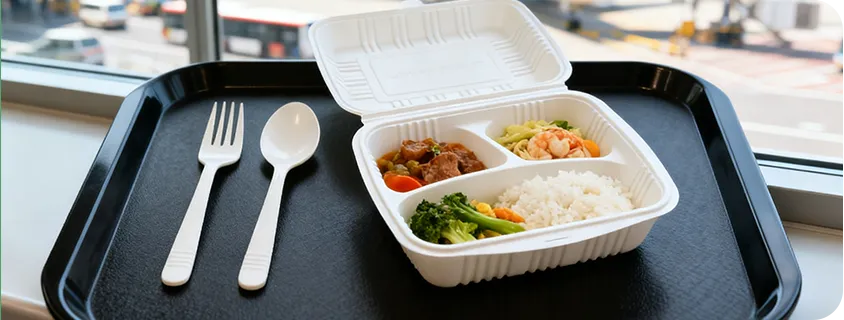
To further accelerate the packing process, clamshell lunch boxes feature an integrated hinged lid. This design allows for rapid, one-handed closing by kitchen staff. Furthermore, clamshells eliminate the need to purchase, inventory, and match separate lids and bases, drastically simplifying the supply chain and ensuring highly convenient transportation for delivery platforms.
Multi-Compartment Engineering for Complex Meals
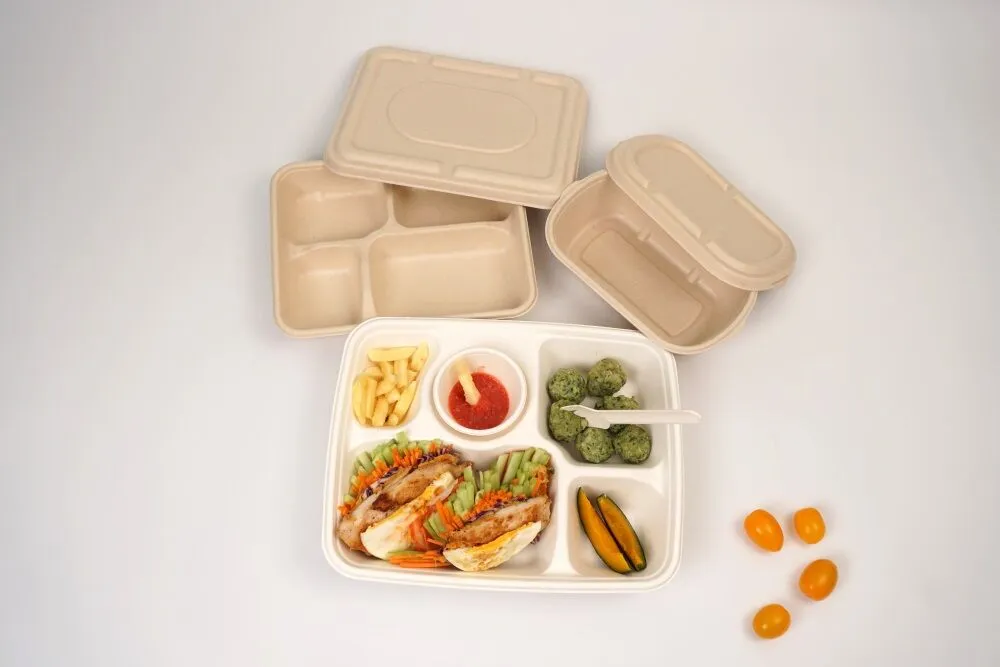
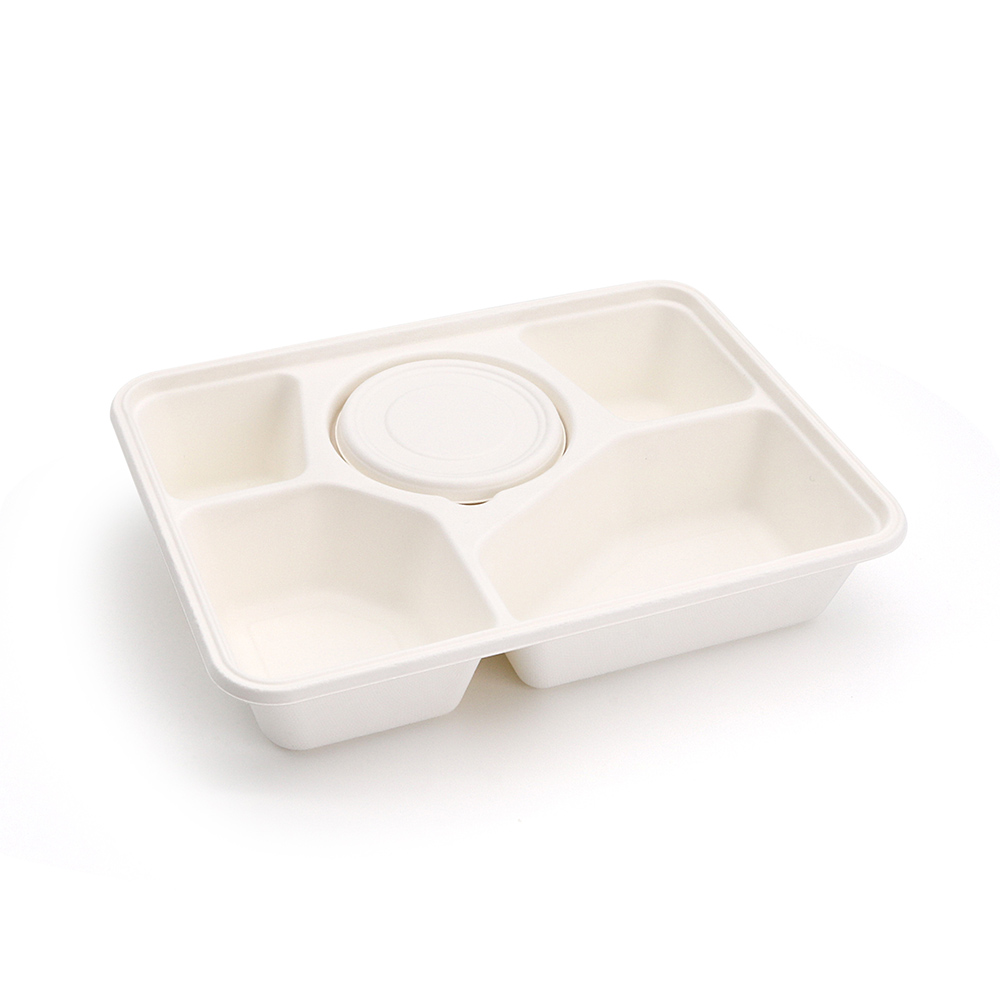
Asian restaurants, bento businesses, and meal preparation companies face a different challenge: they must serve complex meals with distinct flavor profiles in a single package. Multi-compartment lunch boxes (typically 2-3 sections) are engineered with rigid internal dividers that physically separate different foods. This design completely prevents wet sauces from mixing with dry rice or fried side dishes, maintaining the chef’s intended flavor and texture. By improving meal organization, multi-compartment containers significantly elevate the visual food presentation of restaurant combo meals and premium bento deliveries.
4. Assess Heat and Leak Resistance for Takeaway Reliability
Takeaway food delivery subjects packaging to severe mechanical kinetic stress and extreme thermal fluctuations. Reliable restaurant food containers must feature engineered leak resistance to handle saucy dishes, alongside exceptional heat resistance to withstand hot meals, microwave reheating, and temperature changes during transit.
Leak Prevention for Liquid-Heavy Meals
For takeaway restaurants and online food delivery operations, long-distance delivery is the ultimate stress test. A container holding curry, noodles, or soup-based meals is subjected to sudden stops, vibrations, and lateral tilting. If the packaging lacks strict dimensional tolerances and secure lid designs, leakage is inevitable. Transit leaks result in ruined orders, immediate customer complaints, and a poor delivery experience that permanently damages the restaurant’s reputation. High-quality biodegradable lunch boxes feature precision-molded snap-fit closures that create a mechanical seal, locking liquids safely inside the container.
Thermal Stability and Oil Resistance
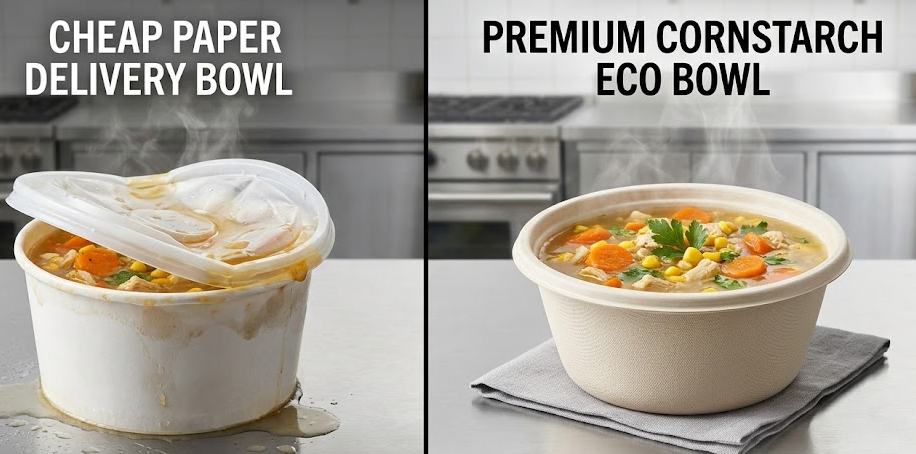
Beyond physical seals, the material itself must withstand the chemical and thermal assault of hot food. Many inferior eco-friendly materials melt, warp, or become soggy when exposed to high heat and heavy cooking oils. Premium corn starch takeaway containers are engineered to deliver robust heat resistance and oil resistance. They remain structurally stable when packed with steaming hot meals and are designed to safely accommodate microwave reheating by the end consumer. Additionally, advanced formulations support freezer environments, making them highly versatile for cloud kitchen operations that require cold storage before rapid heating and dispatch.
5. Leverage OEM Customization for Restaurant Chains
Generic packaging diminishes the perceived value of premium restaurant meals and represents a missed marketing opportunity. Chain restaurants and food brands must partner with suppliers that offer extensive OEM customization, including custom logos, proprietary mold designs, and private label packaging to ensure brand consistency across all franchise locations.
Brand Consistency and Private Labeling
For restaurant chains and growing food brands, packaging is not merely a transport vessel; it is a critical medium for brand display. Regional restaurant franchises require standardized packaging to ensure that a customer ordering in one city receives the exact same unboxing experience as a customer in another. Relying on standard off-the-shelf catalog items makes a brand indistinguishable from competitors on crowded delivery apps.
Custom Molds and Size Configurations
An elite packaging supplier provides deep OEM customized biodegradable lunch boxes. This process goes beyond simple logo printing. It includes the development of a custom mold to achieve a customized size or a highly specific multi-compartment layout tailored exactly to a signature menu item. By integrating a custom logo and developing private label packaging, food brands can seamlessly align their physical delivery presentation with their corporate identity, reinforcing brand loyalty with every order.
6. Verify Reliable Bulk Supply for Uninterrupted Operations
Supply chain interruptions immediately halt restaurant delivery operations and cause severe, unrecoverable revenue losses. To maintain continuous service, B2B buyers must secure a factory-direct supply that guarantees stable production capacity, consistent batch quality, and robust bulk order support for long-term operations.
Factory-Direct Wholesale Advantages
When restaurants or catering companies source packaging through third-party trading intermediaries, they expose themselves to immense risks regarding inventory stability and hidden price markups. Wholesale biodegradable lunch boxes for restaurants must be sourced through a factory-direct supply model. Dealing directly with the manufacturer ensures transparent communication, better pricing controls, and priority production scheduling during peak seasonal demand.
Consistent Quality for Long-Term Partnerships
B2B procurement is rarely about a single transaction; the core focus is establishing a long-term supply relationship. Restaurant owners and catering suppliers require a partner with stable production capacity capable of executing bulk orders without a drop in quality. If batch one features tight, leak-proof lids, but batch ten is loose and warped, the restaurant bears the operational fallout. A reliable manufacturer implements stringent quality control protocols across their independent production facilities, guaranteeing that every single container meets exact commercial specifications.
7. Why Restaurants Partner with Hfenggreen for Eco-Friendly Packaging
Hfenggreen has engineered its product lines and manufacturing infrastructure specifically to solve the performance, branding, and logistical challenges faced by modern food service enterprises.
Engineered for Real Restaurant Operations
We understand that procurement managers do not buy packaging simply because it is eco-friendly; they demand packaging that performs flawlessly under pressure. Hfenggreen’s biodegradable lunch boxes combine sustainability with elite commercial performance. Our corn starch-based takeaway containers deliver exceptional leak-proof performance, oil resistance, and heat resistance. Whether supplying fast food joints requiring clamshells, Asian restaurants needing 3-compartment bento boxes, or catering companies requiring massive 1200ml containers, our products ensure delivery reliability across all food types.
Comprehensive Wholesale and Customization Solutions
Hfenggreen operates with independent production facilities, providing the stable production capacity required by global restaurant chains, importers, and packaging distributors. We eliminate the friction of dealing with multiple vendors by offering multiple sizes and designs from a single, reliable source. Furthermore, our deep OEM customization support—covering everything from custom logos to bespoke container shapes—empowers restaurants to build a sustainable brand image that resonates with today’s environmentally conscious consumers.
Conclusion
Selecting the appropriate biodegradable lunch boxes is a strategic decision that directly impacts a restaurant’s operational efficiency, customer satisfaction, and brand equity. By shifting focus away from cheap, traditional plastics and rigorously evaluating a container’s material stability, volumetric capacity, compartment design, and thermal resistance, restaurants can completely eliminate transit leaks and elevate their food presentation. Partnering with a factory-direct manufacturer that provides extensive OEM customization and stable wholesale supply ensures that food service businesses can confidently scale their delivery operations while meeting modern sustainability expectations.
Looking for reliable biodegradable lunch boxes for your restaurant or takeaway business? Hfenggreen provides cornstarch-based takeaway containers with multiple sizes, custom designs, and wholesale supply solutions for food service businesses worldwide. Contact us today to request samples and secure a factory-direct quotation for your next bulk order.
FAQ
What are the main benefits of using biodegradable lunch boxes for my restaurant?
Biodegradable lunch boxes, specifically those made from plant-based corn starch, help restaurants drastically reduce their reliance on traditional plastics. They elevate your sustainable brand image, ensure compliance with tightening environmental regulations, and deliver commercial-grade heat, water, and oil resistance without creating long-term landfill waste.
How do I choose the right size takeaway containers for my restaurant menu?
You should map the container’s volumetric capacity to your specific food portions. Use small sizes (under 700ml) for snacks and side dishes, medium sizes (700-1000ml) for standard takeaway meals like rice bowls or pasta, and large sizes (1000ml+) for family portions and heavy catering meals.
Why are clamshell lunch boxes recommended for fast food businesses?
Clamshell designs feature a built-in hinged lid, which allows kitchen staff to close the package rapidly with one hand. This maximizes packing speed in fast-paced environments, reduces the inventory hassle of buying separate lids and bases, and ensures secure, convenient transportation.
Can compostable lunch boxes for food delivery services handle hot and liquid-heavy foods?
Yes. High-quality corn starch takeaway containers are engineered with strict dimensional tolerances to provide excellent leak resistance, making them safe for saucy dishes, curries, and noodles. They also feature high heat resistance, safely accommodating hot meals and microwave reheating without warping or melting.
Does Hfenggreen offer OEM customization for growing restaurant chains?
Absolutely. We provide comprehensive OEM customization for restaurant brands. This includes creating custom molds for unique container sizes or compartment layouts, integrating your custom logo, and designing private label packaging to maintain brand consistency across all your franchise locations.
How does working with a wholesale biodegradable lunch box supplier improve my operations?
Partnering with a factory-direct wholesale supplier like Hfenggreen guarantees reliable bulk supply capability. It ensures stable production capacity, consistent batch quality, and eliminates the risk of stockouts or supply chain interruptions, allowing your restaurant to maintain smooth, uninterrupted delivery operations.