Unreliable takeaway packaging leads to severe operational headaches, from spilled curries ruining orders to deformed containers causing immediate customer complaints and permanent brand damage. Ignoring the structural integrity of your packaging practically guarantees high refund rates. To choose the right takeaway packaging supplier, food delivery companies must rigorously evaluate leak-proof engineering, commercial-grade thermal resistance, factory-direct bulk production capacity, and sustainable material compliance.
Table of Contents
- Evaluate Leak-Proof Engineering for Transit Security
- Assess Thermal Stability for Hot and Cold Delivery
- Verify Factory-Direct Bulk Supply Capabilities
- Prioritize Sustainable and Food-Safe Materials
- Examine OEM Customization and Brand Integration
- Calculate Total Cost Efficiency vs. Unit Price
- Why Food Delivery Platforms Partner with Hfenggreen
1. Evaluate Leak-Proof Engineering for Transit Security
For food delivery platforms and restaurant operations, physical transit represents the highest risk phase for any meal. The kinetic energy from delivery vehicles quickly exposes poorly manufactured containers, making leak prevention the most critical performance metric.
A reliable takeaway packaging supplier must provide containers engineered with tight dimensional tolerances, offering superior sealing mechanisms and intrinsic oil and water resistance to completely prevent leaks during rough transportation.
Structural Integrity and Sealing Mechanisms
In high-frequency delivery environments, a container is subjected to stacking pressure, sudden stops, and lateral vibrations. Standard clamshells or poorly molded lids easily pop open under these conditions. Professional disposable food container manufacturers invest heavily in precision thermoforming tooling. This ensures the lid and the base feature an exact interference fit—often machined to tolerances of ±0.1mm. This mechanical lock prevents the capillary action of thin, hot liquids, ensuring that soups, sauces, and dressings remain securely inside the bowl or lunch box from the restaurant kitchen to the consumer’s dining table.
Oil and Liquid Resistance Testing
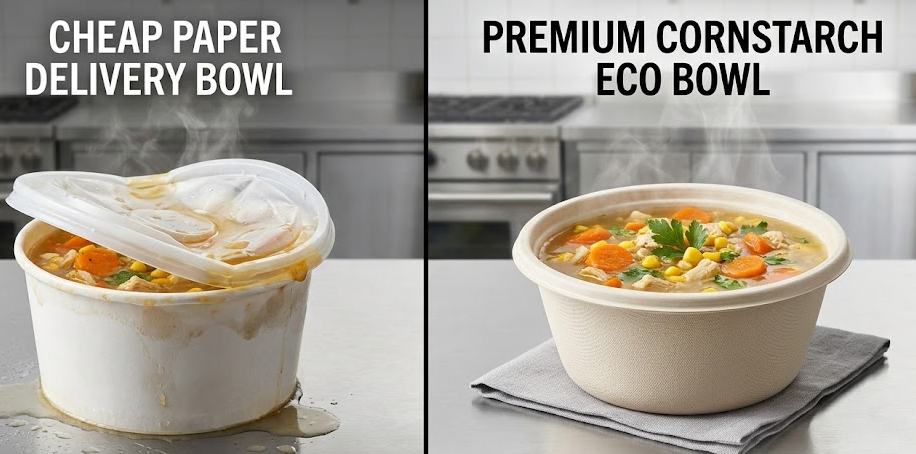
Beyond the physical seal, the structural material itself must repel moisture and grease. Conventional paper containers require synthetic plastic linings to prevent them from turning into a soggy, collapsing mess when exposed to hot oils. Advanced biodegradable takeaway packaging utilizes a dense, non-porous plant-based matrix that is inherently water-resistant and oil-resistant. This intrinsic barrier ensures the container maintains its compressive strength and rigidity, preventing the tragic scenario of a container bottom falling out as the customer lifts it from the delivery bag.
2. Assess Thermal Stability for Hot and Cold Delivery
Food delivery menus are incredibly diverse, requiring packaging that acts as an effective insulator while maintaining physical form under extreme temperature fluctuations. A container that melts or warps destroys the food presentation and raises serious safety concerns.
High-performance takeaway food containers must demonstrate extreme thermal stability, safely withstanding hot food applications up to approximately 125°C without deformation, while also supporting freezer storage down to around -5°C.
High-Temperature Performance
Many early-generation bioplastics (like standard PLA) fail spectacularly in commercial delivery because their heat deflection temperature is often as low as 40°C. When a freshly cooked meal or boiling soup is poured in, these containers warp, shrink, and lose their lid seal. A specialized compostable food container supplier engineers its products—such as cornstarch tableware—to withstand high thermal loads. With stability up to approximately 125°C, these containers remain rigid and secure, allowing for safe handling by kitchen staff immediately after packing and ensuring safe transportation. They also securely accommodate microwave food applications for end-consumers reheating leftovers.
Cold-Chain and Freezer Applications
While hot food is the primary concern for delivery apps, cloud kitchens and meal prep companies also require packaging suitable for refrigeration and freezing. The takeaway packaging must feature a functional freezer performance down to approximately -5°C. At this temperature, inferior plastics and low-grade bioplastics become highly brittle, shattering upon minor impacts during transit. High-quality cornstarch packaging retains its tensile strength in cold environments, making it a highly versatile solution for both hot restaurant delivery and cold meal-prep distribution.
3. Verify Factory-Direct Bulk Supply Capabilities
Ghost kitchens and delivery platforms consume packaging at an astonishing rate. A disruption in the packaging supply chain instantly halts a kitchen’s ability to generate revenue. Sourcing from intermediaries introduces unacceptable risks regarding inventory stability.
Delivery platforms must partner with a factory-direct takeaway packaging supplier maintaining a production facility of at least 10,000 square meters and a monthly capacity exceeding 300 tons to ensure continuous, high-frequency replenishment.
Manufacturing Capacity and Scale
When evaluating a disposable tableware wholesale supplier, the physical scale of their manufacturing operation is the primary indicator of reliability. A facility boasting over 10,000 square meters is capable of housing multiple automated extrusion and molding lines. A proven production capacity of up to 350 tons per month means the manufacturer can absorb the massive volume requirements of national food delivery platforms without lead-time blowouts. Factory-direct wholesale supply eliminates the middleman, granting buyers direct visibility into production schedules and prioritized allocation during peak seasonal demand.
Cloud Kitchen and High-Frequency Replenishment
Cloud kitchens (or ghost kitchens) operate on hyper-efficient, space-constrained models. They cannot warehouse months of packaging inventory; they rely on rapid, bulk ordering capabilities and fast replenishment. A high-capacity bulk takeaway containers supplier supports these operations by maintaining stable raw material inventories and offering predictable, standardized delivery schedules. This allows delivery-only kitchens to maintain high output without tying up crucial capital and physical space in packaging stockpiles.
4. Prioritize Sustainable and Food-Safe Materials
As consumer awareness and municipal regulations increasingly target single-use plastics, food delivery brands are under intense pressure to upgrade to environmentally responsible packaging. However, this transition cannot compromise food safety or functional performance.
Procurement teams must prioritize suppliers offering compostable biodegradable tableware made from non-GMO, plant-based materials like cornstarch, which meet strict food-contact safety standards while drastically reducing plastic dependence.
Non-GMO Cornstarch Bio-Composites
The modern solution for an eco-friendly food packaging manufacturer lies in advanced bio-composites. By utilizing non-GMO cornstarch—a renewable plant-based material—manufacturers can create a highly durable polymer matrix that acts as a direct alternative to conventional plastic packaging. This material provides the environmental benefit of being an industrially compostable biodegradable solution, aligning perfectly with the sustainable brand positioning that modern consumers demand from their favorite food delivery apps and meal brands.
Compliance and Environmental Positioning
Beyond sustainability, material safety is absolute. The chosen takeaway food container supplier must provide comprehensive documentation proving that their materials are strictly food-contact suitable. This means comprehensive testing to ensure no toxic chemicals, heavy metals, or harmful PFAS migrate into the food, especially under the high-heat, high-acidity conditions typical of restaurant meals. A compliant supplier protects the food delivery company from regulatory fines and consumer health liabilities.
5. Examine OEM Customization and Brand Integration
In the highly competitive food delivery ecosystem, the physical packaging is often the only tangible interaction a customer has with a restaurant or meal delivery company. Generic containers are a missed opportunity for brand reinforcement.
An expert OEM food packaging supplier provides end-to-end customization, including the development of custom molds for specific menu items, precise dimensional scaling, and brand logo integration to enhance customer unboxing experiences.
Custom Tooling for Meal-Specific Designs
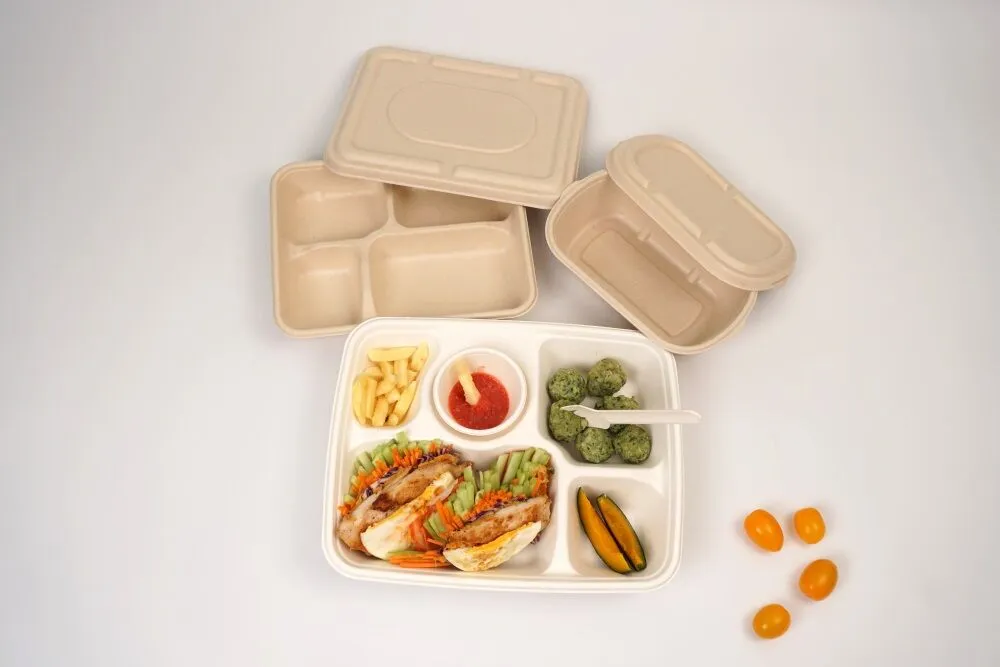
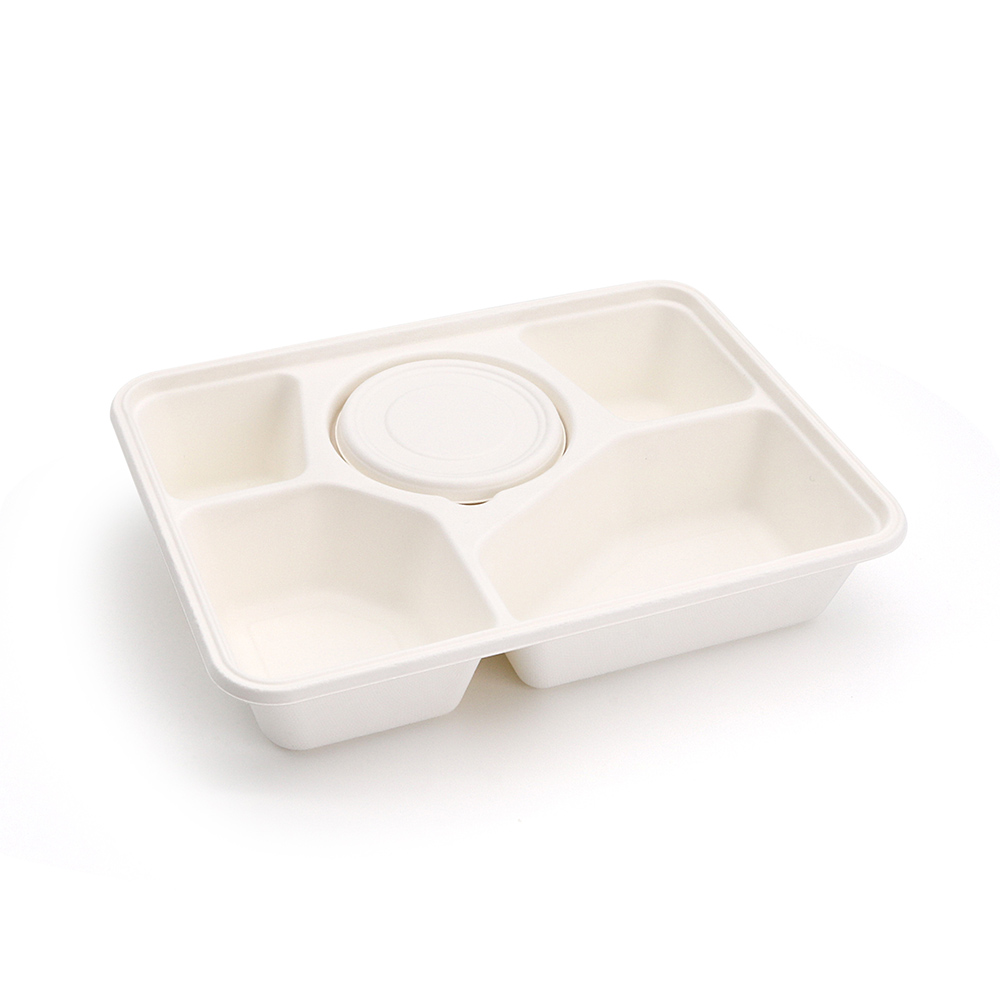
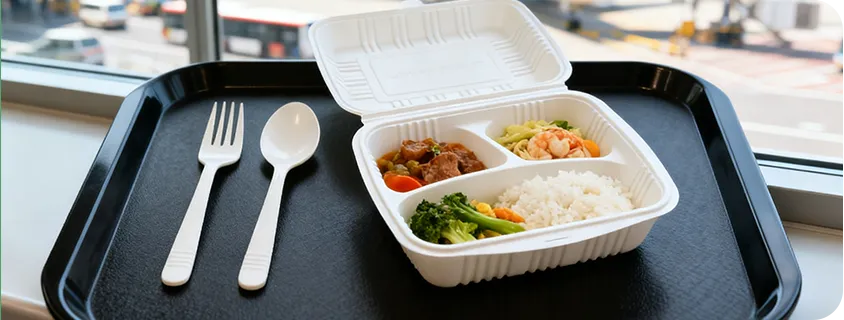
Different cuisines require specific structural solutions. A sushi platter, a multi-component Indian thali, and a towering gourmet burger all require distinct spatial footprints. A specialized disposable food container manufacturer possesses in-house tooling and R&D capabilities to develop custom sizes and multi-compartment food containers. This allows delivery operations to perfectly portion meals, keeping wet sauces separate from crispy fried items, thereby dramatically elevating the food quality upon arrival.
Private Label and Brand Printing
For growing food brands and established delivery platforms, private label packaging is a critical marketing tool. A capable OEM packaging supplier offers comprehensive branding services, including custom logo embossing on container lids and tailored outer carton packaging for streamlined warehouse logistics. By matching the packaging to the brand’s visual identity, delivery companies build stronger brand recognition and encourage repeat orders.
6. Calculate Total Cost Efficiency vs. Unit Price
A common pitfall for procurement teams is selecting a takeaway packaging supplier based solely on the lowest quoted unit price per container, completely ignoring the catastrophic hidden costs of packaging failure.
Professional buyers evaluate the total cost of ownership by factoring in the financial impact of delivery failures, replacement meals, and poor stacking efficiency, rather than exclusively selecting the lowest wholesale unit price.
Calculating the Cost of Packaging Failures
If a cheap container deforms under the heat of a meal or leaks oil onto a customer’s porch, the delivery company incurs immediate financial losses. They must refund the original order, cover the cost of a replacement meal, pay the delivery driver a second time, and suffer the long-term loss of customer lifetime value (LTV) due to a negative experience. When factoring in these replacement costs, “cheap” packaging quickly becomes the most expensive line item on a P&L statement. Investing in engineered leak-proof, heat-resistant packaging drastically reduces customer complaints and lowers overall operational costs.
Supplier Evaluation Matrix
| Technical Criteria | Standard Trading Company (Low-Cost) | Direct Manufacturer (e.g., Hfenggreen) | Impact on Delivery Operations |
| Leak-Proof Engineering | Poor tolerances; frequent loose lids. | Precision molds (±0.1mm); exact snap-fit seals. | Prevents transit spills, protecting brand reputation. |
| Thermal Resistance | Warps or melts above 50°C. | Stable up to 125°C; freezer safe to -5°C. | Safe for boiling soups and hot deliveries. |
| Supply Capacity | Inconsistent; relies on 3rd party output. | 350 tons/month; 10,000+㎡ facility. | Eliminates stockouts for high-volume ghost kitchens. |
| Material Safety | Unverified origins; potential plasticizers. | Non-GMO cornstarch; certified food-contact safe. | Ensures regulatory compliance and consumer safety. |
| Customization (OEM) | Catalog items only; high MOQs for custom. | In-house tooling; custom molds and brand printing. | Supports unique menu designs and brand identity. |
7. Why Food Delivery Platforms Partner with Hfenggreen
Hfenggreen has engineered its production capabilities specifically to resolve the thermal, structural, and supply-chain challenges faced by the global food delivery sector.
Hfenggreen operates a 10,000+㎡ factory producing up to 350 tons monthly of leak-proof, heat-resistant (125°C), biodegradable cornstarch packaging specifically engineered for the high-volume demands of global food delivery companies.
Engineered for the Delivery Ecosystem
We understand that packaging is the backbone of the delivery experience. Hfenggreen provides specialized biodegradable tableware solutions designed as superior alternatives to conventional plastics. Our product line—featuring disposable lunch boxes, multi-compartment food containers, soup bowls, and cutlery sets—is water-resistant, oil-resistant, and features advanced leak-resistant designs. With reliable temperature resistance up to approximately 125°C, our containers maintain their structural integrity regardless of the meal type, ensuring that hot food arrives looking exactly as the chef intended.
Scalable Wholesale Solutions
Whether supplying independent restaurant delivery operations, rapid-growth cloud kitchens, or national food delivery platforms, Hfenggreen provides unparalleled manufacturing scale. Our factory-direct wholesale supply model, backed by a massive 350-ton monthly capacity, guarantees that our B2B partners never face a packaging shortage. Coupled with our comprehensive OEM and customized packaging support, we provide food delivery businesses with the reliable, sustainable, and high-performance foundation they need to scale operations profitably.
Conclusion
Selecting the correct takeaway packaging supplier is a strategic decision that directly influences a food delivery company’s operational efficiency, customer satisfaction rates, and long-term profitability. By shifting focus away from raw unit costs and prioritizing suppliers that offer precision leak-proof engineering, 125°C thermal stability, massive factory-direct bulk supply capabilities, and verified sustainable materials, delivery operators can eliminate the hidden costs of packaging failures.
Ready to upgrade your food delivery packaging and eliminate customer complaints?
Contact the manufacturing experts at Hfenggreen today to discuss technical requirements, request physical samples for transit testing, or receive a customized, factory-direct quotation for your high-volume operations.
FAQ
What makes cornstarch a good material for food delivery packaging?
Cornstarch is a renewable, plant-based material that, when engineered into a bio-composite, offers incredible structural rigidity and natural oil and water resistance. It acts as an industrially compostable alternative to conventional plastic, providing heavy-duty performance without environmental guilt.
Can your takeaway food containers handle boiling hot soups and curries?
Yes. Hfenggreen’s cornstarch takeaway containers are engineered for extreme thermal stability, safely withstanding temperatures up to approximately 125°C. This ensures they will not melt, warp, or lose their lid seal when transporting hot, liquid-heavy meals.
How does Hfenggreen prevent containers from leaking during delivery?
We utilize high-precision thermoforming machinery that creates exact dimensional tolerances between the container base and lid. This engineered interference fit ensures a tight mechanical seal that locks in liquids, preventing spills even during rough transit conditions.
Do you have the capacity to supply national cloud kitchen networks?
Absolutely. We operate a massive 10,000+ square meter production facility with a manufacturing capacity of up to 350 tons per month. This factory-direct bulk supply capability allows us to seamlessly support the high-frequency replenishment needs of large-scale cloud kitchens.
Can you provide customized packaging designs for our specific meal types?
Yes. As an expert OEM food packaging supplier, we offer comprehensive customization support. We can develop custom molds for multi-compartment layouts, unique container sizes, and integrate private label brand printing to align perfectly with your restaurant’s identity.
Are these biodegradable containers safe for direct food contact?
Yes, all our eco-friendly food packaging solutions are manufactured using non-GMO, plant-based materials under strict, quality-controlled processes. They are fully compliant with international food-contact safety standards, ensuring zero harmful chemical migration.