For food packaging distributors, inconsistent supplier quality and delayed shipments directly cause lost wholesale contracts and severe brand damage. Ignoring the rigorous vetting of a factory’s true capabilities leads to catastrophic supply chain failures. To find a reliable disposable tableware manufacturer, distributors must rigorously evaluate production capacity, OEM customization capabilities, commercial-grade material performance, and factory-direct pricing structures.
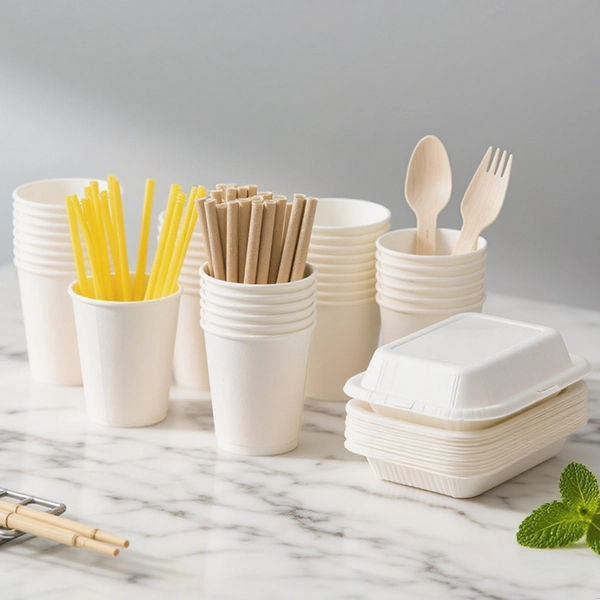
Table of Contents
- Evaluate Stable Factory Supply and Production Capacity
- Assess Material Performance and Foodservice Suitability
- Verify OEM and Private Label Customization Support
- Analyze Wholesale Pricing vs. Total Supply Chain Value
- Implement Strict Quality Control and Compliance Checks
- Capitalize on the Sustainable Packaging Market Shift
- Why Distributors Choose Hfenggreen for Wholesale Supply
1. Evaluate Stable Factory Supply and Production Capacity
In the wholesale distribution sector, supply interruptions immediately translate to lost revenue. Distributors acting as the bridge between manufacturers and large foodservice operators cannot afford unexpected stockouts during peak seasonal demand.
A reliable disposable tableware manufacturer must maintain a minimum monthly production capacity of 300 tons and operate a facility exceeding 10,000 square meters to guarantee stable inventory supply and prevent disruptions for wholesale distributors.
Facility Scale and Automation Capabilities
When evaluating a potential disposable tableware supplier for distributors, the physical scale of the manufacturing infrastructure is the primary indicator of reliability. A world-class factory typically encompasses over 10,000 square meters, providing ample space for highly automated extrusion lines, heavy-duty thermoforming presses, and dedicated automated trimming stations. For example, a proven output capacity of up to 350 tons per month ensures that the manufacturer can run continuous shifts. This immense scale allows the factory to fulfill multiple international 40HQ container orders simultaneously, ensuring that wholesale distributors receive their bulk shipments exactly on schedule, without lead-time blowouts.
Mitigating Inventory and Logistics Risks
Relying on smaller factories or trading intermediaries introduces severe supply chain vulnerabilities. A direct manufacturer with a massive production footprint maintains strategic buffers of raw materials. By securing consistent supplies of non-GMO cornstarch resin and plant-based polymers, the factory insulates its distributor partners from sudden raw material shortages in the broader market. Furthermore, this factory-direct model provides distributors with highly transparent production schedules, enabling precise inventory management and reliable replenishment planning for their downstream restaurant and catering clients.
2. Assess Material Performance and Foodservice Suitability
Distributors supply a wide variety of clients, from fast-food chains requiring leak-proof takeaway boxes to large-scale catering companies needing durable food trays. The physical performance of the packaging under commercial stress is non-negotiable.
Commercial-grade disposable food containers must provide extreme thermal stability from -5°C to 125°C and feature inherent oil and water resistance to prevent leaks during demanding restaurant delivery and catering applications.
Thermal Resistance for Hot and Cold Applications
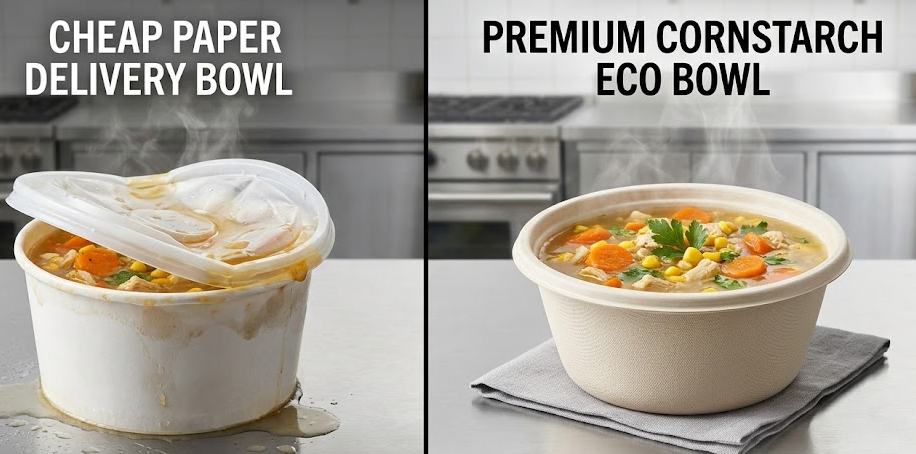
A common failure point for inferior bioplastics, such as standard PLA, is a low heat deflection temperature, causing containers to warp or melt when exposed to foods hotter than 50°C. Professional wholesale disposable tableware manufacturers engineer advanced cornstarch-based composites capable of withstanding severe temperature fluctuations. These robust containers offer heat resistance up to approximately 125°C, making them perfectly safe for holding boiling soups, freshly fried foods, and heavy sauces without losing structural integrity. Additionally, these materials must exhibit freezer use down to approximately -5°C, catering to distributors who supply meal-prep companies and cold-chain foodservice operations.
Liquid and Oil Barrier Properties
A leaking container is the fastest way for a restaurant to lose a customer, which in turn causes the restaurant to drop their packaging distributor. To prevent this, the disposable tableware must possess exceptional water-resistant and oil-resistant properties. High-quality cornstarch tableware achieves this intrinsically through its dense polymer matrix, eliminating the need for toxic chemical liners or PFAS coatings. This stable structure ensures that the packaging remains rigid and secure during transit, absorbing shock and preventing spills in high-frequency foodservice environments.
3. Verify OEM and Private Label Customization Support
To remain competitive and protect their profit margins, many distributors are aggressively expanding their own private label product lines rather than exclusively selling generic packaging.
An expert OEM disposable tableware supplier must offer complete private label solutions, including 3D product design, custom mold development, and customized retail packaging to help distributors differentiate their product lines.
Proprietary Mold Development and Prototyping
A distributor looking to capture a specific niche—such as specialized bento boxes for sushi chains or highly ventilated containers for fried chicken franchises—requires a manufacturer with an advanced in-house R&D tooling department. The OEM customization process must be comprehensive: beginning with precise specification confirmation via CAD modeling, moving to rapid prototype mold development, and executing rigorous physical sampling. Once the distributor approves the structural integrity and dimensional tolerances (often down to ±0.1mm for secure lid fitting), the manufacturer transitions to high-volume mass production molds.
Brand Differentiation and Retail Packaging
Beyond the physical shape of the container, retail and private label distributors require extensive branding options. A capable disposable food container factory provides tailored packaging solutions, such as custom-printed outer cartons, branded inner sleeves, and logo embossing directly on the container lids. By partnering with a factory that supports flexible customization, distributors can build stronger brand recognition, command higher profit margins, and offer unique, value-added products that competitors utilizing off-the-shelf catalog items cannot match.
4. Analyze Wholesale Pricing vs. Total Supply Chain Value
Procurement managers at distribution firms often make the critical error of selecting a supplier based solely on the lowest initial quote per unit. This strategy consistently backfires when hidden costs emerge.
Distributors must evaluate the total purchasing value—balancing factory-direct wholesale pricing against defect rates, delivery reliability, and communication efficiency—rather than solely selecting the lowest initial unit price.
Factory-Direct Cost Control
Working with a bulk disposable food packaging supplier that operates its own factory inherently reduces middle costs. Trading companies add opaque margins and lack the authority to optimize production efficiency. A factory-direct relationship gives distributors access to highly competitive wholesale pricing based on actual raw material and manufacturing costs. This pricing transparency allows distributors to forecast their own pricing models accurately and secure better margin potential when negotiating long-term contracts with major catering companies or restaurant groups.
Supplier Evaluation Matrix for Distributors
| Evaluation Criteria | Standard Trading Intermediary | Factory-Direct Manufacturer (e.g., Hfenggreen) | Impact on Distributor Business |
| Pricing Structure | High markups; unpredictable cost changes. | Factory-direct pricing; transparent cost control. | Maximizes distributor profit margins and contract competitiveness. |
| Supply Capacity | Limited; prone to severe seasonal delays. | 350+ tons/month; 10,000+㎡ automated facility. | Eliminates stockouts; ensures continuous wholesale supply. |
| Product Performance | Low thermal tolerance; high leakage rates. | Stable up to 125°C; oil and water-resistant. | Prevents restaurant client churn due to packaging failures. |
| Customization (OEM) | Generic catalog items; high 3rd-party mold fees. | In-house CAD design, tooling, and private labeling. | Enables the launch of highly profitable proprietary brands. |
| Total Value | Low upfront price, high hidden failure costs. | Excellent wholesale pricing with zero defect costs. | Secures long-term, profitable B2B supply chain operations. |
5. Implement Strict Quality Control and Compliance Checks
For wholesale distributors, a single defective batch can result in the loss of a major restaurant supply contract. Quality consistency across millions of units is the foundation of a successful packaging distribution business.
A qualified disposable food container factory implements rigorous quality-controlled manufacturing processes, testing dimensional tolerances and material safety to ensure consistent batch quality for food-grade commercial applications.
In-Process Quality Assurance (IPQA)
A reliable biodegradable tableware supplier does not wait until a product is finished to inspect it. They deploy comprehensive quality inspection procedures at every stage of the manufacturing process. This begins with testing the moisture content and purity of the incoming renewable plant-based raw materials. During thermoforming, automated sensors monitor temperature and pressure to ensure uniform wall thickness across every single lunch box and soup bowl. Post-production, physical stress tests are conducted—including drop tests, crush resistance analysis, and lid-seal tension checks—to guarantee that the final product meets strict commercial foodservice standards.
Material Safety and Regulatory Standards
Distributors bear the legal and reputational risk if the packaging they supply contaminates food. Therefore, verifying the manufacturer’s compliance background is essential. The factory must provide documentation proving that their products are manufactured using 100% food-grade material suitable for commercial food applications. The materials must be certified free from heavy metals, toxic plasticizers, and harmful chemicals, ensuring completely safe usage across all restaurant and catering supply chains.
6. Capitalize on the Sustainable Packaging Market Shift
Driven by evolving consumer preferences and strict municipal bans on single-use plastics, foodservice operators are demanding sustainable packaging alternatives. Distributors must adapt their product portfolios to capture this rapidly expanding market.
Partnering with a biodegradable tableware supplier that utilizes non-GMO cornstarch allows distributors to capture the growing eco-friendly market by offering sustainable, plastic-replacement solutions that meet environmental standards.
Bio-Composites and Cornstarch Engineering
The transition away from traditional petroleum-based plastic packaging requires viable, high-performance alternatives. Cornstarch tableware manufacturers lead this transition by engineering advanced bio-composites. By utilizing non-GMO cornstarch and other renewable plant-based raw materials, these factories produce packaging that offers the heavy-duty physical strength of plastic while providing the environmental benefits of biodegradable and compostable tableware solutions.
Driving Distributor Growth
Distributors that stock comprehensive eco-friendly food packaging lines position themselves as forward-thinking industry leaders. Offering high-quality, plant-based packaging allows distributors to win lucrative contracts with environmentally conscious retail brands, large-scale event caterers, and modern restaurant chains that prioritize sustainable branding.
7. Why Distributors Choose Hfenggreen for Wholesale Supply
Hfenggreen has deliberately engineered its manufacturing infrastructure and product development pipelines to resolve the specific supply, quality, and pricing challenges faced by global food packaging distributors.
Hfenggreen is a premier factory-direct disposable tableware manufacturer offering a 350-ton monthly capacity, robust OEM support, and a comprehensive range of high-performance cornstarch packaging solutions designed for global wholesale distributors.
Unmatched Manufacturing Power
Operating from an expansive production facility covering more than 10,000 square meters, Hfenggreen provides the massive scale that wholesale buyers demand. With a production capacity of up to 350 tons per month, our factory-direct wholesale supply model guarantees stable, continuous inventory. We eliminate the risk of supply interruptions, ensuring that our distributor partners can confidently fulfill massive, high-volume orders for their retail, catering, and restaurant clients worldwide.
A Comprehensive, High-Performance Portfolio
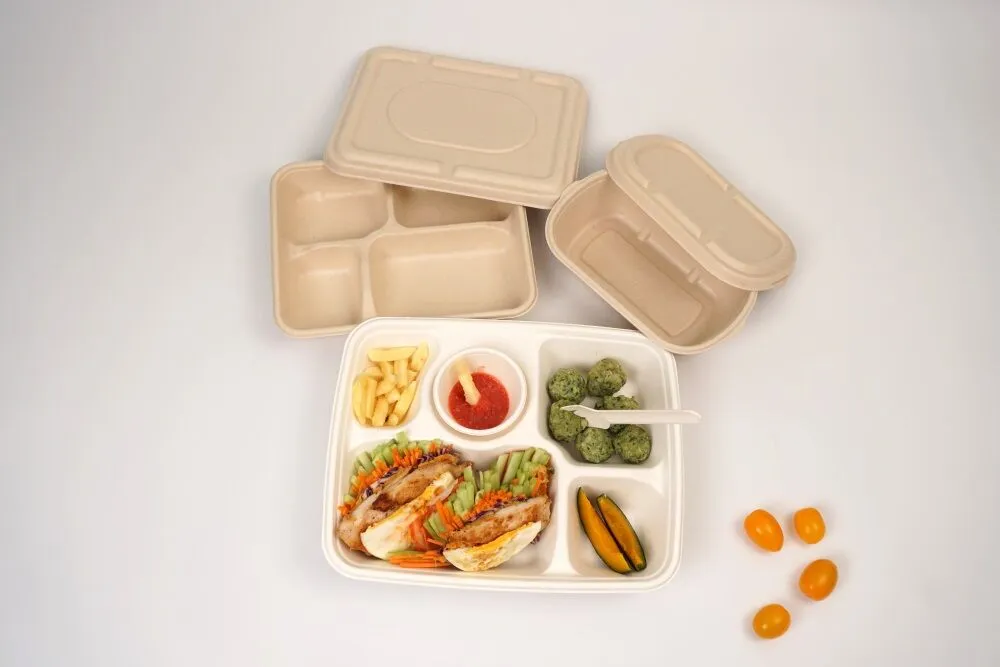
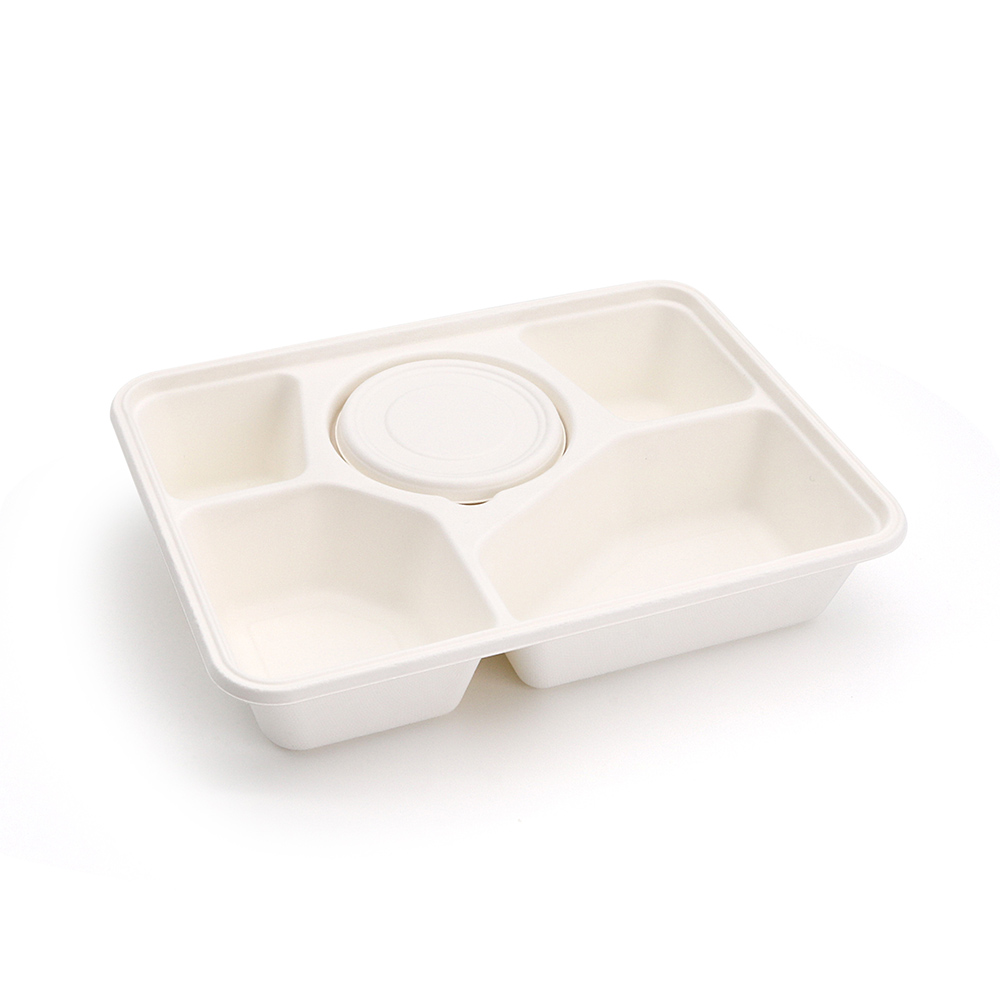
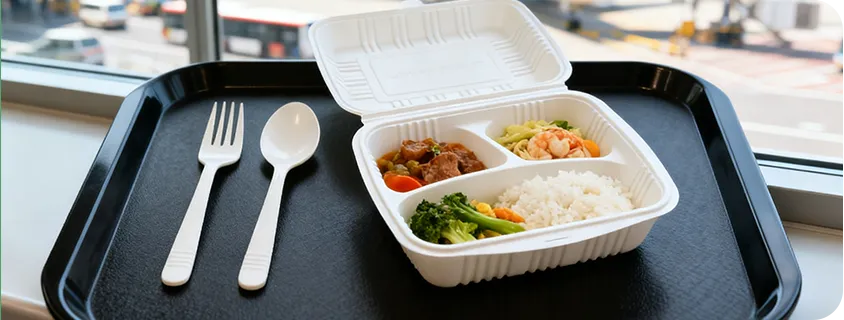
Hfenggreen provides a complete category of disposable tableware, drastically simplifying inventory management for our partners. Our product range includes leak-resistant cornstarch lunch boxes, soup bowls, disposable food containers, cutlery sets, and high-volume catering trays. Engineered for commercial excellence, our food-grade packaging offers remarkable heat resistance up to 125°C, reliable freezer use down to -5°C, and exceptional water and oil-resistant performance. Backed by end-to-end OEM customization support—from custom sizes to private label packaging—Hfenggreen is the ultimate manufacturing partner for distributors seeking long-term cooperation and dominant market growth.
Conclusion
Finding the right disposable tableware manufacturer is the most consequential decision a food packaging distributor will make. By prioritizing suppliers with immense factory-direct production capacity, verifiable commercial-grade thermal performance, rigorous quality control, and deep OEM customization capabilities, distributors can build a highly resilient and profitable supply chain. Partnering with a manufacturer that offers advanced biodegradable solutions ensures that distributors remain highly competitive in an industry rapidly shifting toward sustainable practices.
Ready to strengthen your wholesale packaging supply chain?
Contact the manufacturing specialists at Hfenggreen today to discuss technical specifications, request a comprehensive sample kit for internal evaluation, or receive a highly competitive factory-direct quotation tailored to your bulk distribution requirements.
FAQ
Why should a distributor choose a factory-direct manufacturer over a trading company?
A factory-direct manufacturer offers transparent wholesale pricing by eliminating middleman markups. More importantly, direct factories maintain total control over production schedules and quality assurance, ensuring stable inventory supply, consistent batch quality, and reliable delivery schedules that trading companies simply cannot guarantee.
What is the production capacity of Hfenggreen for wholesale orders?
Hfenggreen operates a massive manufacturing facility exceeding 10,000 square meters. Our automated production lines provide a reliable manufacturing capacity of up to 350 tons per month, easily accommodating continuous, high-volume container orders from international packaging distributors.
Are your cornstarch food containers suitable for heavy, hot restaurant meals?
Yes. Our engineered cornstarch-based materials are designed specifically for demanding foodservice environments. They feature exceptional heat resistance up to approximately 125°C, inherent oil and water resistance, and robust structural stability to prevent leaks during the transportation of heavy, hot meals.
Do you offer OEM and private label services for retail distributors?
Absolutely. We provide end-to-end OEM customization support designed for private label distributors. Our services include specification confirmation, custom mold development for unique container shapes, logo printing, and customized retail packaging to help differentiate your brand in the market.
Are Hfenggreen products environmentally friendly?
Yes. Our entire product line is manufactured using non-GMO cornstarch and renewable plant-based raw materials. They serve as a high-performance, biodegradable, and compostable alternative to traditional petroleum-based plastic packaging, perfectly aligning with global sustainability demands.
How do you ensure consistent product quality across massive wholesale orders?
We implement a highly rigorous, quality-controlled manufacturing process. This includes constant monitoring of material formulation, automated temperature and pressure controls during thermoforming, and extensive post-production physical testing to ensure that every container meets strict commercial food-grade standards.