Selecting the wrong disposable lunch box leads to compromised food presentation, catastrophic leaks during transit, and inflated logistical costs. To choose the right disposable lunch box, food service businesses must match volumetric capacity to portion sizes, select compartment layouts that prevent flavor mixing, and ensure the structural design provides secure stacking and leak-proof delivery.
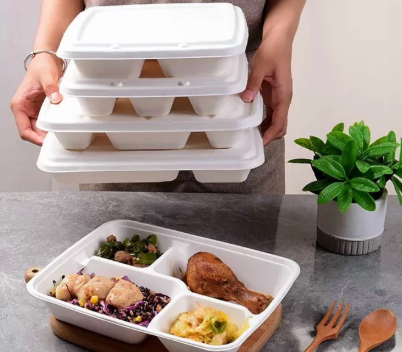
Table of Contents
- Determine Capacity Based on Food Portion and Meal Type
- Select Compartment Layouts to Prevent Flavor Mixing
- Evaluate Structural Design for Delivery and Stacking
- Prioritize Material Safety and Thermal Performance
- Leverage OEM Customization for Brand Identity
- Partner with a Reliable Wholesale Supply Chain
1. Determine Capacity Based on Food Portion and Meal Type
Mismatched container capacity is a frequent operational error. Placing a small meal in a large container causes the food to shift violently during transit, making the portion look inadequate to the customer, while using a container that is too small results in overpacking and lid failure.
To optimize food presentation and packaging costs, businesses must match their menu items to precise volumetric capacities, utilizing 500-700ml for light meals, 800-1000ml for standard takeaways, and 1000-1500ml for large catering portions.
Volumetric Mapping for Food Service
When selecting a disposable lunch box size, procurement managers must evaluate the specific volumetric requirements of their core menu. Standardized capacities not only improve food presentation but also streamline inventory management for restaurant chains and food delivery brands. A professional wholesale disposable lunch box supplier will offer a comprehensive range of sizes to accommodate different dining scenarios from a single source.
Capacity Selection and Application Matrix
| Capacity Range | Structural Suitability | Optimal Food Service Applications | Target Business Types |
| 500-700ml | High space efficiency; single or dual compartment. | Light meals, snacks, small portions, side dishes, desserts. | Fast food, snack bars, side-order packaging. |
| 800-1000ml | Standardized footprint; highly versatile layout options. | Standard takeaway meals, rice dishes, combo meals, pasta. | Restaurants, takeaway brands, cloud kitchens. |
| 1000-1500ml | Heavy-duty structural support; multi-compartment capable. | Large portions, catering meals, family-style sharing platters. | Catering companies, event planners, buffets. |
Operational Impact of Capacity Selection
For high-volume restaurants and takeaway businesses, standardizing around the 700-1000ml range allows for rapid packaging on the prep line. It eliminates the need for kitchen staff to guess which container to use, speeding up operational flow. Conversely, catering companies require 1000ml+ capacities to handle bulk supply efficiently, ensuring that corporate meals and event catering are transported with maximum spatial efficiency.
2. Select Compartment Layouts to Prevent Flavor Mixing
The internal geometry of a food container dictates how the meal is experienced upon unboxing. A lack of proper physical separation results in sauces migrating into dry ingredients, fundamentally ruining the culinary intent of the dish.
Businesses must select compartment designs based on meal complexity: single compartments for unified dishes, 2-3 compartments for bento and combo meals, and multi-compartment structures to separate ingredients in meal prep and catering applications.
Single vs. Multi-Compartment Engineering
The choice of compartment layout directly influences both the cost and the customer experience.
- Single Compartment: These designs maximize internal volume utilization and are the most cost-effective option for high-volume supply. They are ideal for unified meals such as rice bowls, pasta, fried food, and burgers. The lack of internal walls makes them easier to stack and faster to fill on a busy restaurant line.
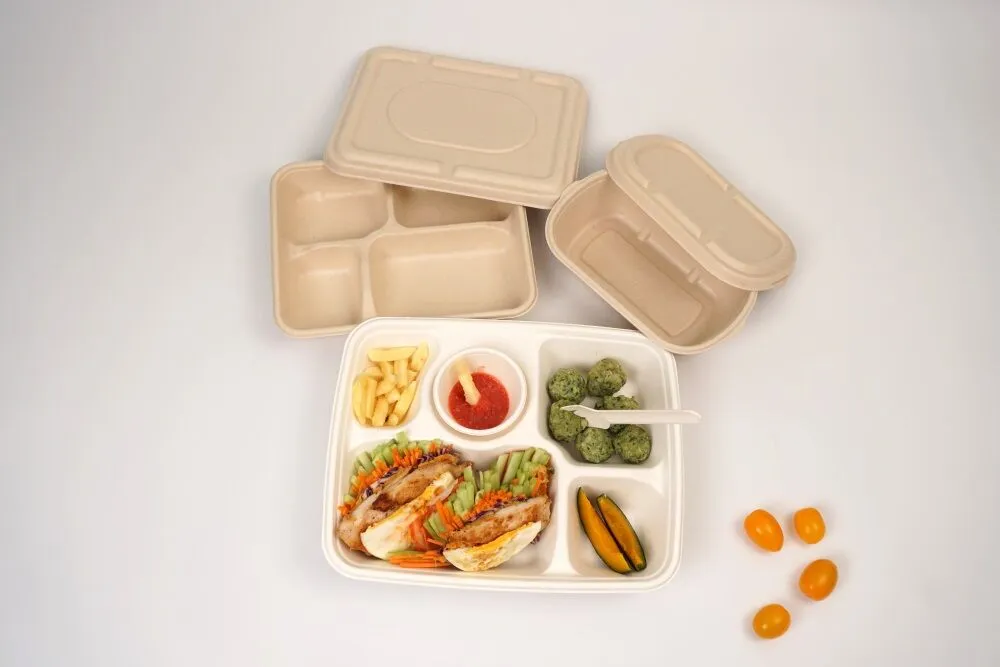
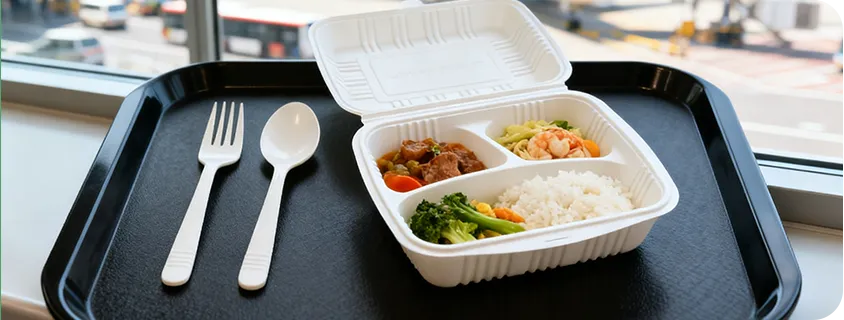
- 2-3 Compartments: Perfect for bento meals, school meals, and standard combination dishes. These layouts are engineered to separate main courses, side dishes, and sauces, entirely preventing flavor mixing. The internal dividers add structural rigidity to the base of the container, preventing the bottom from bowing under the weight of heavy, wet foods.
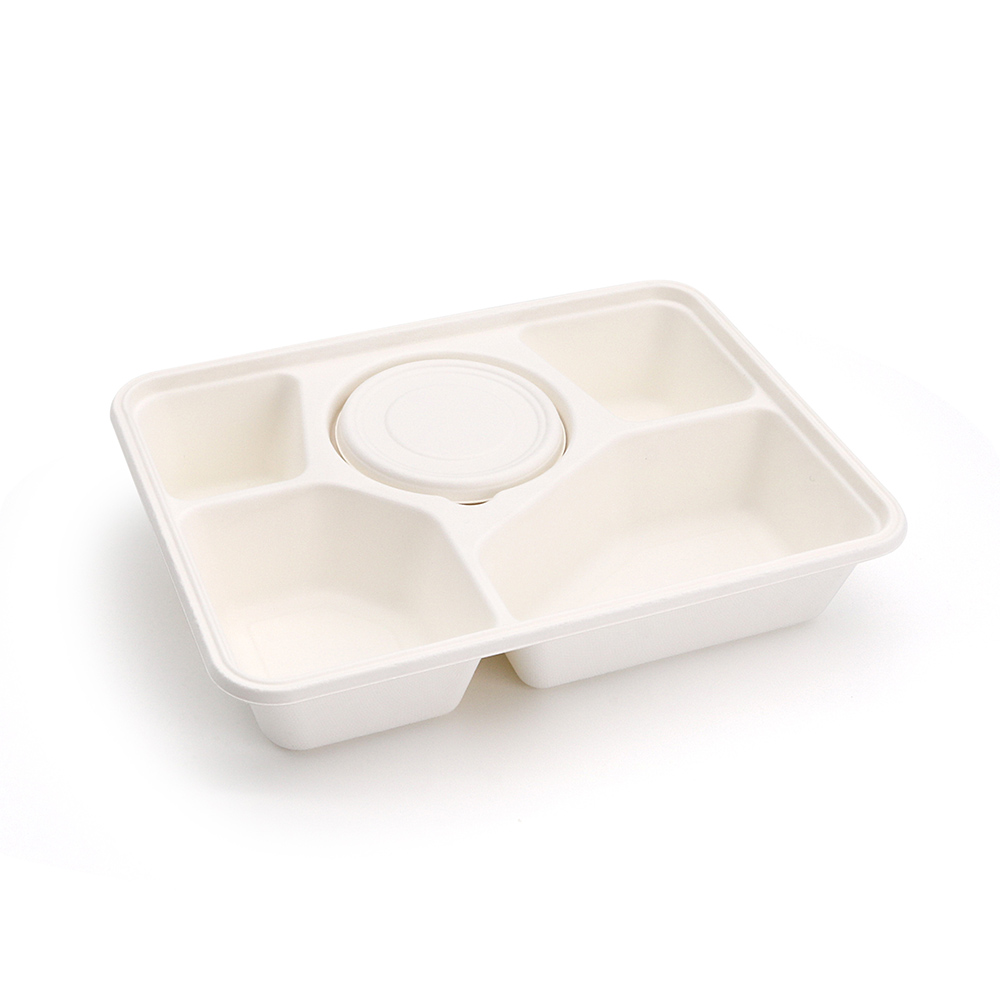
- Multi-Compartment (4+): Essential for specialized applications like institutional catering, subscription food services, and meal preparation companies. These designs allow for the strict separation of healthy meals and weekly meal plans, significantly elevating the visual display and perceived value of the food while maintaining strict portion control for different macro-nutrients.
3. Evaluate Structural Design for Delivery and Stacking
In the era of app-based food delivery, the physical journey of a meal is aggressive. Containers are subjected to lateral forces, vertical stacking pressure, and constant vibration. A weak structural design will inevitably result in delivery failures.
To ensure transit stability, food delivery brands must choose strong rectangular containers to maximize delivery bag space, paired with secure lid closures that guarantee leak prevention and reliable vertical stacking.
Shape Optimization for Logistics
The external shape of the disposable lunch box impacts logistics from the warehouse to the final delivery vehicle.
- Rectangular Design: This is the industry standard for food delivery. Rectangular containers maximize spatial utilization inside standard insulated delivery bags. Their straight edges align perfectly, preventing the containers from sliding or tipping during transit. This geometry is crucial for takeaway businesses executing high-volume, multi-order deliveries.
- Bowl-Style Design: While less spatially efficient than rectangles, bowl-style designs are structurally superior for handling liquid dynamics. The curved walls evenly distribute the outward pressure of liquids, making them the optimal choice for soups, heavy salads, and saucy noodle dishes.
Lid Security and Leak Prevention
A secure lid closure is the most critical conversion point for B2B procurement. Food delivery brands demand packaging that prevents leakage. Advanced disposable food containers utilize engineered snap-fit mechanisms with tight dimensional tolerances. This creates a mechanical seal that locks liquids inside, even when the container is tilted. Furthermore, the lids must feature molded stacking rims—indentations that interlock with the base of the container above it—ensuring that a stack of five meals remains perfectly stable during motorcycle or bicycle transit.
4. Prioritize Material Safety and Thermal Performance
As environmental regulations tighten, the food service industry is rapidly shifting away from conventional petroleum-based plastics. However, adopting biodegradable solutions cannot come at the expense of commercial performance.
Procurement managers must select food-contact safe, biodegradable materials like cornstarch that deliver robust commercial performance, specifically guaranteeing high oil resistance and heat resistance for hot takeaway food.
Cornstarch Biodegradable Solutions
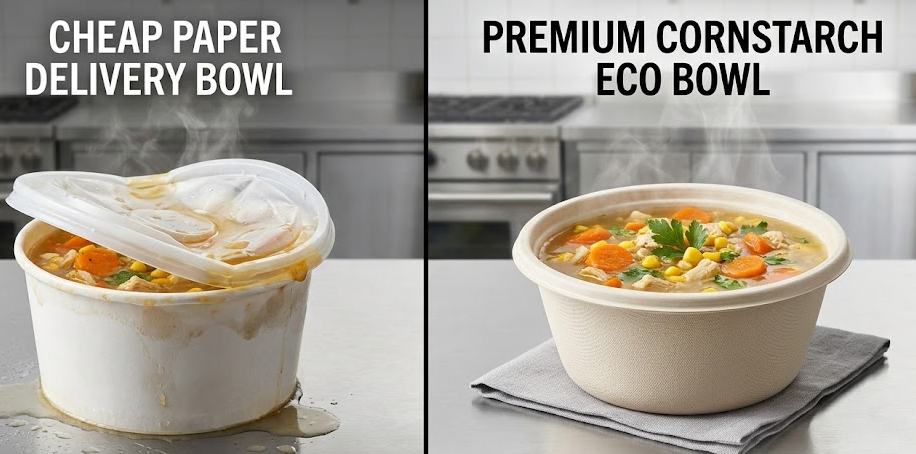
Cornstarch lunch boxes represent the optimal intersection of sustainability and functional performance. Manufactured from plant-based, renewable non-GMO cornstarch materials, these compostable food containers serve as a direct replacement for traditional plastic. Unlike cheap paper alternatives that quickly become soggy and require synthetic chemical liners, cornstarch composites offer a high-density, non-porous structure.
Thermal and Barrier Performance
For wholesale buyers, material performance dictates the final purchase decision. The selected material must be inherently oil-resistant and water-resistant to handle heavy gravies, deep-fried foods, and acidic sauces without degrading. Furthermore, thermal stability is critical. High-quality cornstarch tableware is engineered to maintain its structural integrity under high thermal loads, resisting deformation and warping when exposed to hot meals. This ensures that the packaging remains safe to handle and visually appealing from the moment it leaves the kitchen to the moment the consumer opens it.
5. Leverage OEM Customization for Brand Identity
For high-end catering brands, growing restaurant chains, and private label meal prep companies, packaging is a primary marketing asset. Off-the-shelf, generic containers fail to differentiate a brand in a crowded marketplace.
To strengthen brand recognition and meet unique menu requirements, food service businesses must partner with a supplier that offers deep OEM customization, including custom dimensions, bespoke compartment designs, and integrated logo placement.
Custom Dimensions and Compartment Molds
A major purchasing trigger for B2B clients is whether a supplier can accommodate specific product requirements. Standard market sizes do not always fit signature dishes. A manufacturer with robust OEM solutions can develop custom molds tailored to exact volumetric specifications. If a meal prep company requires a precise 4-compartment layout to separate a specific protein, carb, and two vegetables, the supplier must be able to engineer and manufacture that exact configuration.
Logo Customization and Brand Display
Visual branding elevates the perceived quality of the food inside. Customized disposable lunch boxes allow businesses to imprint their logo, brand colors, and sustainability messaging directly onto the lid or side walls. This customization transforms a simple takeaway food container into a mobile advertisement, building brand loyalty and encouraging repeat orders in the highly competitive food delivery sector.
6. Partner with a Reliable Wholesale Supply Chain
Identifying the perfect lunch box design is irrelevant if the supplier cannot deliver the product consistently. Procurement teams must evaluate the manufacturing backbone of their packaging partners to avoid stockouts.
To mitigate supply chain risks, wholesale buyers must source from direct manufacturers capable of stable bulk production, ensuring consistent batch quality, reliable delivery, and a flexible product selection.
The Importance of Supply Stability
For restaurant chains and major food packaging distributors, consistent quality and bulk production capability are the foundational requirements of a supplier relationship. A manufacturer operating a large-scale, automated production facility can guarantee stable wholesale supply. This reliability means that a 1000ml rectangular cornstarch container ordered in December will have the exact same lid-fit tension, wall thickness, and heat resistance as the batch ordered in June.
Comprehensive Product Portfolios
By partnering with a supplier that offers multiple capacity options and diverse structural designs, businesses lower their procurement decision costs. Instead of sourcing single-compartment boxes from one factory and multi-compartment catering trays from another, a unified supplier simplifies the supply chain. This holistic approach ensures that a restaurant, catering company, and food delivery platform can all find the exact, high-performance biodegradable solutions they need from a single, reliable manufacturing partner.
Conclusion
Choosing the right disposable lunch box size and design requires a strategic evaluation of a business’s specific menu, logistical challenges, and branding goals. By meticulously selecting the correct volumetric capacity, utilizing appropriate compartment layouts to preserve food quality, ensuring structural stability for leak-proof delivery, and demanding high thermal performance from biodegradable materials, food service operators can drastically reduce customer complaints and operational costs. Prioritizing a supplier with strong OEM capabilities and stable bulk production ensures long-term supply chain success.
Looking for disposable lunch boxes customized for your food business? Hfenggreen provides biodegradable cornstarch lunch boxes in different sizes and designs with OEM support for restaurants, catering companies, and food service brands. Contact us today for a customized wholesale quotation.
FAQ
How do I choose the right capacity for standard takeaway meals?
For standard takeaway meals such as rice dishes, pastas, and combo meals, the 800-1000ml capacity range is the industry standard. It provides sufficient volume to present the food attractively without causing it to shift during delivery, optimizing both customer experience and packaging costs.
Why should I choose multi-compartment lunch boxes for my business?
Multi-compartment designs (2, 3, or 4+ sections) are essential for bento meals, meal prep businesses, and catering. They strictly separate main courses from side dishes and sauces, completely preventing flavor mixing and moisture migration, thereby preserving the original culinary quality of the dish.
What structural designs are best for food delivery apps?
Food delivery brands should prioritize strong rectangular containers with secure, engineered lid closures. Rectangular shapes maximize space utilization in standard delivery bags, while secure snap-fit lids provide crucial leak prevention and vertical stacking stability during rough transit.
Are cornstarch disposable lunch boxes safe for hot food?
Yes. High-quality biodegradable cornstarch lunch boxes are manufactured using food-grade materials that offer excellent heat performance. They are inherently heat-resistant, ensuring they do not warp, melt, or leach chemicals when holding steaming hot meals directly from the kitchen.
Can I get disposable lunch boxes customized with my restaurant’s logo?
Yes, partnering with a manufacturer that provides comprehensive OEM solutions allows you to fully customize your packaging. This includes bespoke container dimensions, custom compartment layouts, and direct logo customization to strengthen your brand identity.
Why is stable wholesale supply important for food packaging?
For high-volume restaurants and distributors, supply interruptions immediately halt business operations. A reliable manufacturer with bulk production capability guarantees consistent batch quality and on-time delivery, mitigating supply chain risks and preventing costly stockouts.