Inconsistent quality and supply chain disruptions in food packaging can lead to severe operational failures and customer complaints for distributors and restaurant chains. To find a reliable disposable tableware manufacturer, buyers must strictly evaluate production capacity, material safety compliance, food-contact performance tolerances, and OEM customization capabilities rather than relying solely on the lowest unit price.
Table of Contents
- Assess Production Capacity and Supply Stability
- Evaluate Material Safety and Environmental Compliance
- Verify Product Performance for Commercial Foodservice
- Examine OEM Customization and R&D Capabilities
- Conduct a Comprehensive Factory Audit (Checklist)
- Compare Total Cost of Ownership vs. Unit Price
- Why Partner with Hfenggreen for Bulk Disposable Tableware?
1. Assess Production Capacity and Supply Stability
Supply consistency is the backbone of commercial food packaging distribution. A manufacturer’s ability to scale dictates your business’s ability to grow, particularly during peak seasonal demand or sudden market shifts.
A reliable disposable tableware manufacturer must demonstrate a minimum monthly production capacity of 300 tons, maintain automated production lines, and provide stable inventory support to guarantee on-time delivery for high-volume wholesale orders without supply disruptions.
Capacity Metrics and Facility Scale
When evaluating a bulk disposable tableware supplier, physical infrastructure is the primary indicator of capability. A qualified factory should possess a large-scale manufacturing footprint—typically exceeding 10,000 square meters—equipped with automated extrusion, thermoforming, and trimming machinery. For instance, a facility maintaining a monthly production capacity of up to 350 tons can comfortably service multiple continuous global wholesale accounts simultaneously. High-capacity operations reduce lead times and buffer against supply chain bottlenecks that frequently paralyze smaller operations.
Inventory and Supply Chain Buffers
Dependable manufacturers do not operate purely on just-in-time raw material procurement, which leaves them vulnerable to market shortages. Instead, they maintain strategic safety stock of raw materials, such as non-GMO cornstarch resins, to ensure production lines run continuously. Factory-direct wholesale supply means the manufacturer controls the entire scheduling process, offering importers and distributors predictable lead times and the flexibility to handle urgent replenishment orders.
2. Evaluate Material Safety and Environmental Compliance
Transitioning to eco-friendly food packaging requires strict adherence to international material standards. The market is saturated with misleading greenwashing claims, making scientific validation critical for procurement.
When evaluating biodegradable tableware manufacturers, verify that they use non-GMO plant-based materials like cornstarch, possess industrial compostability certifications, and strictly adhere to food-contact safety standards for both domestic and international markets.
Cornstarch-Based Material Science
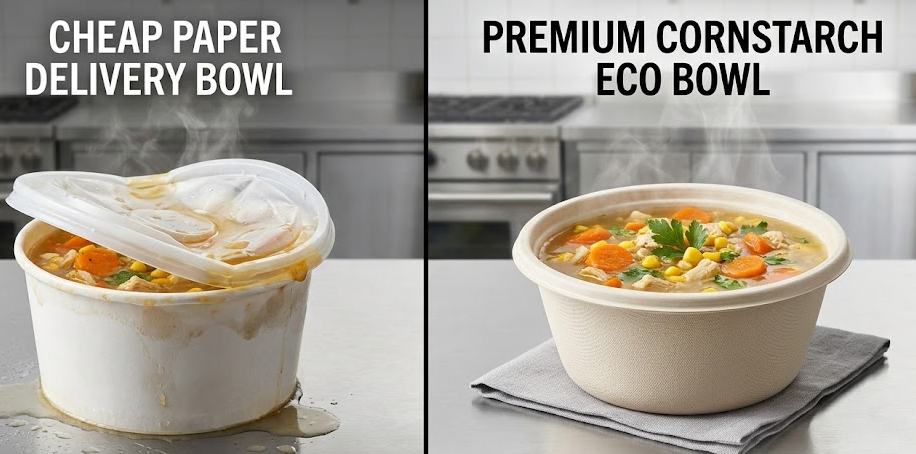
Traditional plastics are being heavily regulated globally. As a superior alternative, professional manufacturers utilize bio-based composites, predominantly utilizing non-GMO cornstarch. In this manufacturing process, the starch is plasticized and blended with biodegradable polymers to create a durable matrix. This results in a material that significantly reduces dependence on fossil fuels while maintaining the structural rigidity required for commercial catering. Unlike flimsy paper alternatives, cornstarch tableware offers exceptional density and weight-bearing capacity.
Food-Grade Certification and Compliance
Safety is non-negotiable in the food packaging industry. A legitimate eco-friendly food packaging manufacturer will readily provide third-party laboratory testing reports confirming their products are free from heavy metals, BPA, and harmful PFAS (per- and polyfluoroalkyl substances). These materials must comply with international food-contact regulations, ensuring that no chemical migration occurs when the packaging is exposed to acidic, alkaline, or high-temperature foods.
3. Verify Product Performance for Commercial Foodservice
Eco-friendly tableware must perform equally well, if not better, than traditional plastic. Failure in thermal or structural integrity directly causes food leaks, operational losses, and brand damage.
High-quality disposable food containers must offer temperature resistance from -5°C to 125°C, feature precise waterproof and oil-resistant barrier properties, and maintain structural rigidity during transportation to prevent leakage.
Thermal Tolerance and Application Ranges
Foodservice businesses require packaging that can handle extreme temperature variations. Standard PLA (polylactic acid) products often warp at temperatures above 40°C, making them useless for hot food. A technical-grade cornstarch tableware manufacturer engineers products capable of withstanding hot food applications up to approximately 125°C. This makes them ideal for hot soups, curries, and freshly fried items. Conversely, the same material must exhibit cold resistance down to around -5°C, ensuring the containers do not become brittle or shatter when used in commercial refrigeration or cold-chain delivery applications.
Leak Prevention and Structural Integrity
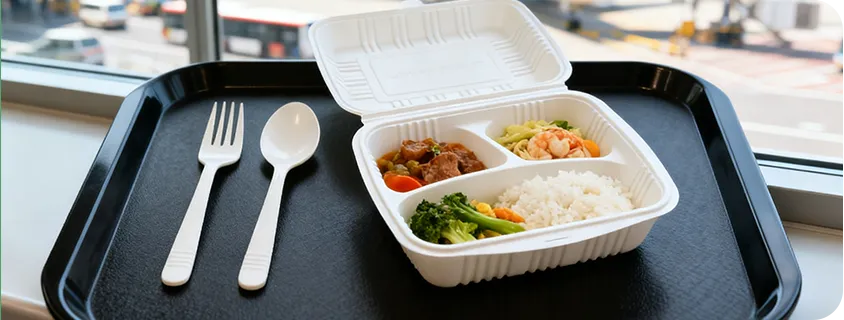
For food delivery businesses and restaurant chains, a leaking container is a failed product. Reliable factories invest in precise mold tooling to ensure lids and bases feature an exact snap-fit mechanism, usually manufactured with dimensional tolerances of ±0.1mm. Furthermore, the inherent material formulation must be inherently waterproof and oil-resistant without relying on toxic chemical coatings. This ensures the structural integrity of the lunch boxes and soup bowls remains intact even when holding heavy, sauce-laden meals during long transit times.
4. Examine OEM Customization and R&D Capabilities
For distributors and restaurant chains, packaging is a critical branding tool. A capable factory must offer comprehensive engineering support rather than just off-the-shelf catalog products.
An expert OEM disposable tableware supplier should provide end-to-end customization, including 3D product design, rapid mold development, exact dimensional tolerances, and private label packaging tailored to specific brand guidelines.
Mold Development and Dimensional Accuracy
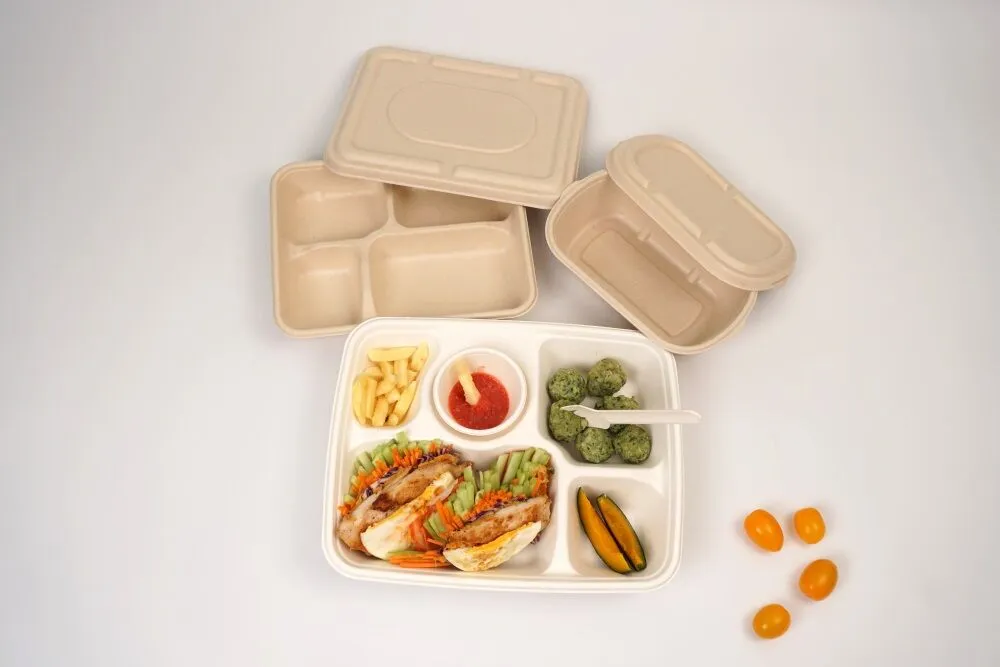
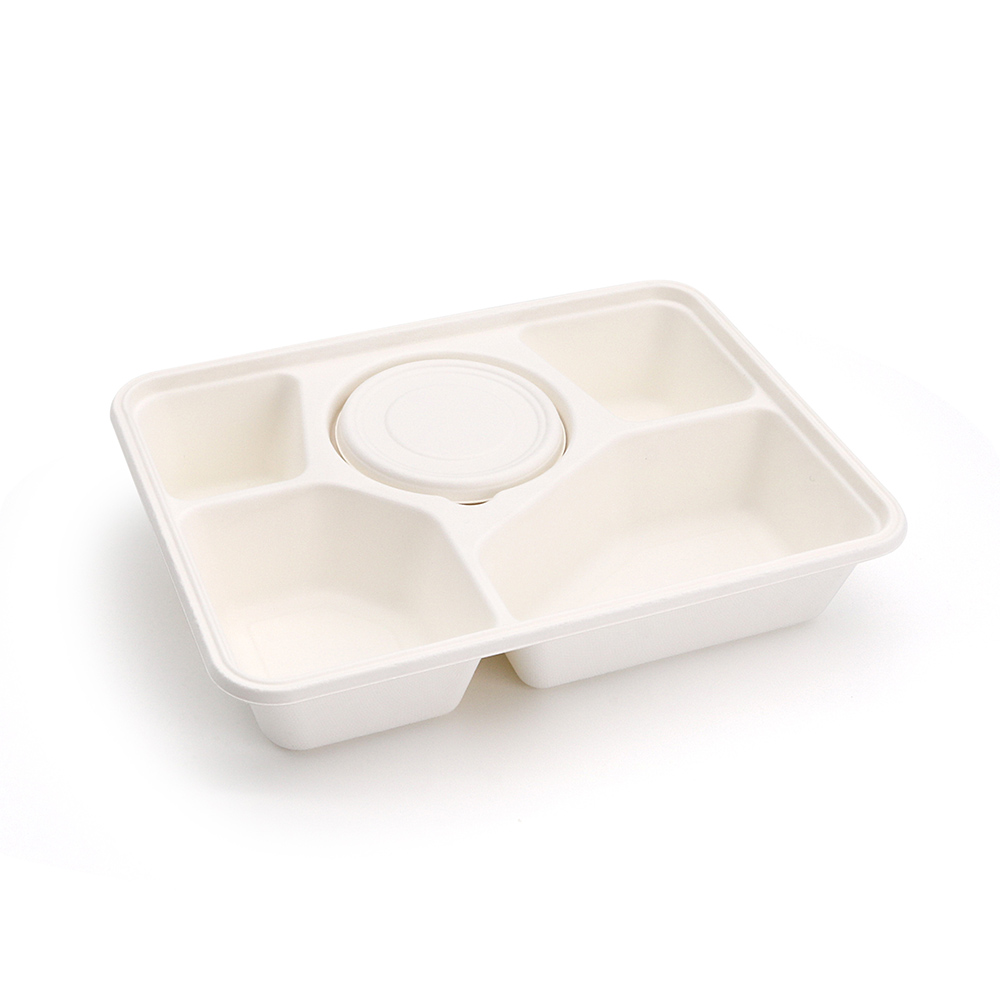
Every food brand has unique portion control and presentation requirements. An advanced disposable food container factory houses an in-house R&D and tooling department capable of rapid prototyping. Whether a client requires a specific three-compartment bento box layout, specialized ventilation holes for fried foods, or unique volumetric capacities, the manufacturer must be able to design, test, and machine custom molds efficiently. The ability to transition from CAD drawing to a functional physical prototype within weeks is a hallmark of a top-tier supplier.
Private Labeling and Packaging Solutions
Wholesale distributors and catering providers often require private-label solutions to build their brand equity. This includes custom embossing of logos on the container lids or bases, as well as customized outer carton packaging for streamlined warehouse identification. A flexible manufacturer will accommodate specific packaging configurations—such as custom sleeve wraps, bulk inner-bag quantities, or retail-ready display cartons—allowing importers to distribute the goods immediately upon arrival without secondary repackaging.
5. Conduct a Comprehensive Factory Audit (Checklist)
Remote supplier sourcing carries inherent risks. A structured audit process filters out trading companies posing as direct manufacturers and ensures the facility operates under rigorous quality controls.
A comprehensive factory audit should verify the supplier’s direct manufacturing status, evaluate their 10,000+ square meter facility size, inspect on-site quality control systems, and review raw material traceability records.
Direct Manufacturer vs. Trading Company
Many B2B buyers unknowingly purchase from trading intermediaries, resulting in inflated costs, miscommunication regarding technical specs, and a complete lack of quality control. Working with a direct manufacturer advantage ensures better pricing control, direct communication with the engineers, and immediate intervention if production issues arise. Buyers should verify factory registration documents, request live video tours of the extrusion and molding lines, and confirm the factory address matches the business license.
In-Process Quality Control (IPQC)
A reliable factory implements multi-stage quality management systems. This includes incoming raw material inspection (moisture content and purity of the cornstarch resin), in-process quality control (monitoring temperature and pressure parameters during thermoforming), and final outgoing QA. Technical checks should include wall thickness consistency analysis, drop-testing for durability, and lid-fit tension testing to guarantee a secure seal.
6. Compare Total Cost of Ownership vs. Unit Price
Focusing exclusively on the lowest quoted unit price is the most common pitfall in B2B packaging procurement. Hidden costs from defects and logistical failures quickly erase upfront savings.
Purchasing decisions for disposable tableware must factor in the total cost of ownership, which includes unit price, defect rates, customer complaint resolution costs, packaging efficiency, and freight optimization.
The Hidden Costs of Cheap Packaging
When a buyer selects a sub-standard supplier based purely on a fraction of a cent per unit, they inherit massive downstream risks. Containers with inconsistent wall thickness will crack during delivery, leading to food spoilage, forced refunds, and lost restaurant customers. Furthermore, cheap packaging often nests poorly, meaning fewer units fit into a shipping carton or container, drastically increasing the per-unit freight cost. Professional buyers evaluate the holistic financial impact of the product’s performance.
Supplier Evaluation Matrix
| Evaluation Criteria | Sub-Standard Supplier / Intermediary | Professional Direct Manufacturer |
| Defect Rate & Consistency | High variance; frequent cracking or loose lids. | Strict QA; exact tolerances (±0.1mm) and tight seals. |
| Thermal Performance | Warps or melts when exposed to hot food. | Stable up to 125°C; safe for hot liquids and refrigeration. |
| Production Capacity | Limited output; frequent delays during peak seasons. | 350+ tons/month; automated lines ensure on-time delivery. |
| Customization (OEM) | Limited options; high costs for third-party mold making. | In-house tooling; rapid custom design and private labeling. |
| Total Cost Impact | High hidden costs due to refunds, leaks, and poor packing. | Lower total cost via high durability and optimized freight packing. |
7. Why Partner with Hfenggreen for Bulk Disposable Tableware?
Hfenggreen has engineered its production infrastructure specifically to solve the scalability, customization, and quality challenges faced by global foodservice distributors and brands.
Hfenggreen is a direct manufacturer of biodegradable cornstarch tableware, offering a 350-ton monthly capacity from a 10,000㎡ facility, comprehensive OEM support, and food-safe, temperature-resistant containers designed for global wholesale buyers.
Engineered for Commercial Performance
At Hfenggreen, we specialize in high-performance biodegradable solutions. Our non-GMO cornstarch-based material is engineered to meet the intense demands of the commercial food industry. The product line—including lunch boxes, soup bowls, cutlery, and catering trays—delivers exceptional thermal stability, withstanding hot food applications up to approximately 125°C and refrigerated environments down to -5°C. Inherently waterproof and oil-resistant, our packaging ensures a premium, leak-free experience for end-users, directly reducing customer complaints for our B2B partners.
Tailored Solutions for Diverse Applications
Operating from our 10,000㎡ production facility, we supply specialized solutions across the food sector:
- Restaurant Chains: Leak-resistant lunch boxes and customized branding to elevate takeout presentation.
- Food Delivery Businesses: Heat-resistant and oil-resistant containers that maintain food integrity during transit.
- Catering Companies & Events: Highly durable disposable trays and cutlery sets capable of serving large volumes efficiently.
- Food Packaging Distributors: Factory-direct wholesale pricing, massive 350-ton monthly capacity, and comprehensive OEM/private label options for reliable export supply.
Conclusion
Selecting the right disposable tableware wholesale supplier requires a comprehensive evaluation of a factory’s true capabilities. By prioritizing a supplier with large-scale production capacity, rigorous material safety compliance, proven thermal and structural performance, and robust OEM support, businesses can secure a stable supply chain and protect their brand reputation. Balancing sustainability with commercial viability is no longer just an option—it is a requirement for modern foodservice operations.
Ready to upgrade your food packaging supply chain?
Contact the experts at Hfenggreen today to request a technical consultation, order product samples for internal evaluation, or receive a customized factory-direct quotation for your next bulk order.
FAQ
What makes cornstarch disposable tableware a better alternative to traditional plastic?
Cornstarch tableware utilizes renewable, non-GMO plant materials, significantly reducing reliance on fossil fuels. It offers industrial compostability while maintaining the structural strength, heat resistance, and leak-proof performance required for commercial foodservice, which many flimsy paper alternatives lack.
Are your disposable food containers suitable for both hot meals and cold storage?
Yes, Hfenggreen’s engineered cornstarch containers are designed for extreme commercial environments. They are stable and heat-resistant up to approximately 125°C for hot soups and freshly cooked meals, and cold-resistant down to -5°C for secure refrigerated storage.
What is your production capacity for wholesale and bulk orders?
Our state-of-the-art 10,000㎡ production facility operates with a monthly capacity of up to 350 tons. This large-scale output ensures stable inventory support, factory-direct pricing, and on-time delivery for high-volume international distributors.
Can you provide custom OEM designs and private-label packaging?
Absolutely. We offer comprehensive OEM services, including 3D product design, rapid custom mold development for unique container sizes, logo embossing, and customized outer carton packaging tailored to your brand’s specific wholesale requirements.
How do you ensure the lids fit securely to prevent leaks during food delivery?
We utilize high-precision molds with strict dimensional tolerances during our thermoforming process. In-process quality control systems test lid-fit tension and wall thickness consistency to ensure every container creates a secure, leak-resistant, and oil-resistant seal.
How can I verify the quality before placing a bulk wholesale order?
We strongly encourage B2B buyers to request product samples for hands-on evaluation. You can test the thermal resistance, structural rigidity, and leak-proof capabilities in your own commercial environment before committing to a factory-direct wholesale order.