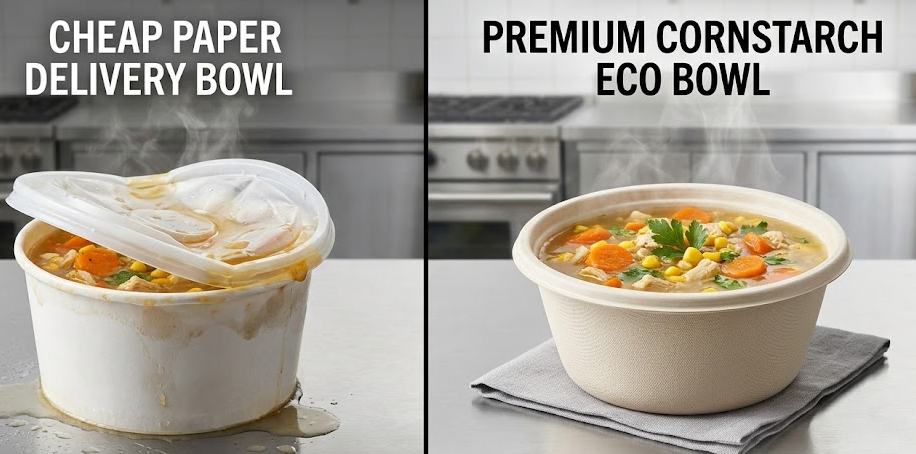
Substandard packaging causes leaks, leading to customer refunds, operational inefficiencies, and severe brand damage. Ignoring structural integrity in food delivery drastically increases long-term costs. The most durable disposable trays for restaurants are made from heavy-duty sugarcane bagasse and modified cornstarch composites, offering superior heat resistance, grease-proofing, and stackable rigidity.
In the high-pressure environment of commercial catering, packaging is not just a vessel; it is a structural barrier protecting your culinary product. The final leg of food delivery subjects containers to extreme heat, volatile oils, and constant mechanical vibration. Relying on flimsy materials compromises food safety and customer satisfaction. As the Chief Manufacturing Engineer at Dongguan Hengfeng High-Tech Development Co., Ltd., I have spent years formulating packaging solutions that survive these exact conditions. Let us examine the objective parameters and material sciences that determine true commercial durability.
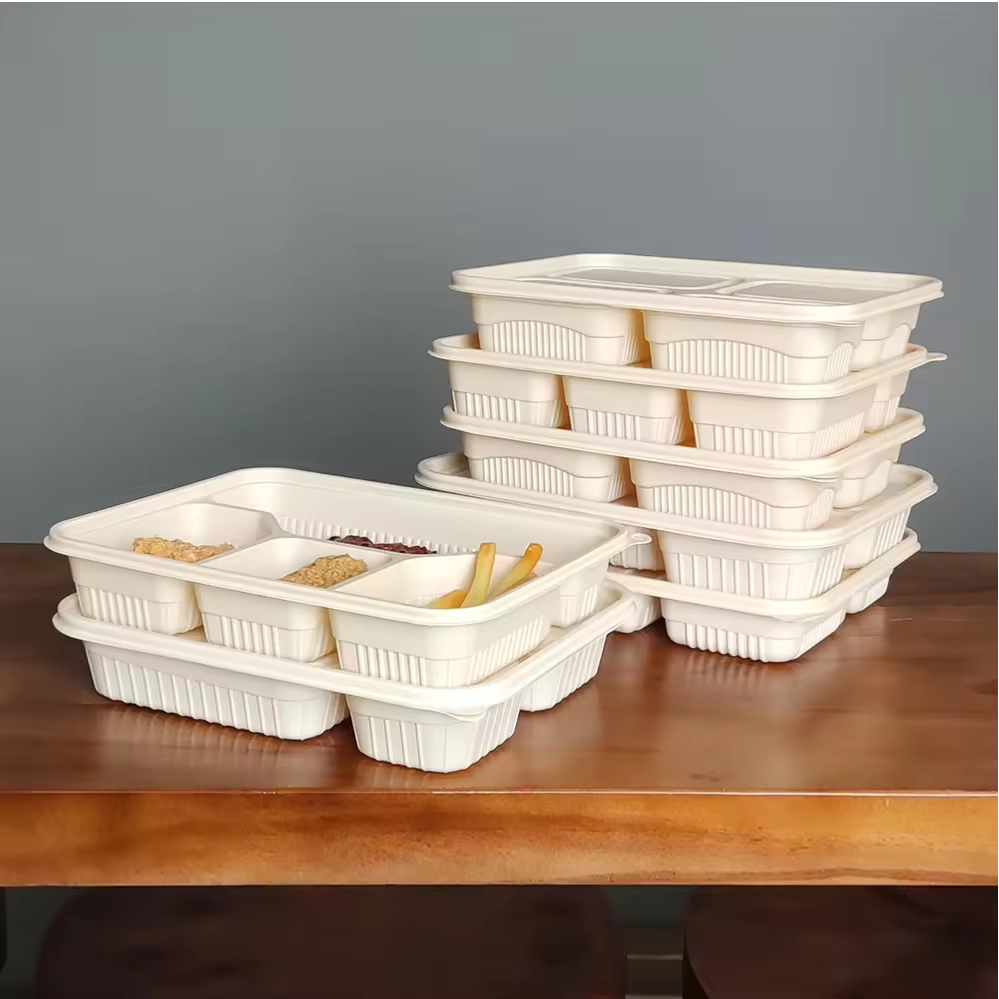
Table of Contents
- What Material Defines 80% of a Tray’s Durability?
- How Does Heat and Grease Resistance Impact Delivery?
- Why Are Plant Fiber Trays Replacing Traditional PP Plastic?
- How Do Central Kitchens Prevent Transit Damage?
- What Packaging Certifications Ensure Global Compliance?
- Can Custom Disposable Trays Enhance Brand Identity?
1. What Material Defines 80% of a Tray’s Durability?
The foundational raw material dictates exactly how a food tray reacts to mechanical stress and thermal shock. Selecting an incorrect substrate fundamentally compromises the container long before the food is even plated.
Sugarcane bagasse and cornstarch composites determine 80% of a tray’s durability by providing a tight molecular structure. These plant-based fibers offer exceptional compressive strength and rigidity, ensuring the packaging remains intact and leak-resistant under heavy portions and high temperatures.
Evaluating Substrate Mechanics
The physical characteristics of a disposable tray depend entirely on its polymer or fiber matrix. In the restaurant supply chain, durability is not a single metric; it is a combination of load-bearing capacity, heat tolerance, and structural stability.
Consider the operational differences between a fast-food chain serving heavy burger-and-fries combos and a healthy salad restaurant. The fast-food chain requires bagasse compartment trays. The interlocking plant fibers created during the wet-molding process provide extreme rigidity, ensuring the heavy burger and sauces do not mix or bend the tray. Conversely, the salad restaurant often utilizes PLA (Polylactic Acid) bases paired with molded pulp lids. PLA provides high-visibility transparency for cold food presentation.
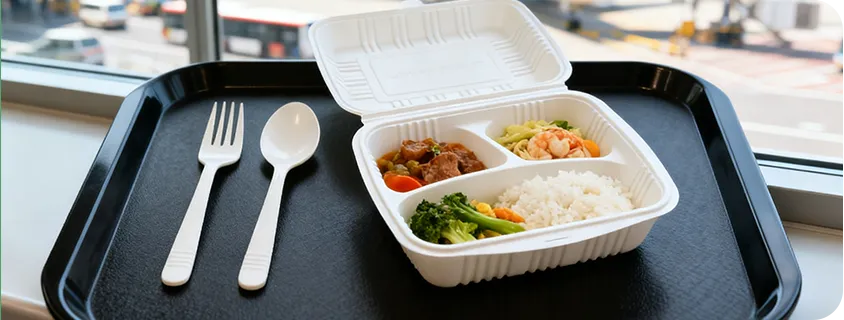
From an engineering perspective, there are distinct design trade-offs. PLA offers exceptional clarity but fails structurally under heat. Bagasse and cornstarch composites sacrifice transparency to achieve high thermal and structural resilience. Practically, this means procurement managers must match the material to the menu.
| Material Type | Structural Rigidity | Optimal Temperature Range | Primary Application Scenarios |
| Sugarcane Bagasse | Very High | -15°C to 120°C | Hot fast food, heavy portions, microwave heating |
| Molded Wood Pulp | High | -10°C to 120°C | Compartment boxes, dry hot foods |
| PLA Bioplastic | Medium | 0°C to 60°C | Cold salads, desserts, refrigerated displays |
| Traditional PP | High | -10°C to 120°C | Low-cost hot foods (phasing out globally) |
2. How Does Heat and Grease Resistance Impact Delivery?
The harsh environment of restaurant food introduces aggressive variables like boiling temperatures and volatile cooking oils. Packaging must act as an impenetrable barrier to prevent structural softening and catastrophic delivery failures.
High heat and grease resistance prevent disposable trays from softening and collapsing during transit. Heavy-duty structures utilizing sugarcane bagasse or cornstarch composites effectively withstand temperatures up to 120°C, acting as an absolute barrier against aggressive oils and hot sauces.
Thermal and Lipid Barrier Engineering
When hot, oily food is placed into a container, it tests the material’s hydrophobic (water-repelling) and oleophobic (oil-repelling) limits. If the material is highly porous, the capillary effect will draw the hot oil into the packaging walls, causing the base to turn soggy and eventually rupture.
For example, a restaurant delivering heavy curries requires a heavy-duty structure for restaurant-grade use (hot, oily, and takeaway-safe). Our modified cornstarch formulations combine a cornstarch base with PPT plastics to create a dense, non-porous thermoplastic matrix. This eliminates the need for controversial PFAS chemical coatings while achieving total grease resistance. Another example is serving fried chicken in bagasse compartment trays; the material breathes slightly, allowing steam to escape so the chicken remains crispy, while the dense fiber base prevents oil leaks.
The theoretical basis of this engineering relies on surface tension and material density. The design trade-off is that achieving a PFAS-free, highly dense bagasse or cornstarch tray requires higher-tonnage injection molding machines and longer cycle times, slightly increasing production costs. However, the practical impact is a drastic reduction in customer complaints regarding leaky packaging.
| Performance Metric | Untreated Paper/Cardboard | Hengfeng Cornstarch Composite | Sugarcane Bagasse (PFAS-Free) |
| Heat Resistance | Up to 80°C (Softens) | Up to 120°C (Stable) | Up to 120°C (Stable) |
| Oil Penetration Time | < 15 Minutes | > 24 Hours | > 12 Hours |
| Microwave Safety | Low (Fire risk if dry) | Very High (Safe) | Very High (Safe) |
3. Why Are Plant Fiber Trays Replacing Traditional PP Plastic?
For decades, polypropylene (PP) dominated the takeaway industry due to its low cost. However, mounting environmental regulations and corporate sustainability mandates are forcing a rapid shift away from fossil-fuel derivatives.
Plant fiber trays are rapidly replacing traditional PP plastic because they eliminate long-term environmental liabilities and microplastic pollution. Currently, over 70% of B2B restaurants are adopting compostable bagasse solutions to comply with stringent global regulations while maintaining comparable structural performance.
The Cost Replacement Logic
The transition from traditional plastics to bio-based materials is accelerating, particularly in the US and EU markets. Statistics indicate that utilizing compostable trays reduces plastic waste pressure by 60% to 80%.
Consider a national fast-food franchise transitioning from PP clamshells to bagasse trays, or a premium health-food brand upgrading to starch-based containers. The theoretical driver is carbon footprint reduction. Traditional PP is derived from crude oil and persists in landfills for centuries. Bagasse and cornstarch utilize agricultural byproducts and renewable resources.
The primary design trade-off for procurement teams is unit cost. Plant fiber and composite trays often carry a slightly higher initial per-unit price than raw PP. However, the practical impact justifies the switch. By avoiding upcoming single-use plastic taxes, avoiding disposal fees, and elevating the brand’s eco-friendly image, businesses achieve long-term cost saving through compliance & waste reduction.
| Evaluation Criteria | Traditional Polypropylene (PP) | Biodegradable Plant Fibers (Bagasse/Cornstarch) |
| Environmental Impact | High (Centuries to degrade) | Low (60-180 days to compost) |
| Regulatory Risk | Extremely High (Bans active) | Zero (Compliant globally) |
| Consumer Perception | Cheap, harmful to environment | Premium, responsible, sustainable |
| End-of-Life Disposal | Landfill or complex recycling | Industrial or home composting |
4. How Do Central Kitchens Prevent Transit Damage?
Mass catering and central kitchen operations require packaging that survives palletization and rough bulk transport. Structural rigidity and predictable stacking tolerances become the primary engineering requirements for these high-volume facilities.
Central kitchens prevent transit damage by utilizing thick-walled molded pulp and cornstarch trays specifically designed for vertical load-bearing. This stackable and leak-resistant design ensures bulk food deliveries remain structurally stable, significantly lowering breakage rates and maximizing high-volume catering efficiency.
Vertical Load-Bearing and Stackability
In B2B catering, such as supplying corporate events or hospital meal programs, hundreds of meals are prepared, stacked in thermal transport boxes, and driven across cities. If the bottom tray in a stack of ten cannot support the weight of the nine trays above it, the entire column will collapse, ruining the food.
We engineer thick-walled molded pulp and cornstarch trays with precise draft angles and reinforced rib structures. For example, a central kitchen delivering group meals utilizes our heavy-duty cornstarch trays because the injection-molded structural ribs transfer downward kinetic force away from the lid and into the base corners. Another application is school lunch programs, where trays must nest perfectly within each other prior to use to save warehouse space.
The theoretical engineering relies on optimizing the container’s geometry to maximize vertical compressive strength. The trade-off is that thicker walls require more raw material, slightly increasing the weight of each unit. The practical impact, however, is a stackable & leak-resistant design for delivery efficiency that drastically reduces the percentage of meals lost to transit damage.
| Structural Feature | Engineering Purpose | Benefit for Central Kitchens |
| Reinforced Corner Ribs | Divert vertical load stress | Allows safe stacking of 10+ filled containers |
| Precision Draft Angles | Allow tight nesting when empty | Saves up to 40% of warehouse storage space |
| Snap-Fit Lid Grooves | Prevent lateral shifting during transit | Stops leaks and spills inside delivery vehicles |
5. What Packaging Certifications Ensure Global Compliance?
Exporting food packaging to North American or European markets demands strict adherence to safety and environmental standards. Without recognized documentation, procurement managers face severe customs delays and regulatory rejections.
Certified compostable and food-safe packaging certifications, such as FDA, EN13432, and BPI, ensure global compliance. These critical standards verify that disposable trays are completely free of PFAS chemicals and will safely biodegrade within 60 to 180 days in commercial compost facilities.
Navigating International Regulatory Frameworks
When sourcing eco-friendly packaging, B2B buyers must prioritize documented compliance over marketing claims. True durability includes the ability to survive regulatory audits.
For instance, a European restaurant chain importing packaging must verify compliance with EN13432, ensuring the trays decompose organically without leaving heavy metals in the soil. Similarly, North American buyers require FDA approval for safe direct food contact and BPI certification for compostability. At Hengfeng High-Tech, our automated production facilities operate under ISO9001 standards in a sterile, pollution-free environment, guaranteeing that every tray meets these global benchmarks.
The theoretical basis of these certifications involves rigorous laboratory testing for chemical migration and disintegration timeframes. The trade-off for manufacturers is the high cost and extensive lead time required to pass these audits. For the B2B buyer, the practical impact is absolute peace of mind. Sourcing certified compostable and food-safe packaging for global markets ensures frictionless importing and protects the brand from health-related liabilities.
| Certification Standard | Region/Authority | What It Verifies |
| FDA Food Contact | United States | No toxic chemical migration into food |
| EN13432 | European Union | Complete industrial compostability within 180 days |
| BPI Certified | North America | Free of PFAS, safely biodegradable |
| ISO9001 | Global | Consistent quality management in manufacturing |
6. Can Custom Disposable Trays Enhance Brand Identity?
Standardized packaging fulfills basic logistical needs, but customized solutions transform a simple container into a powerful marketing asset. Precision branding communicates quality and environmental responsibility directly to the end consumer.
Custom disposable trays enhance brand identity by integrating precise compartment designs, unique dimensions, and embossed logos. Utilizing OEM/ODM disposable tray solutions allows restaurant brands to upgrade their packaging to sustainable standards while differentiating themselves in a highly competitive market.
OEM/ODM Engineering for B2B Clients
B2B procurement is heavily driven by the need for unique, brand-specific solutions. A one-size-fits-all approach often fails complex menus.
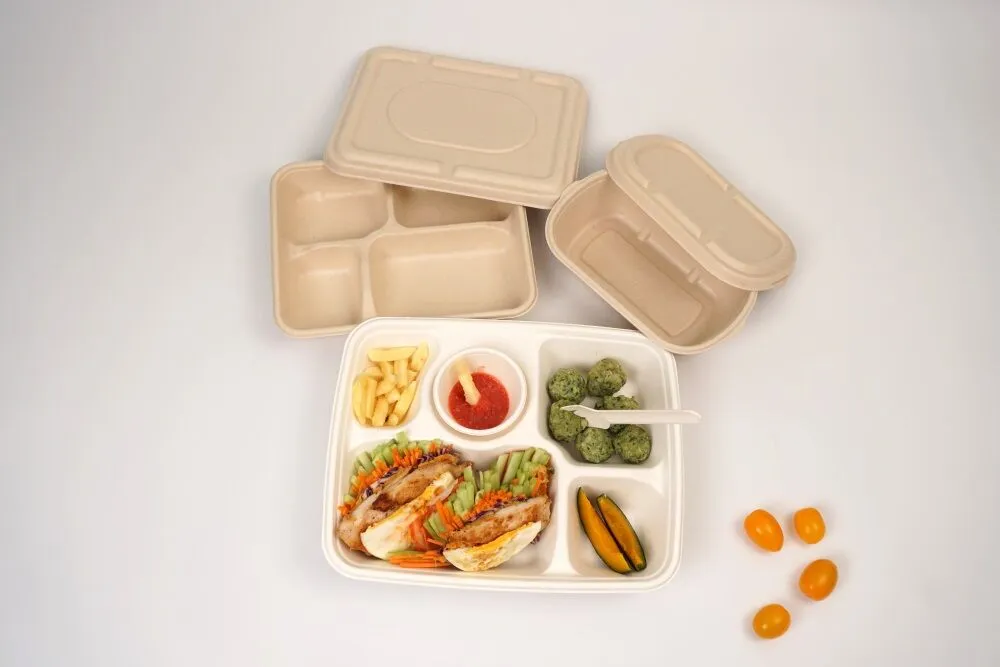
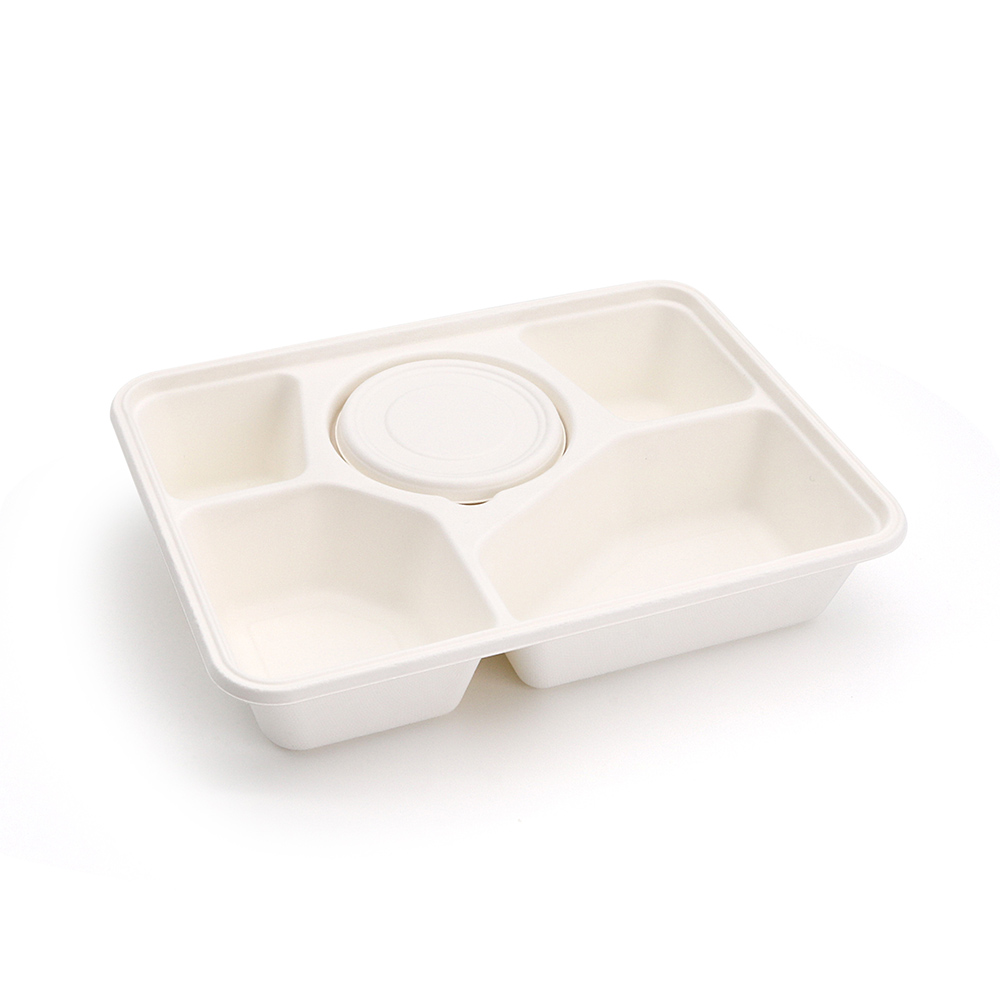
Consider a premium Japanese franchise requiring a highly specific 4-compartment bento box to keep sauces, tempura, and sushi perfectly separated. We utilize advanced CNC machining to create custom molds that dictate exact compartment volumes. Another example is a modern healthy food chain that requires its logo to be prominent. Instead of using toxic printing inks, we engineer custom embossed relief craftsmanship into the mold, pressing the logo directly into the cornstarch or bagasse material.
The theoretical aspect involves precision tooling and fluid dynamics during the injection molding process to ensure the material fills the custom mold evenly. The trade-off is the initial tooling cost and lead time (typically 7-10 days for samples). The practical impact is massive: OEM/ODM disposable tray solutions for restaurant brands give you the exact operational tool you need, allowing you to upgrade your packaging to sustainable standard while elevating the customer’s unboxing experience.
| Customization Capability | Engineering Method | Commercial Advantage |
| Custom Compartments | CAD Design & Mold Machining | Prevents flavor mixing, precise portion control |
| Logo Embossing | 3D Relief Mold Engraving | High-end branding without toxic printing inks |
| Custom Sizing | Dimensional Adjustments | Perfect fit for proprietary automated lidding machines |
Conclusion
The durability of disposable trays is ultimately determined by the integration of material science, thermal stability, and structural engineering—not by material type alone. As global food delivery volumes continue to rise and regulatory pressure on single-use plastics intensifies, traditional PP packaging is rapidly becoming a high-risk and outdated solution.
Sugarcane bagasse and modified cornstarch composites offer a commercially viable alternative, combining high heat resistance, grease-proof performance, and strong stacking integrity. When properly engineered and manufactured under controlled industrial standards, these materials not only meet modern ESG and compliance requirements but also significantly reduce operational failures such as leaks, collapses, and delivery damage.
For B2B buyers, the strategic decision is no longer whether to switch to eco-friendly packaging, but how to select the correct structural configuration for their specific food application and logistics environment. Partnering with an experienced manufacturer ensures consistent quality, scalable production, and packaging solutions that are engineered for real-world delivery stress conditions.
👉 If you need a customized solution for your restaurant chain, catering system, or distribution network, please contact us for professional support and sampling options.
Frequently Asked Questions (FAQs)
1. Are bagasse and cornstarch trays safe for microwave use?
Yes. Both sugarcane bagasse and modified cornstarch composite trays are highly heat-resistant, safely withstanding microwave temperatures up to 120°C without melting or releasing harmful chemicals.
2. How long does it take for these eco-friendly trays to compost?
Under commercial composting conditions, bagasse and cornstarch materials typically break down and naturally decompose into organic matter within 60 to 180 days.
3. Do plant fiber trays get soggy when holding oily foods?
High-quality, heavy-duty bagasse and cornstarch trays are engineered with a dense molecular structure that provides an excellent barrier against grease and oil, preventing them from becoming soggy during standard delivery times.
4. Can I use PLA trays for hot soups or meals?
No. PLA (Polylactic Acid) bioplastics have a low heat tolerance (usually up to 60°C) and will deform or melt if exposed to hot foods or microwave heating. PLA is best suited for cold salads and refrigerated items.
5. Are your biodegradable trays free of PFAS chemicals?
Yes. Our certified compostable trays comply with strict international standards (like BPI and EN13432), ensuring they are manufactured without the addition of harmful PFAS “forever chemicals.”
6. What is the minimum order quantity (MOQ) for custom-molded trays?
For customized OEM/ODM disposable tray solutions, our standard minimum order quantity starts at 100 boxes (with 500 units per box), ensuring cost-effective production runs.